Maido, Lima
Hailing at the top of 2025’s Best Restaurant in The World is Maido, a Nikkei-focused restaurant that is disrupting the industry, bringing in curious diners from all over the world. Combining Japanese and Peruvian culinary traditions have been a craze for quite sometime now, conquering both western and eastern continents. Nikkei cuisine is synonymous to upscale dining, reflecting its approach to sourcing the best ingredients that chefs can possibly get, paired with the most delicate and precise techniques, and mind-blowing peruvian flavors. I am a huge fan of Nikkei cuisine, as the flavors are very accessible and discerning even to the most basic diner, the only challenge is whether you eat raw fish and seafood.
Maido sits at the top of the helm, but does it really deliver?
This is our second entry to our high-end Peruvian culinary journey and Maido, which means “greetings and welcome” in Japanese, opens its arms to accommodate our hungry imagination.
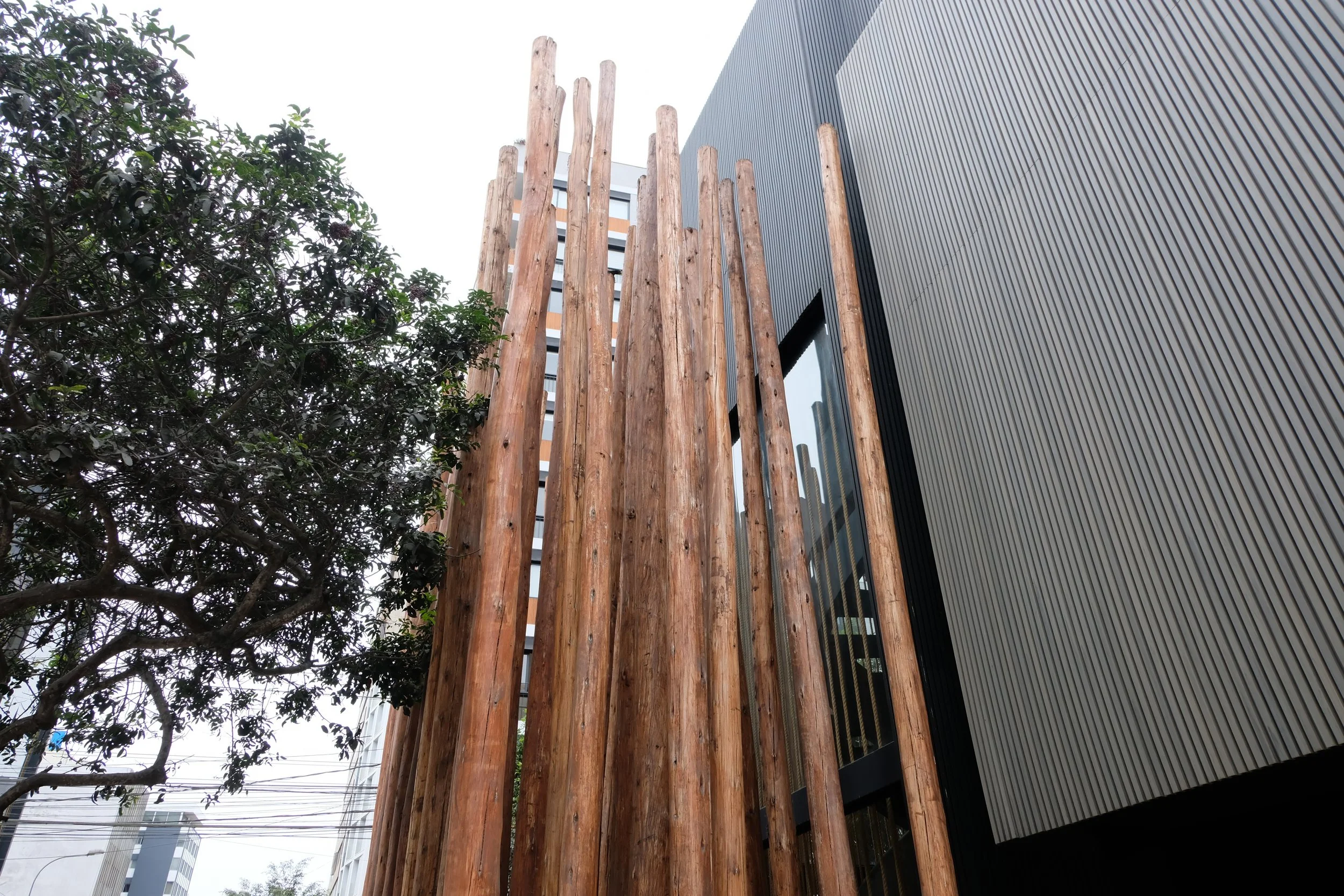
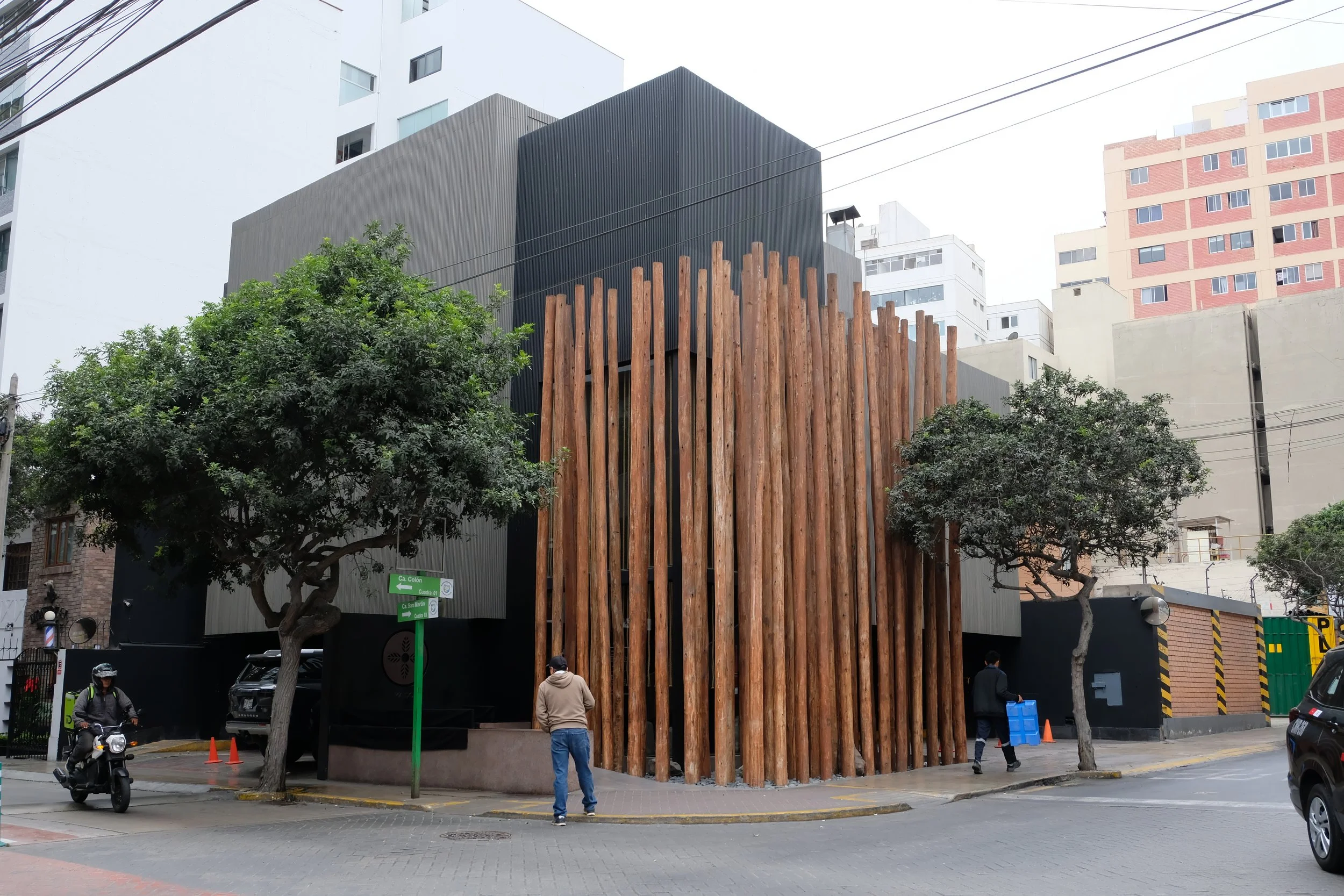
Maido is nestled in the affluent area of Miraflores, a favorite amongst tourists. You know that you’ve arrived once you spot the towering wooden beams at the corner of Calle Colon and San Martin. A pro-tip when visiting Peru: don’t rent a car! Do Uber instead as it is more convenient and cheaper. You’ll save a ton of headache compared to renting a car. The best way to get around is to walk. We were lucky as our hotel was in close proximity to Maido.
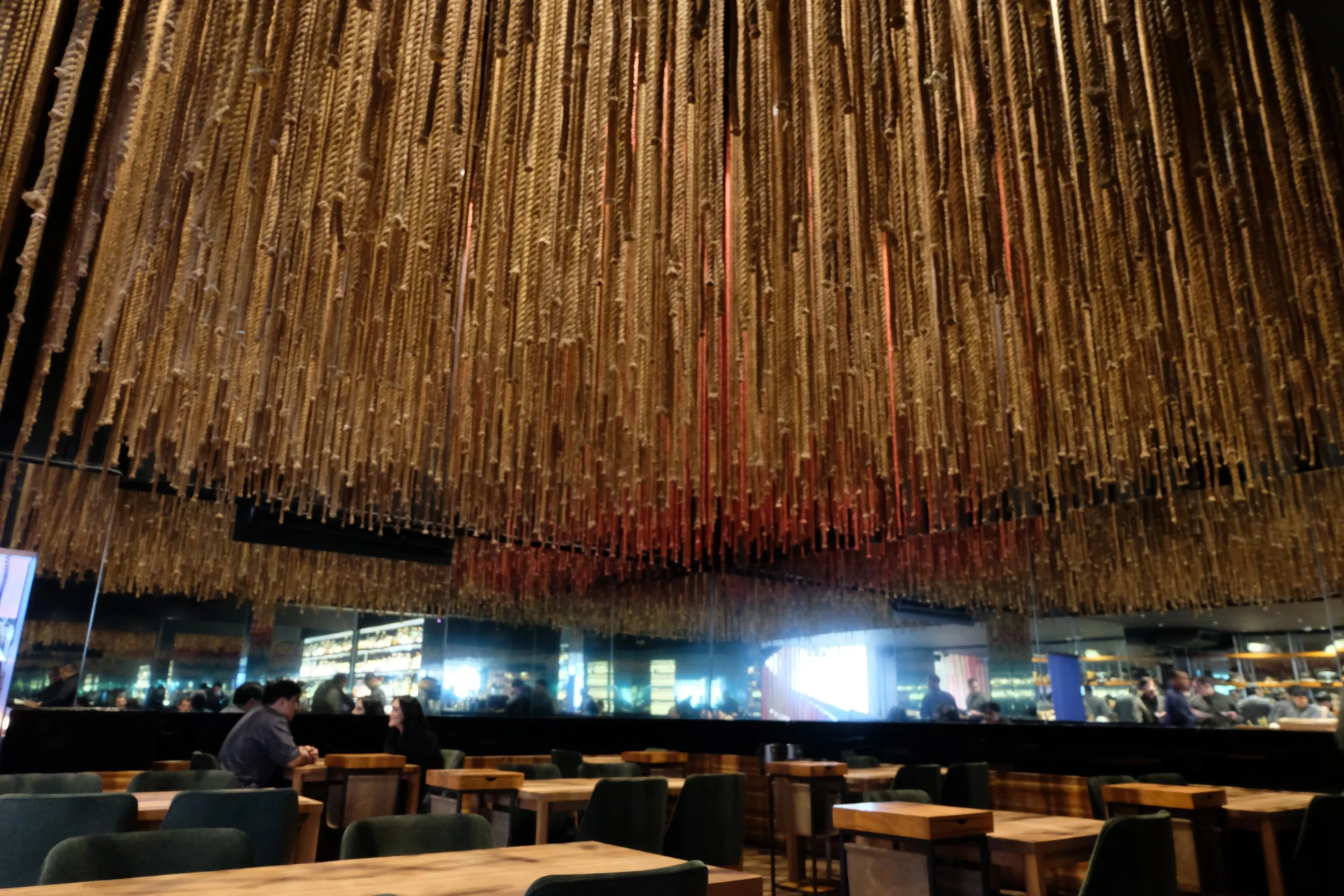
Once in, you are directed to the second floor, straight to the dining area that opens up to a ceiling full of hanging ropes, evoking a feeling of being suspended.
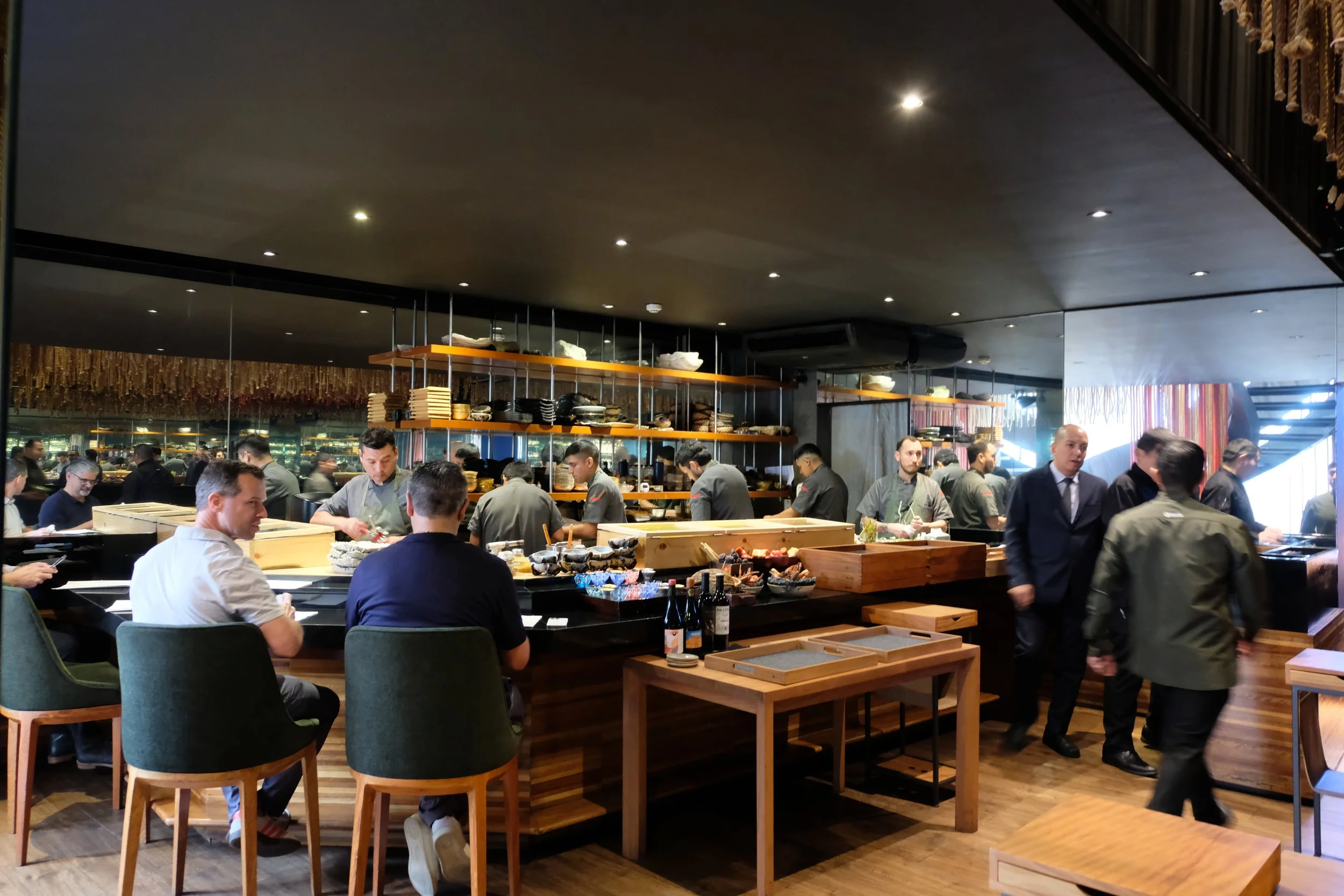
Next to the stairs is the raw bar kitchen, where chefs fight for their own real estate, as there were at least seven to eight brigade members cramped up within a three to four meter by one and half meter kitchen line. That’s a lot of chefs for such a small area, although, while enduring and going the craze right now, you need every abled-body cook that you can hire. When the server gives the que, all the chefs greet you in unison, making you feel seen and acknowledged.
The walls are made with black granite, I would assume. Mirrors are sandwiched in between the tile walls, reflecting the hanging ropes, creating an illusion of a bigger dining area.
We got sat at a table that was a bit away from the action, next to a wall. To my left was the bar, which is kind of disappointing as it didn’t have anything special about it—no focal point that will make you say, “wow.” it also concerned me that the bar had all its equipment running during service which affected the atmosphere of the experience.
The patrons came in all at once and it felt chaotic and loud. Moreover, the Front of The House members, while welcoming, seemed to be in the in their own bubble and dry. The service seemed robotic, where everything is calculated ahead of time, no more, no less. There was a missing element—a raw, unscripted and sincere touch from every interaction.
For the entirety of the experience, I felt rushed. Maybe it’s because we went for lunch instead of dinner?
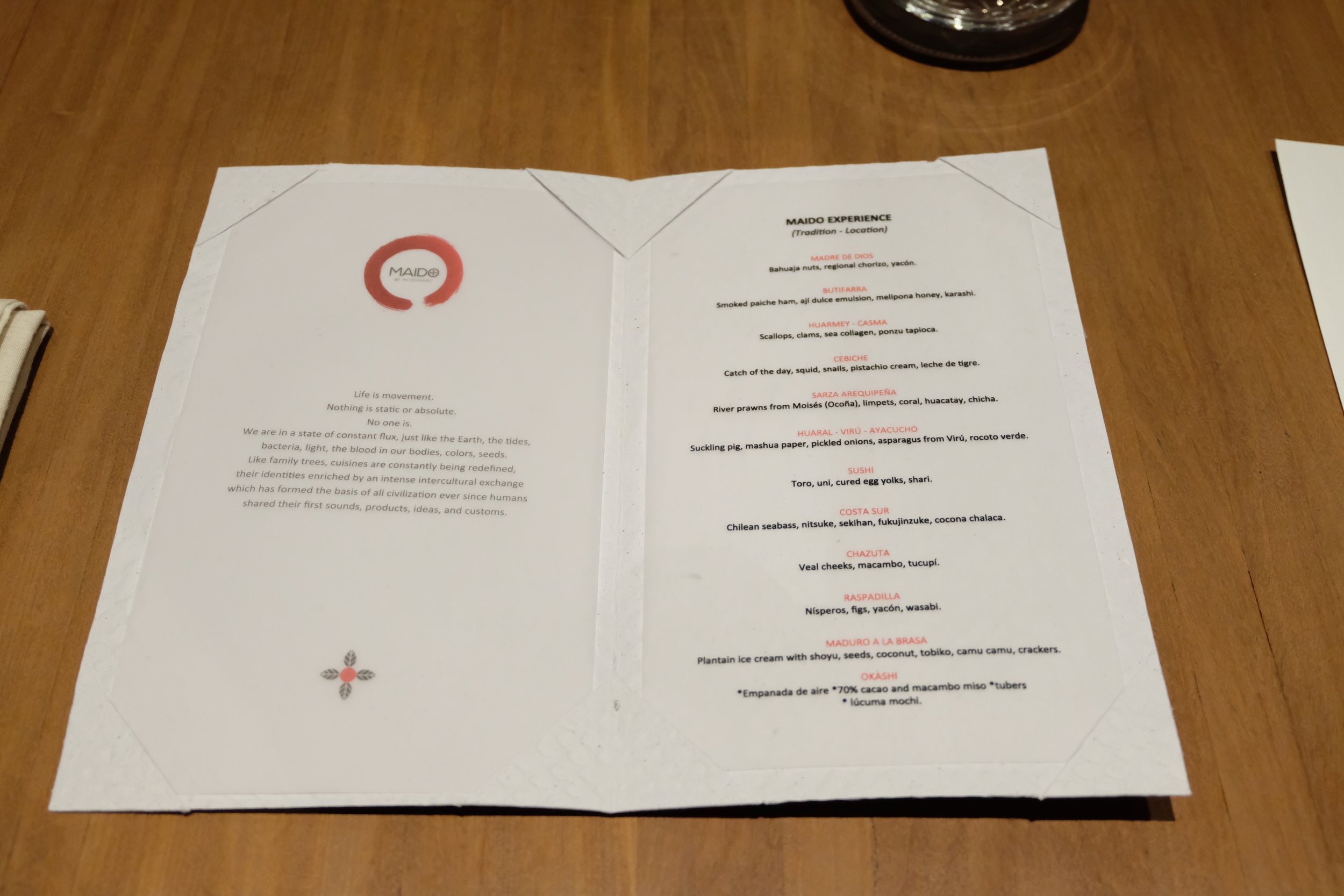
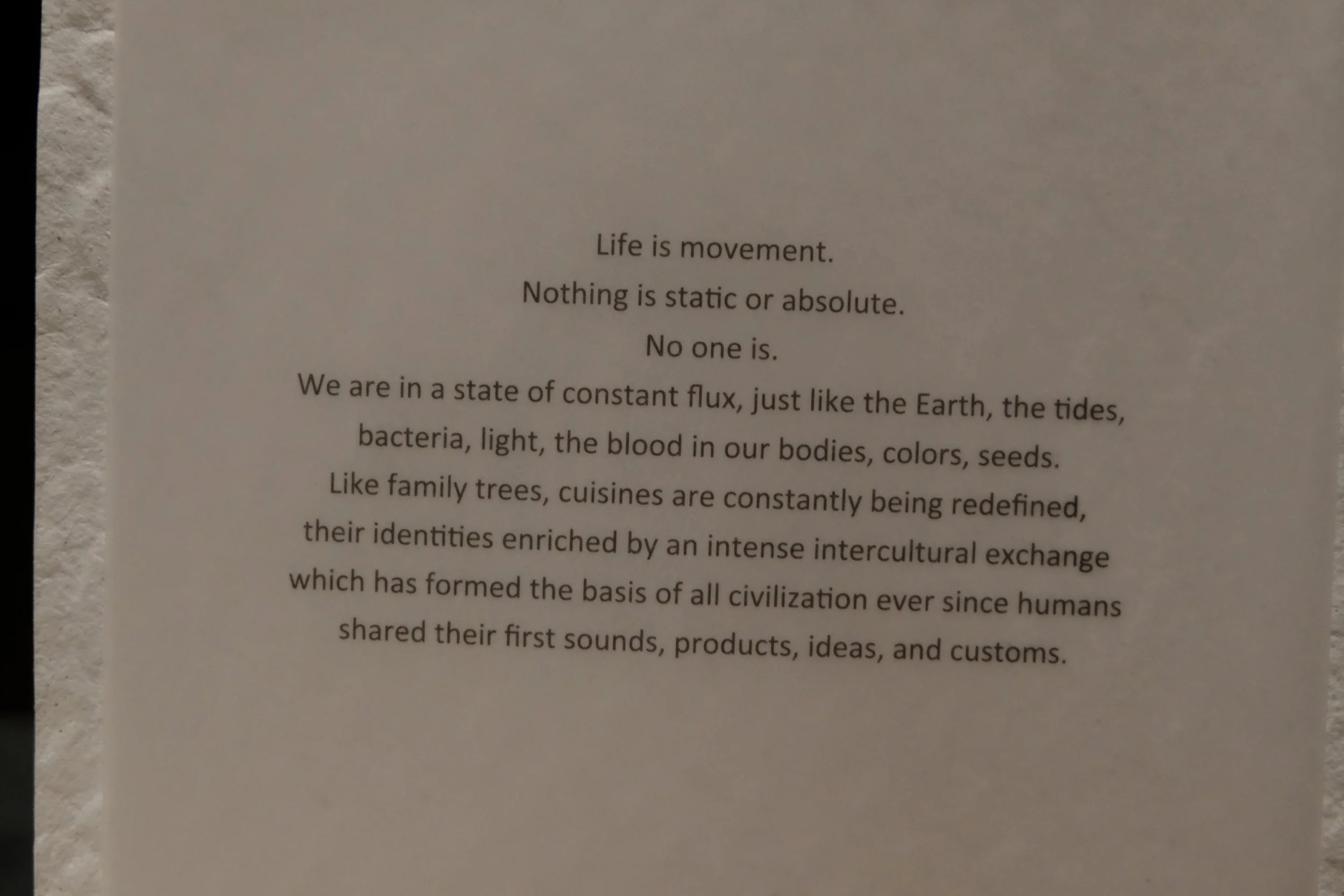
Upon opening the menu, you are greeted with a wonderful message from the team that talks about how life is never static. Everything changes and everything grows. The philosophy can be associated to how they approach Nikkei cuisine—in a way that there’s still new techniques to discover, new flavor pairings to conquer and new ways to improve the way we create memorable experiences. Globalization is changing our lives and enhancing our perception of food and approach to dining. Along with this change, our identity and culture follow.
__________
And so we start the experience. As expected, Maido, and other aspiring Peruvian restaurants, showcased Peruvian ingenuity through their choice of china, cutlery and serveware. These pieces have been developed from their rich history, dating back to more than 2000 years. I suggest you visit the Larco Museum in Lima when you get the chance. It opens up a whole entire universe to enlighten you of this country’s history.
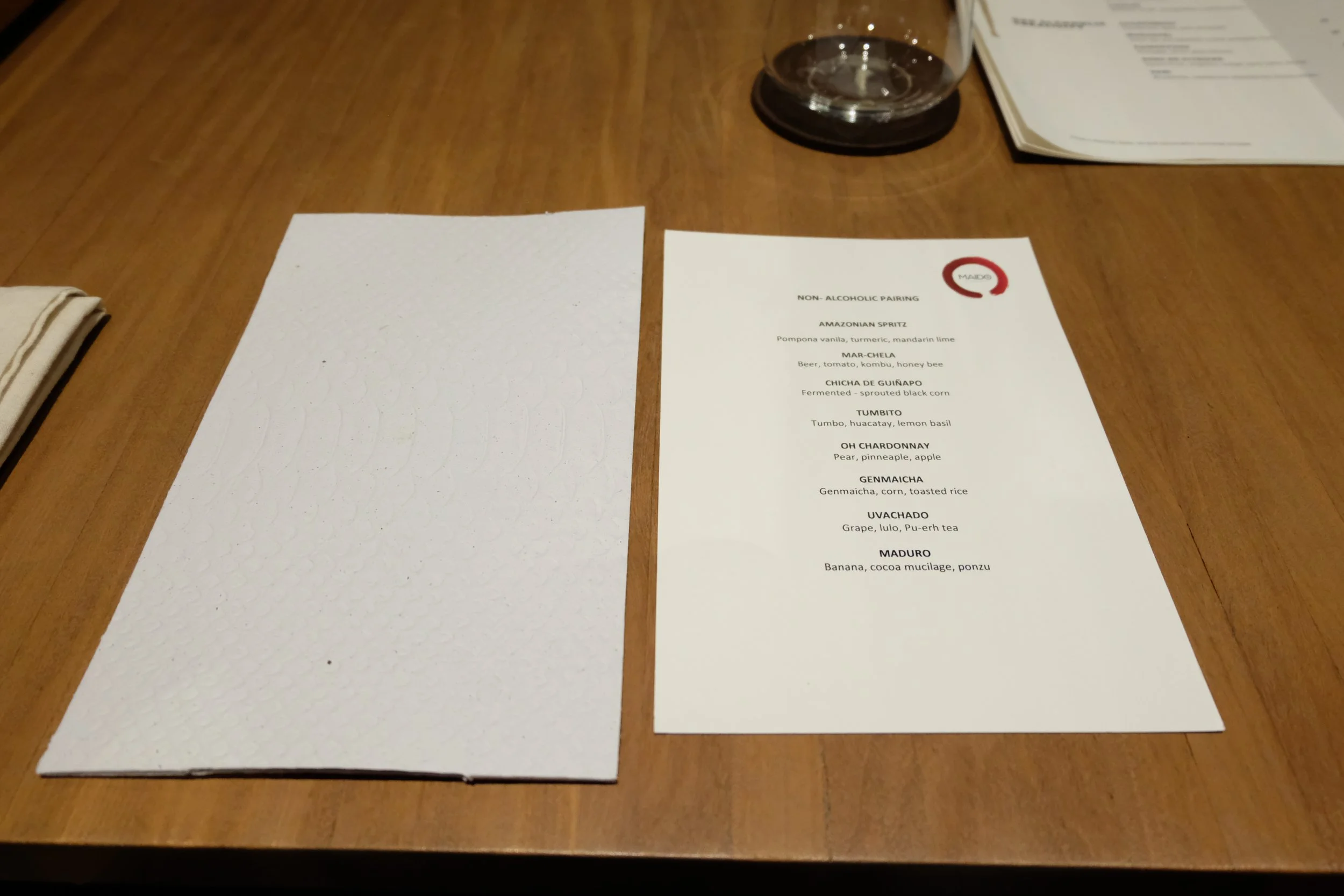
We opted for the tasting menu with a non-alcoholic beverage pairing.
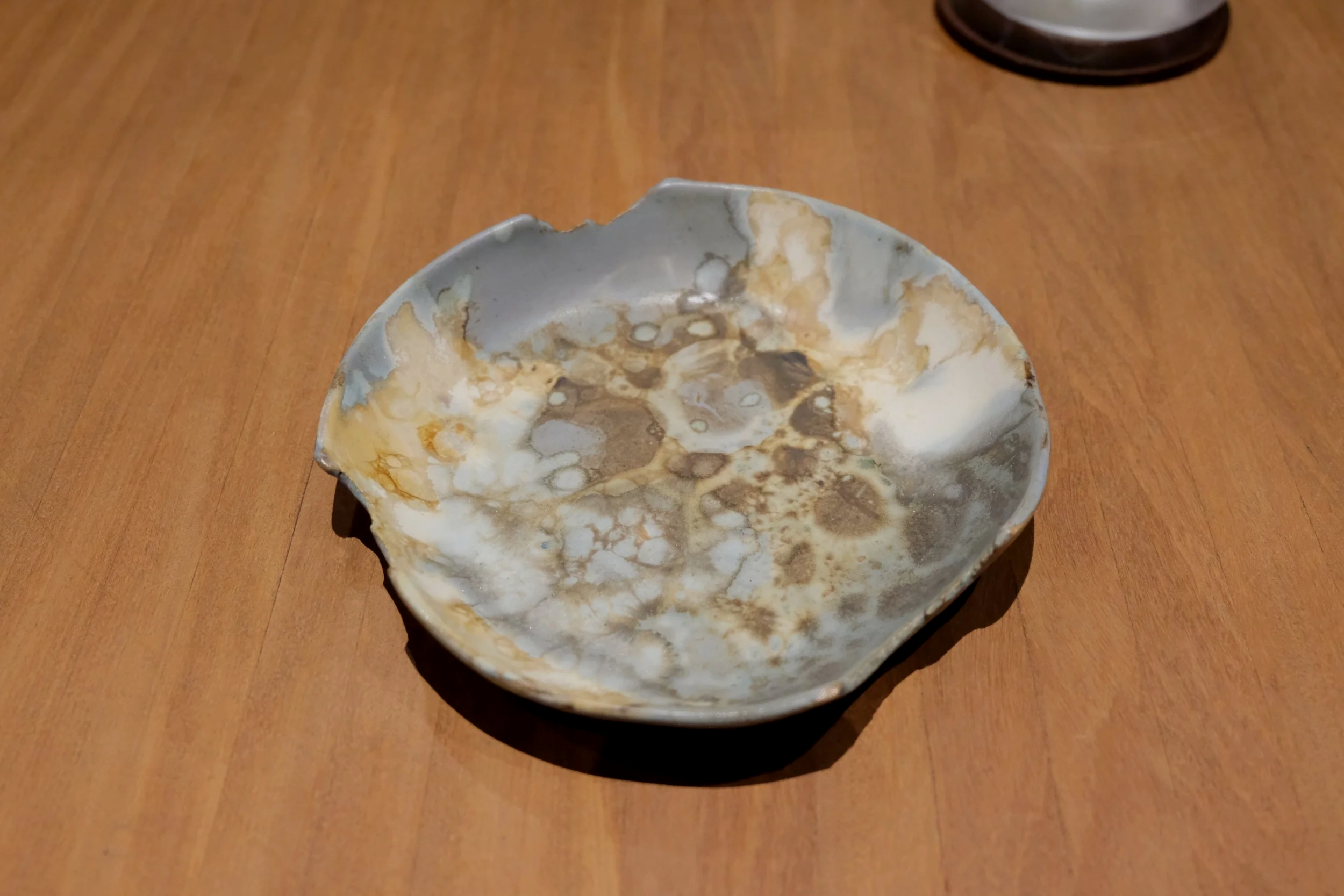
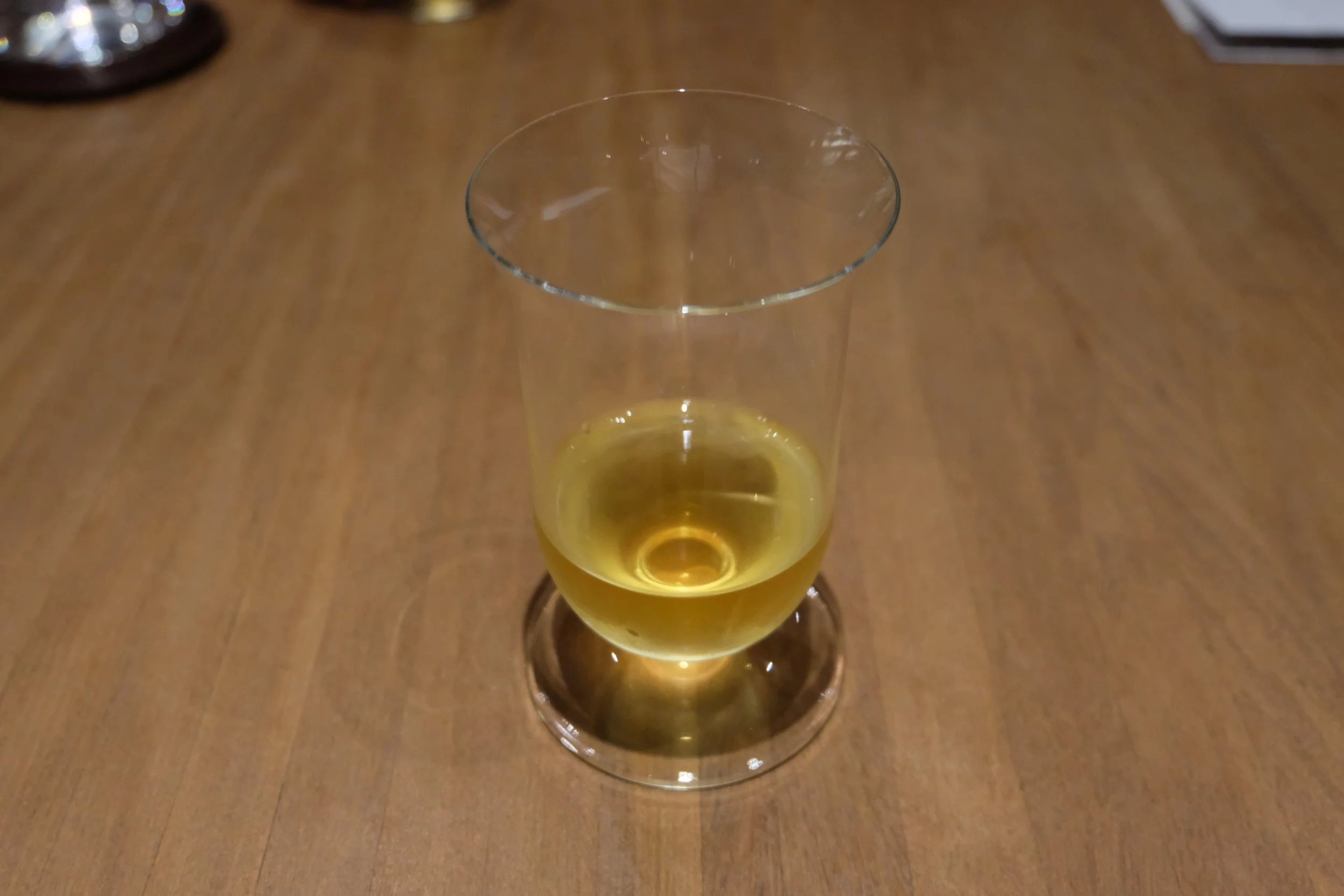
For our first beverage pairing, Amazonian Spritz with Pompona vanilla, turmeric and mandarin lime.
This was a lovely bubbly starter drink. The vanilla and mandarin were the dominant flavors. This paired with the first three courses.
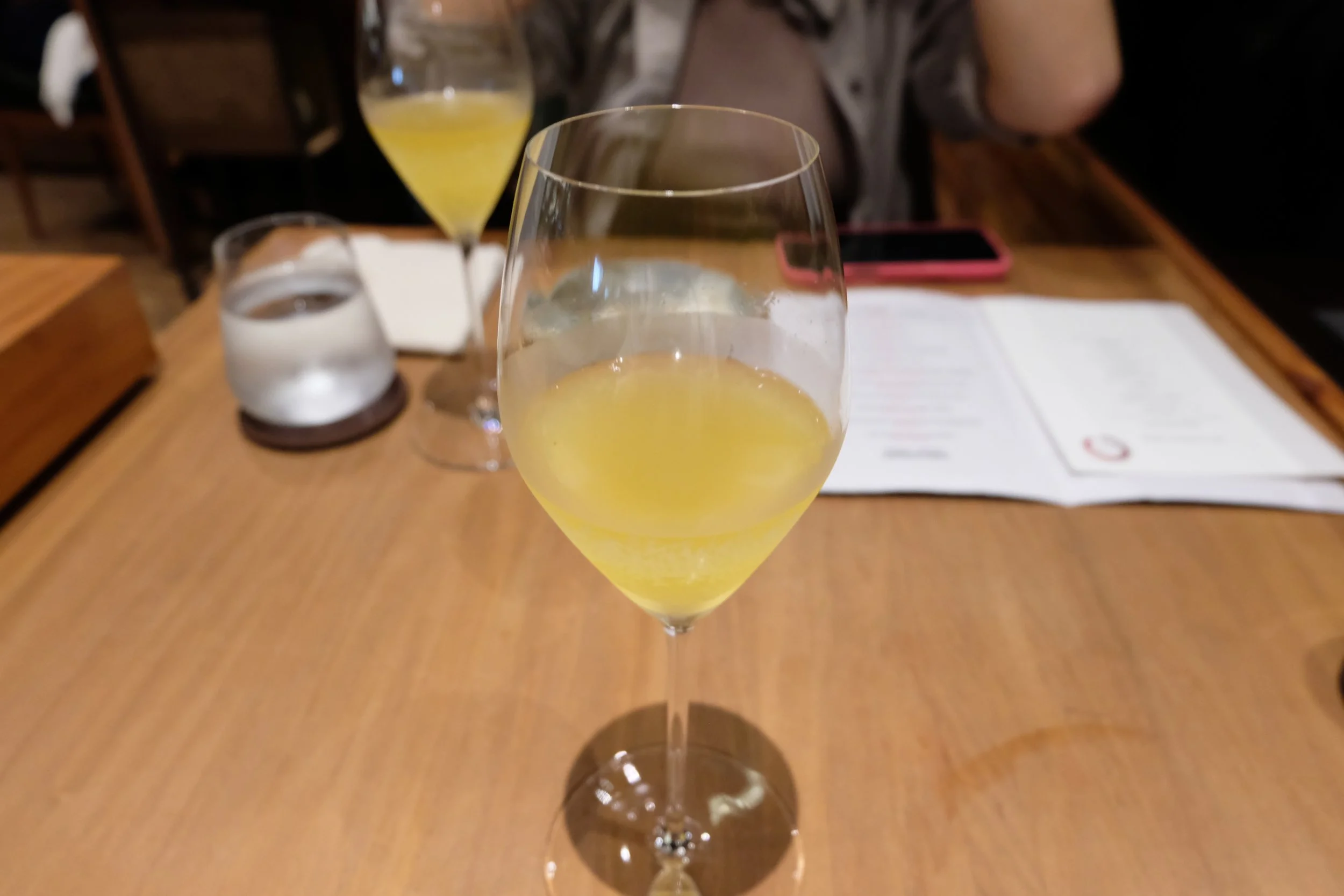
For the first wave of amuse, the team showed us the raw ingredients of what makes the dishes being presented. There were Peruvian Chorizo and Paiche Ham (a native Amazonian fish) as the ingredients under the spotlight. The presentations were native and modern, giving you a wow factor that would make you sit straight, drool and salivate.
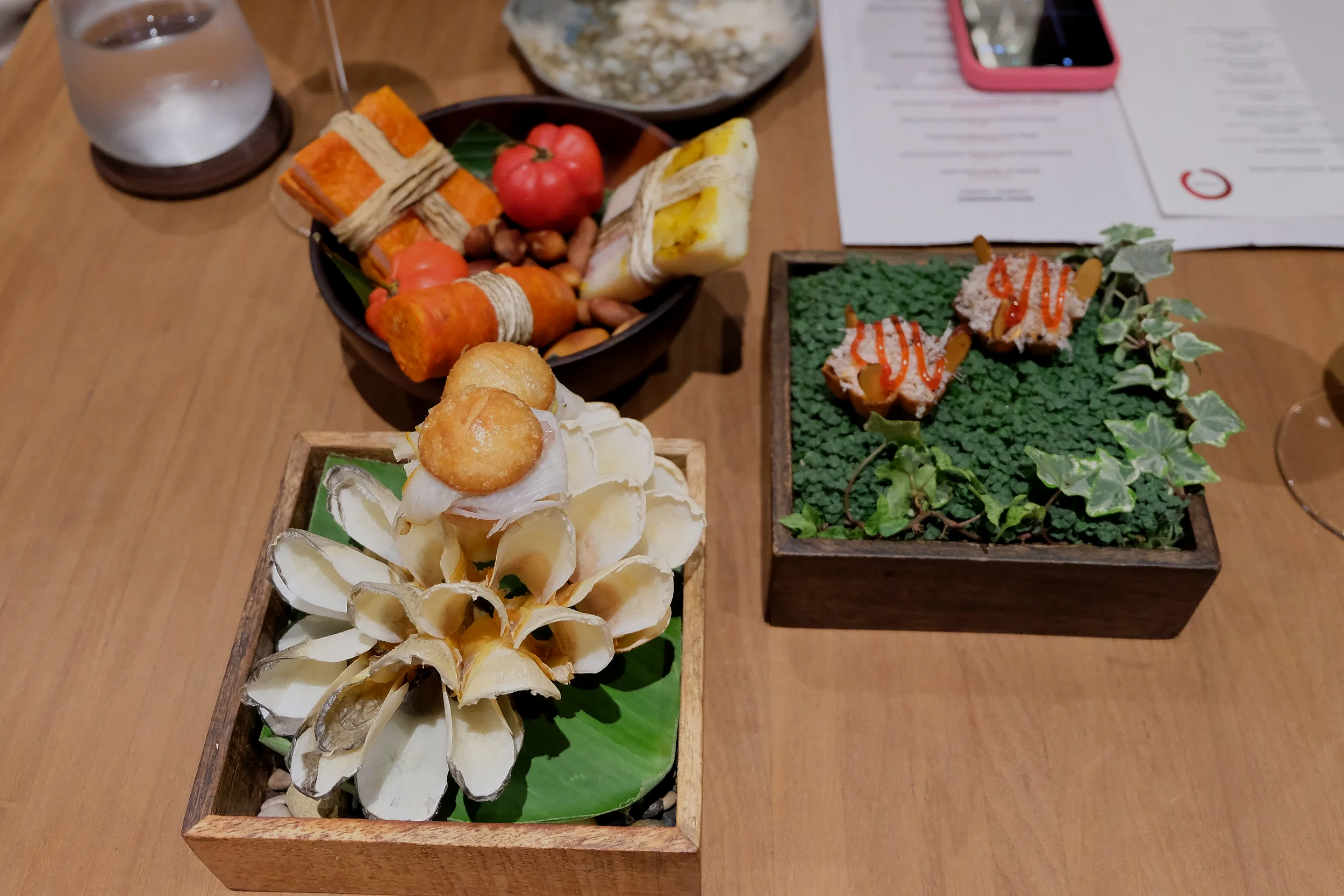
Below, is a mini slider called Butifarra, of Paiche that they turned into ham. Served with aji dulce emulsion, melipona honey and karashi (Japanese spicy mustard).
Butiffara is a common Peruvian term for a sandwich, usually served with pork.
Paiche is a highly versatile and neutral-flavored fish, similar to the texture of seabass. It was a smart move to cure and smoke it like ham as it will take any flavor in.
The ingredient display also showcased a local sweet mini pepper, similar looking to a scotch bonnet. They incorporated the aji dulce, melipona honey and karashi and turned these ingredients into sauce to compliment the slider.
The slider is served on a bed of fish scales, creating a captivating visual show-stopper which the photo doesn’t give justice to. This gives me Anaconda and The Land Before Time movie vibes. Mind you, Paiche is a huge river creature. HUGE. It takes at least two to three people to hold these mighty fish.
Quite surprisingly, the amuse didn’t taste like fish at all. If you close your eyes after taking a bite of this, your tongue might decipher it as pork or chicken. The bread was soft and chewy that complimented the entire dish. Smokey, mustardy and impactful.
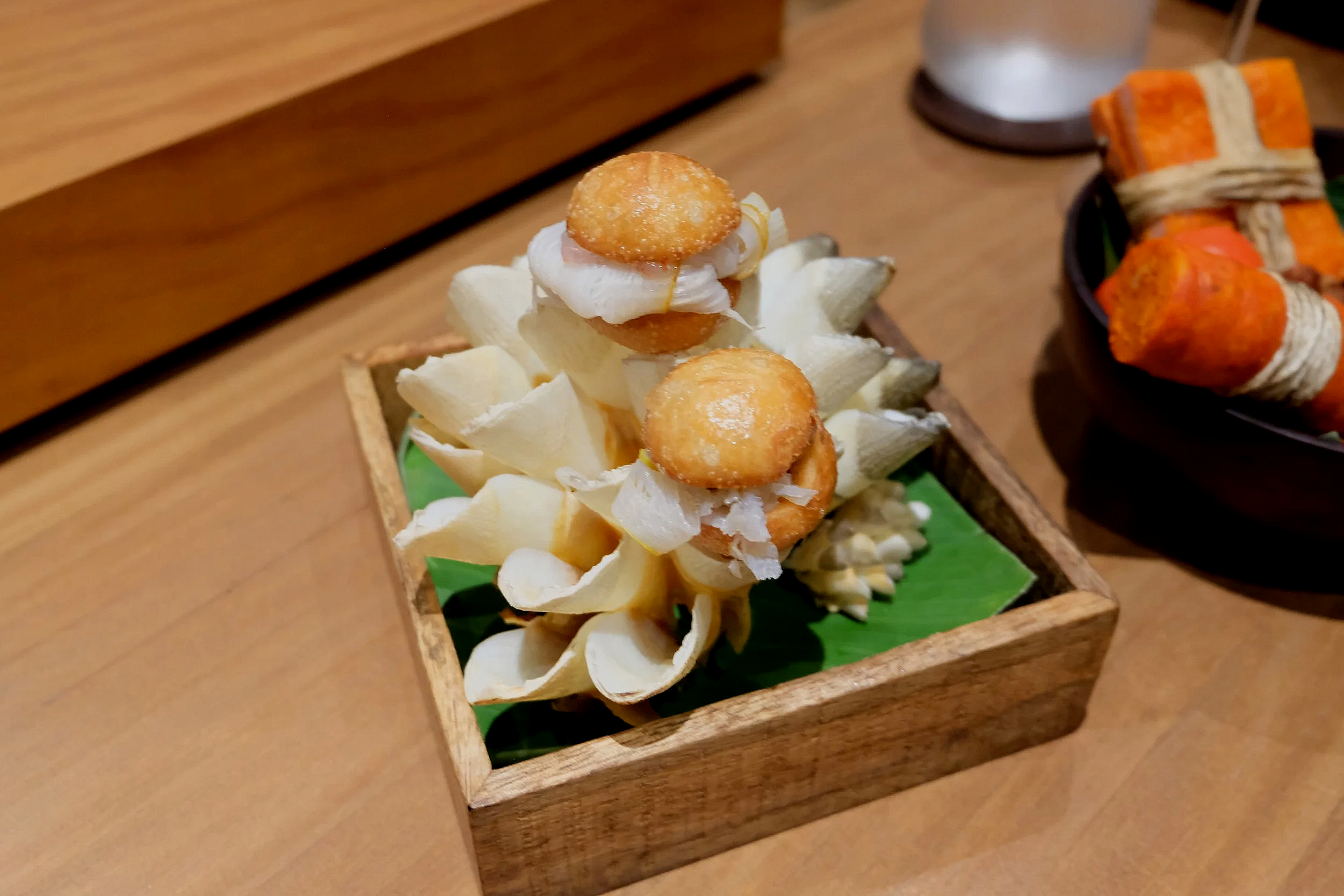
Up next, Madre De Dios
With Bahuaja Nuts, Regional Ham and Yacón
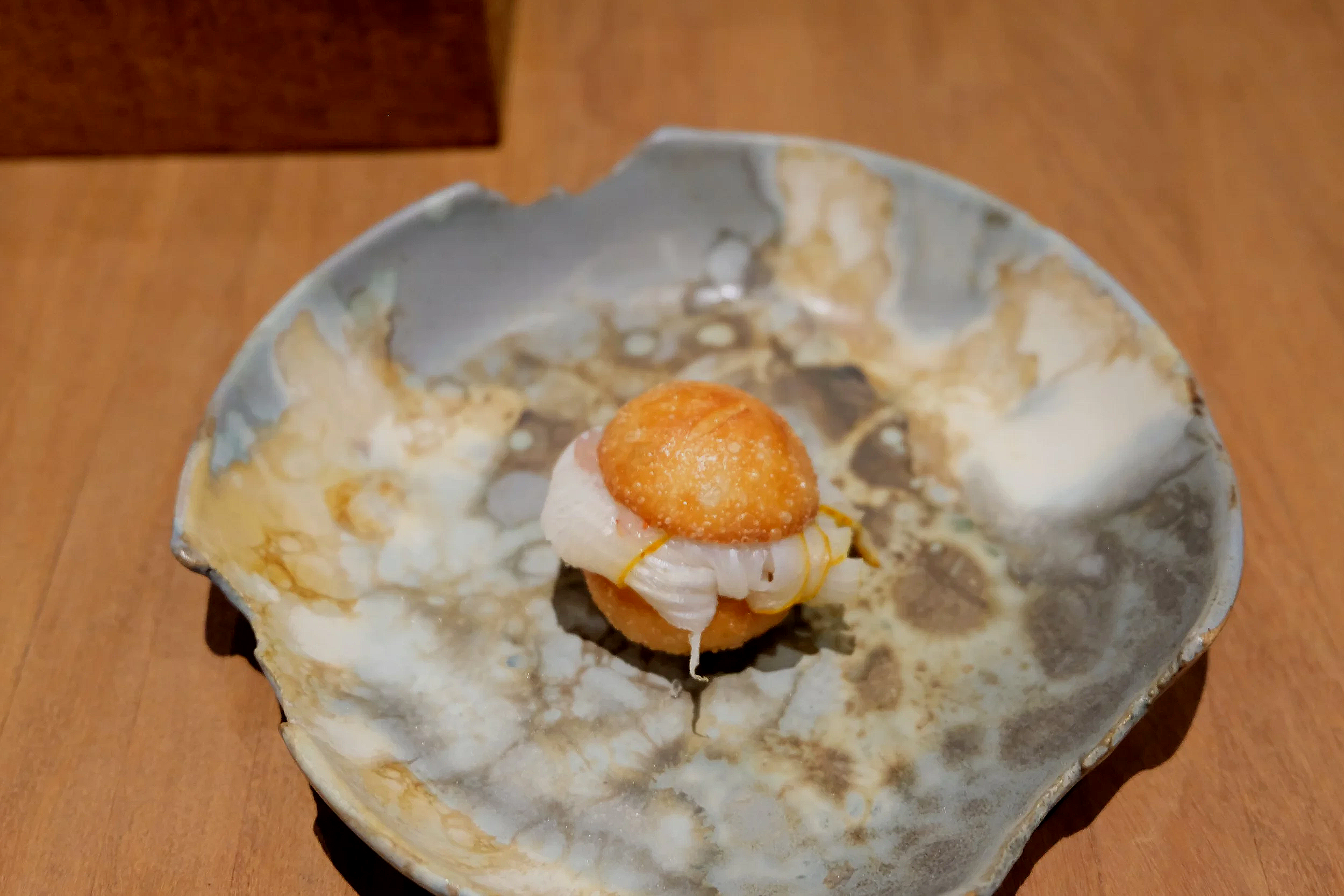
Yacón is a native root vegetable that I’ve already seen multiple times in different restaurants in Lima. They created a crispy tart shell out of it, added some pieces of chorizo, covered with Yacón shavings. Bahuaja nut slivers, similar to almonds, are added on top for added textural difference.
On both first-bites, you can taste some torched elements, something that you can only taste in Japanese cuisine, when an ingredient is intentionally being burned to get a quick smokey flavor.
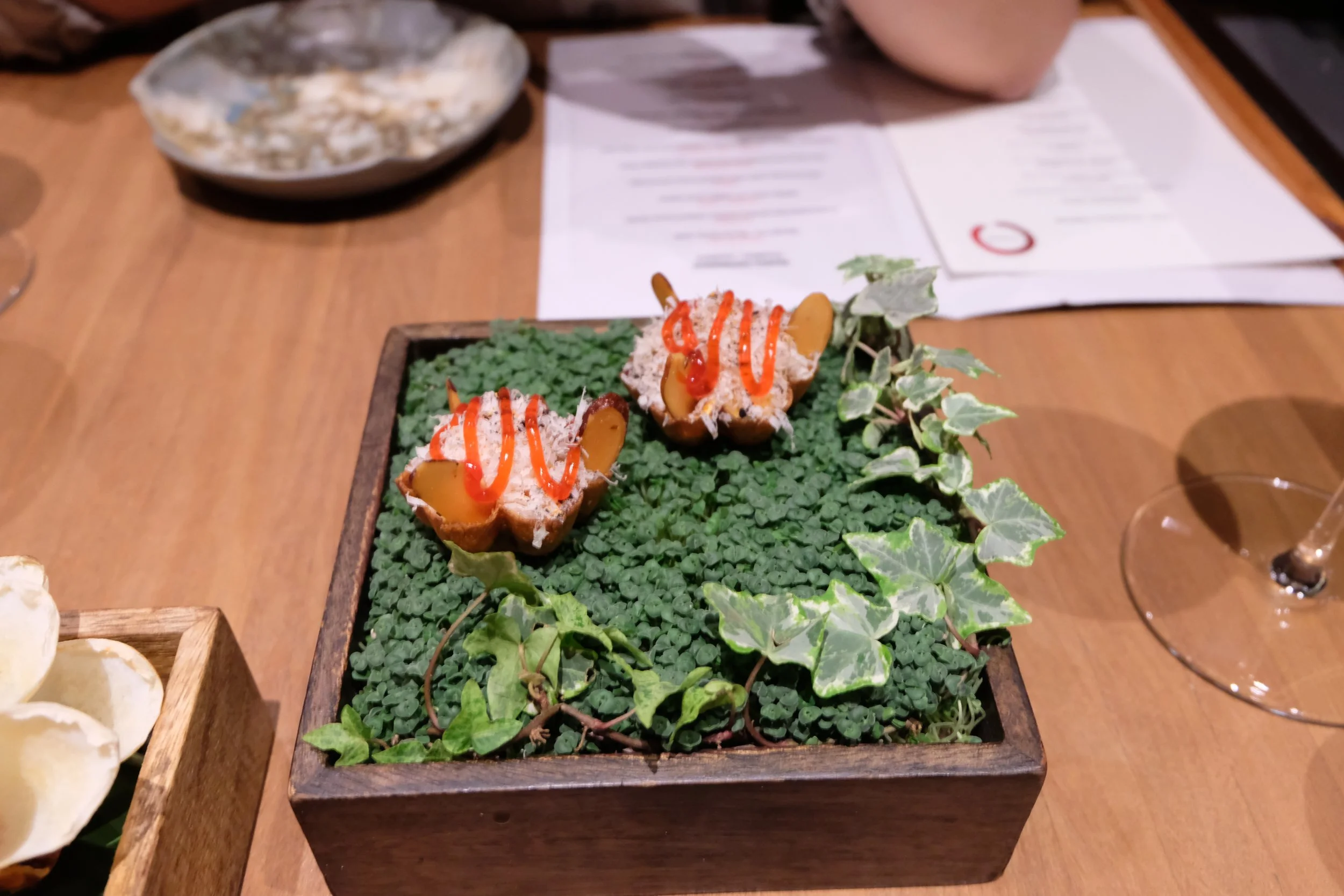
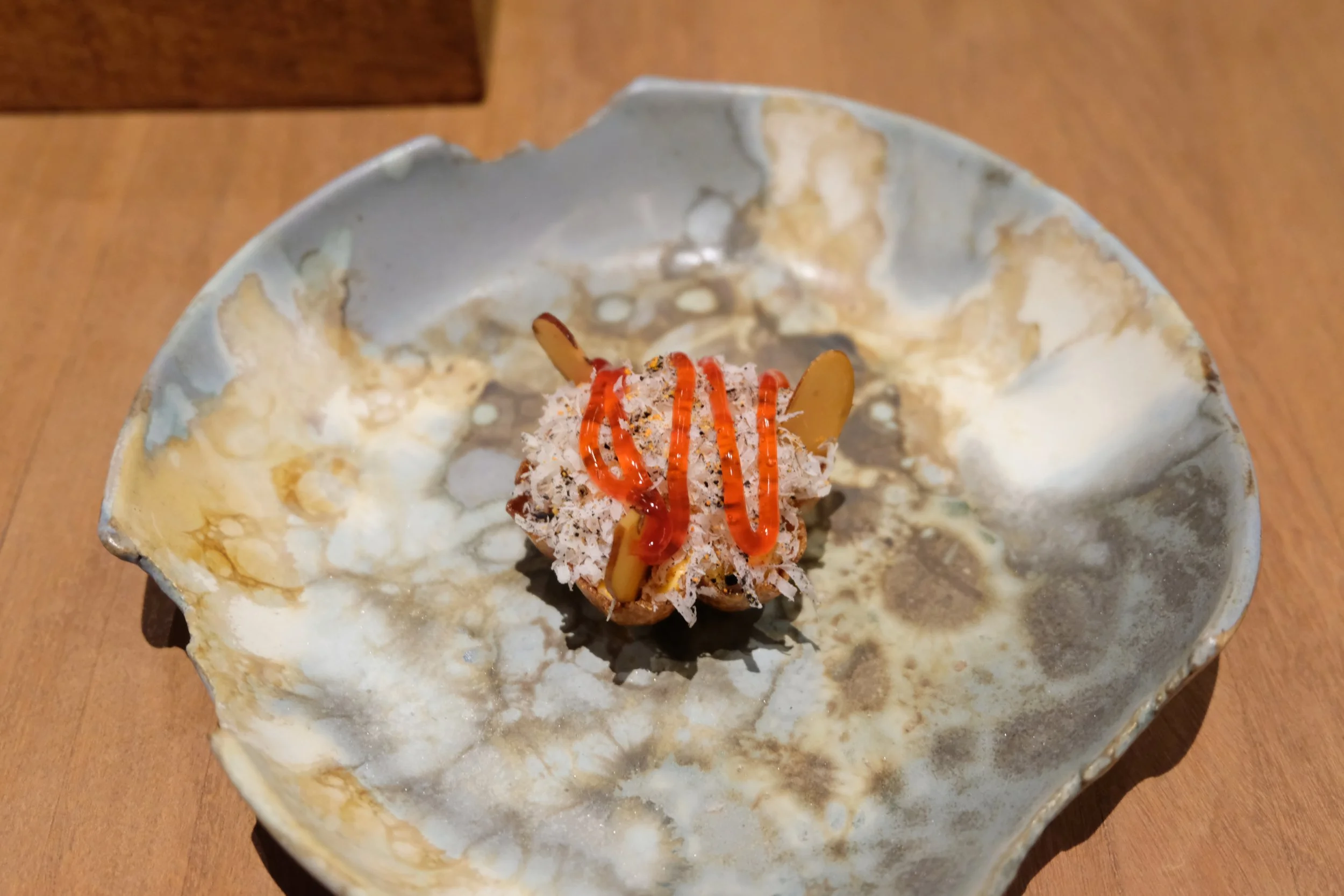
Next, Huarmey-Casma
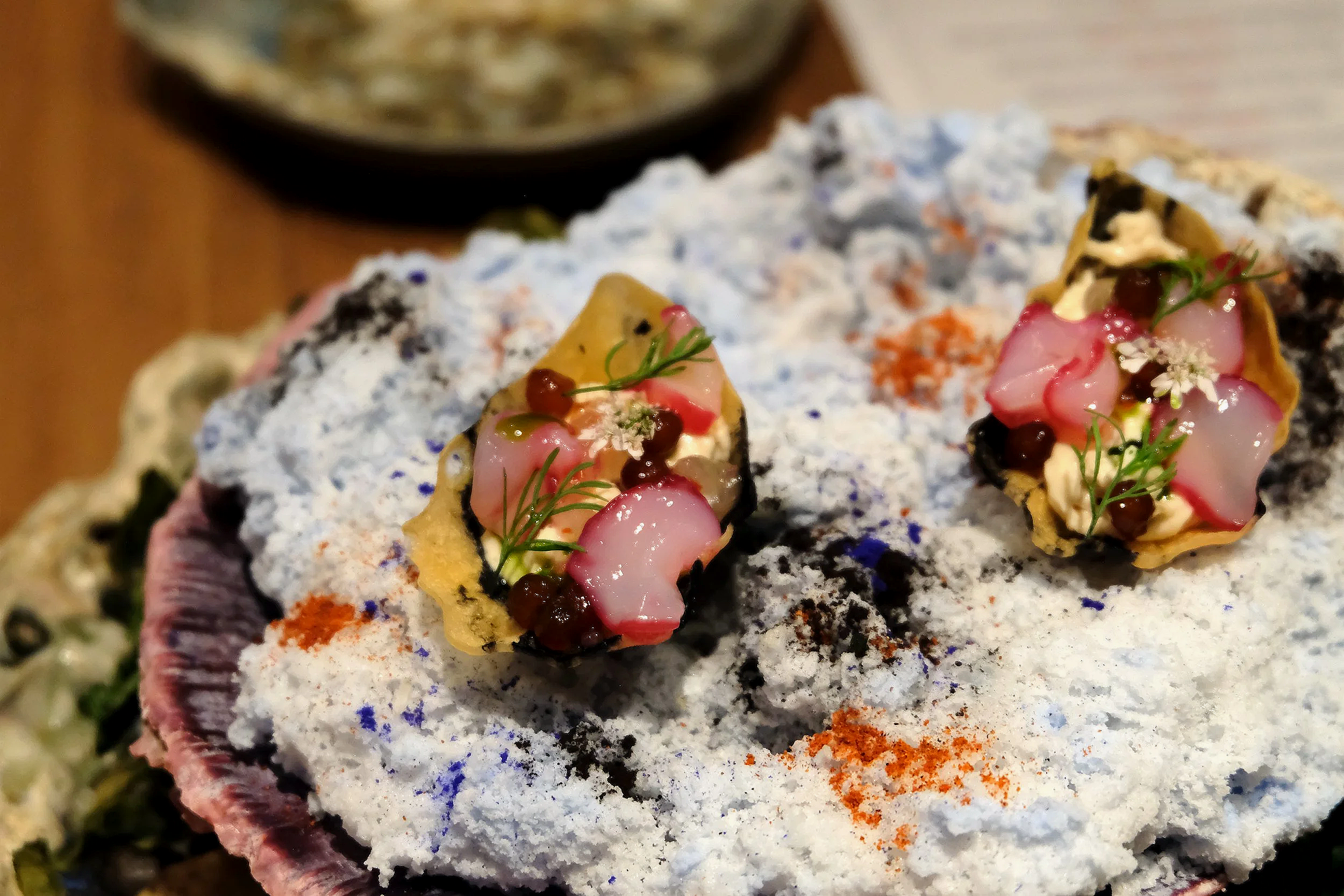
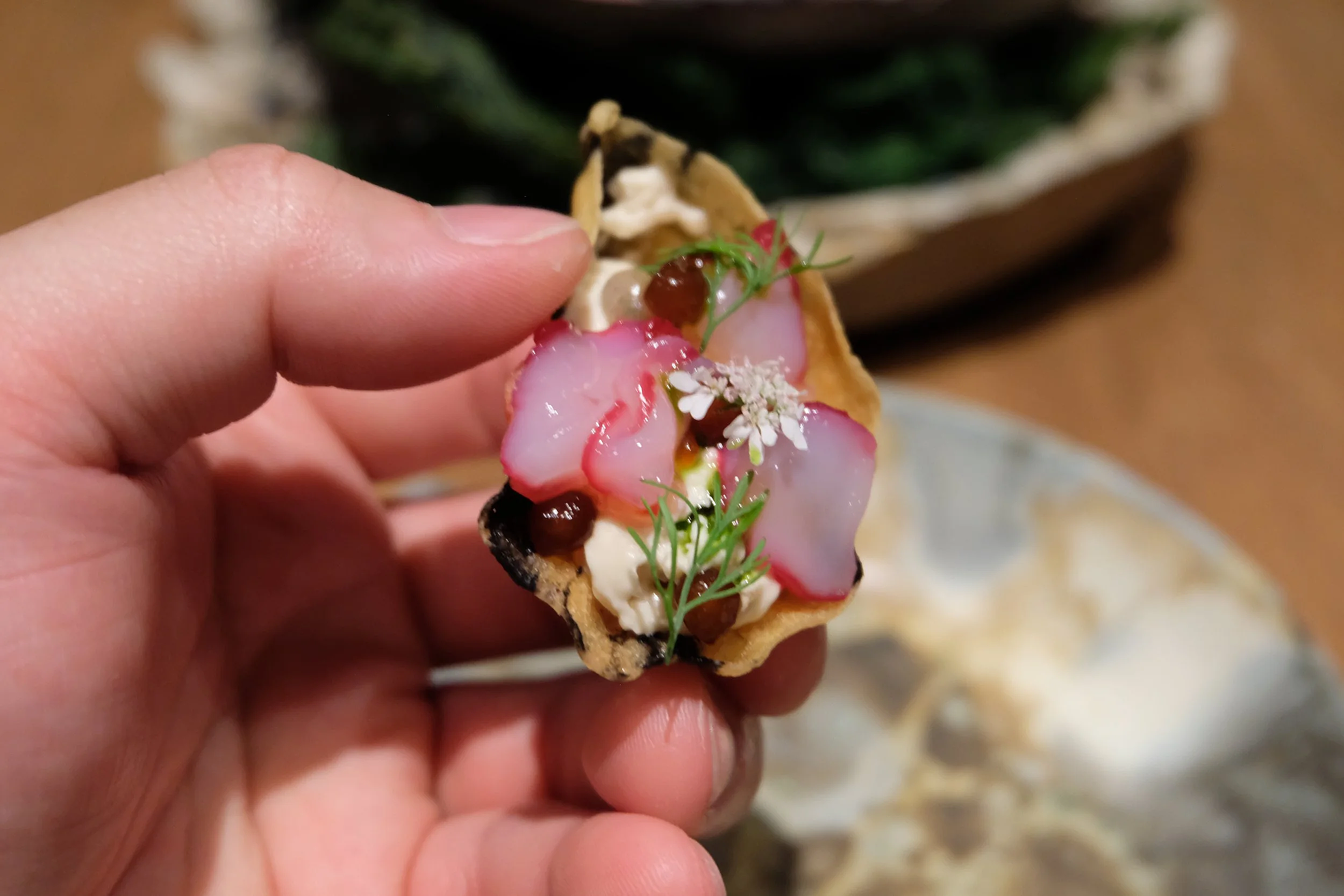
local bay scallops, clams, sea collagen, ponzu tapioca
Another visually appealing and tasty dish that didn’t disappoint. They created a tart shell in the shape of an oyster, then added a ceviche of scallops, clams and sea collagen. Something was torched as well and you can taste the sea from this bite. It had something bright that took it to the next level.
Amazing.
For our next pairing, Mar-Chela
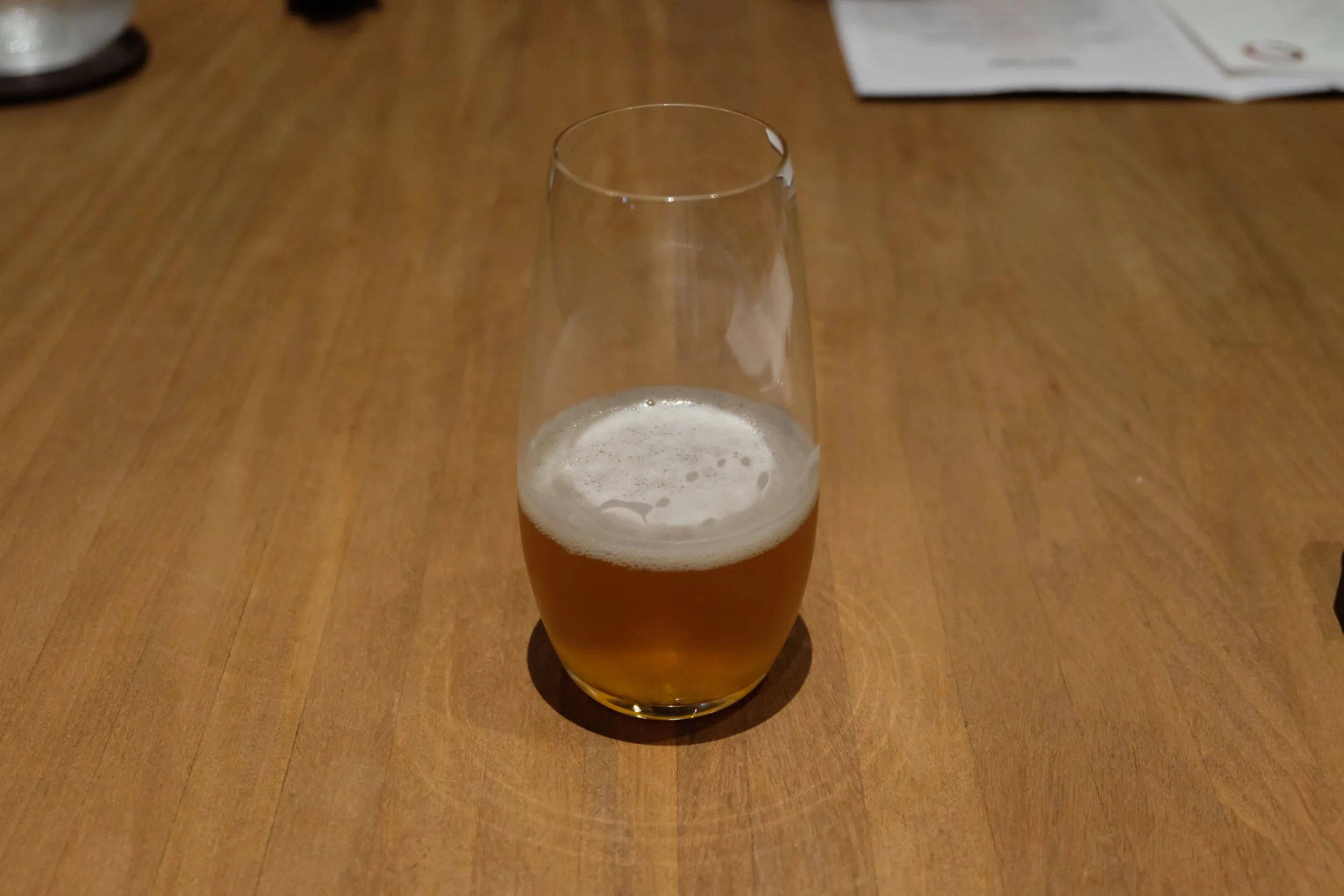
the team experimented on wanting to serve beer without the alcohol. They were able to achieve the IPA taste by combining Konbu, Tomato and Honey Bee. Mar (which is the sea) is represented by the infusion of Kombu or japanese seaweed in the drink. While Chela, is a term for beer or cerveza in spanish. You can definitely taste the tomato, kombu and honey if you pay attention while sipping. Pretty cool!
Paired with the Mar-Chela is the Cebiche.
FYI, Peruvians pronounce Ceviche with a B. I’m not spelling it wrong.
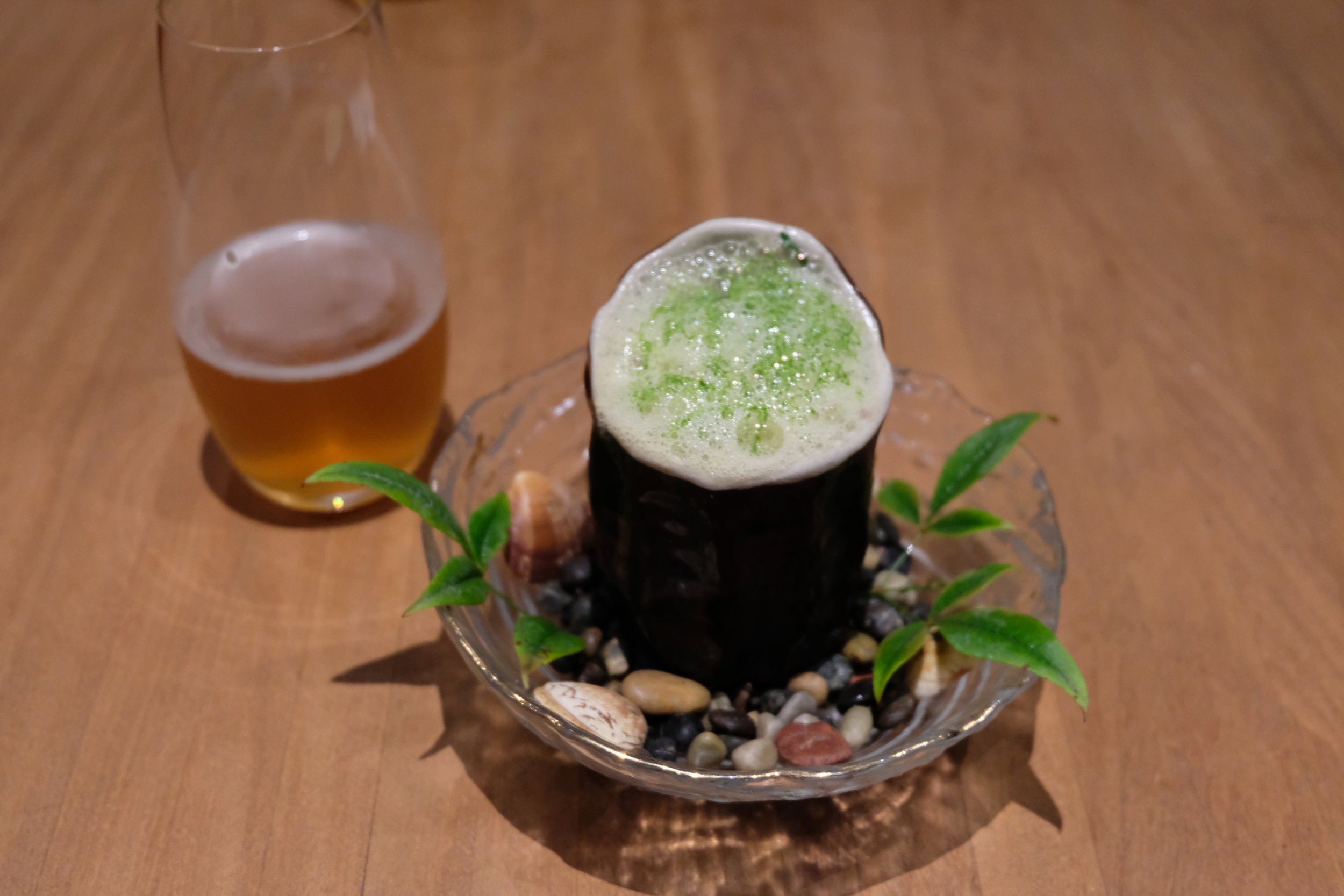
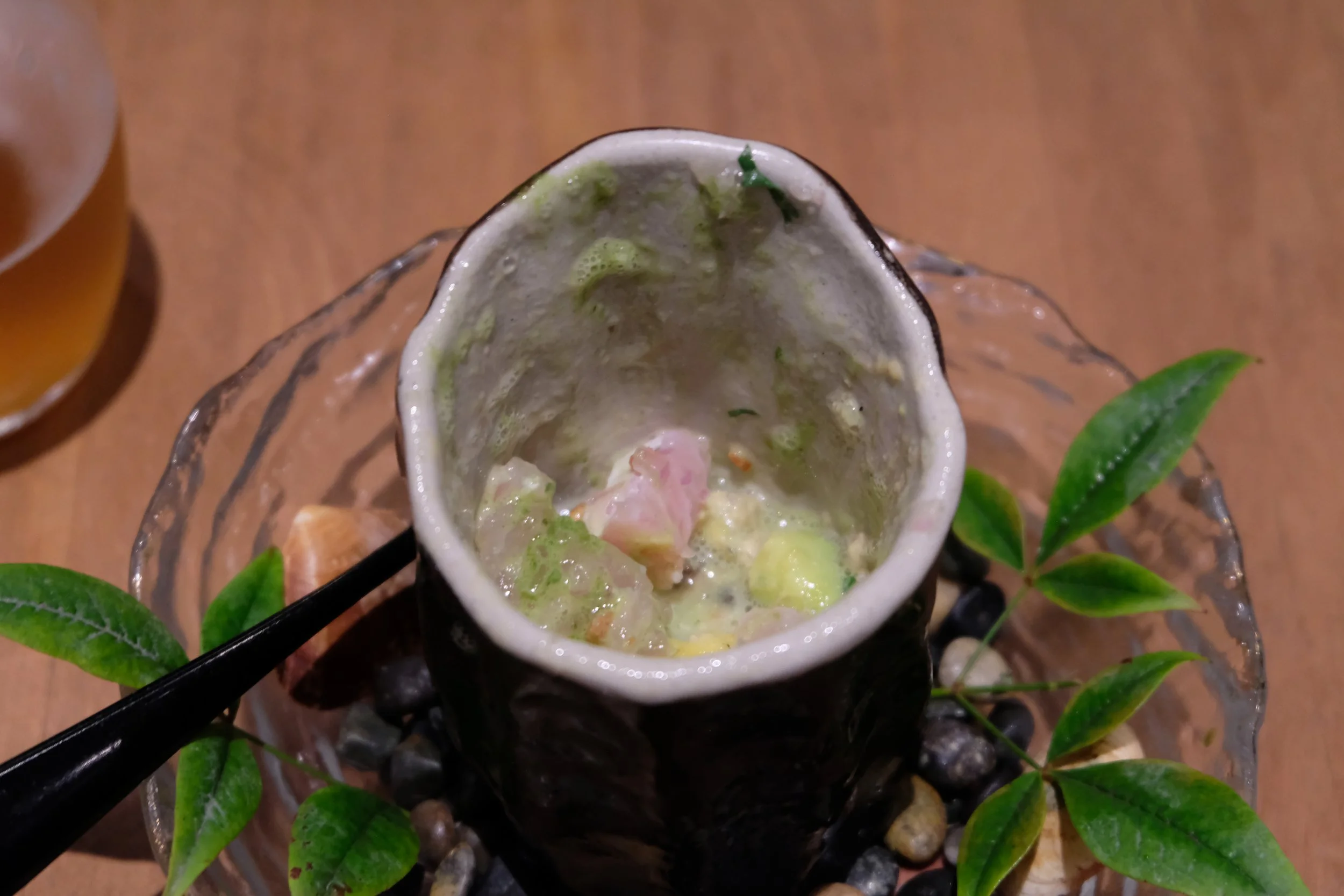
The dish contained the catch of the day, squid, snail, pistachio cream and leche de tigre.
The server instructed us to start from the bottom and scooping all the way to the top. The pistachio cream lends creaminess to this dish as a substitute to the typical sweet potato. To add another dimension, the leche de tigre was aerated to produce a light foam that really, really went well with the overall dish and juice pairing. 9/10.
Chicha De Guiñapo, Fermented Black Corn
Chicha is a fermented corn product widely used in Peru. Since there are at least 3000 varieties of corn in Peru, one couldn’t help but to experiment to see where it leads the curious.
This delivers a strong corn flavor with a bit of tartness.
Sarza- Arequipeña
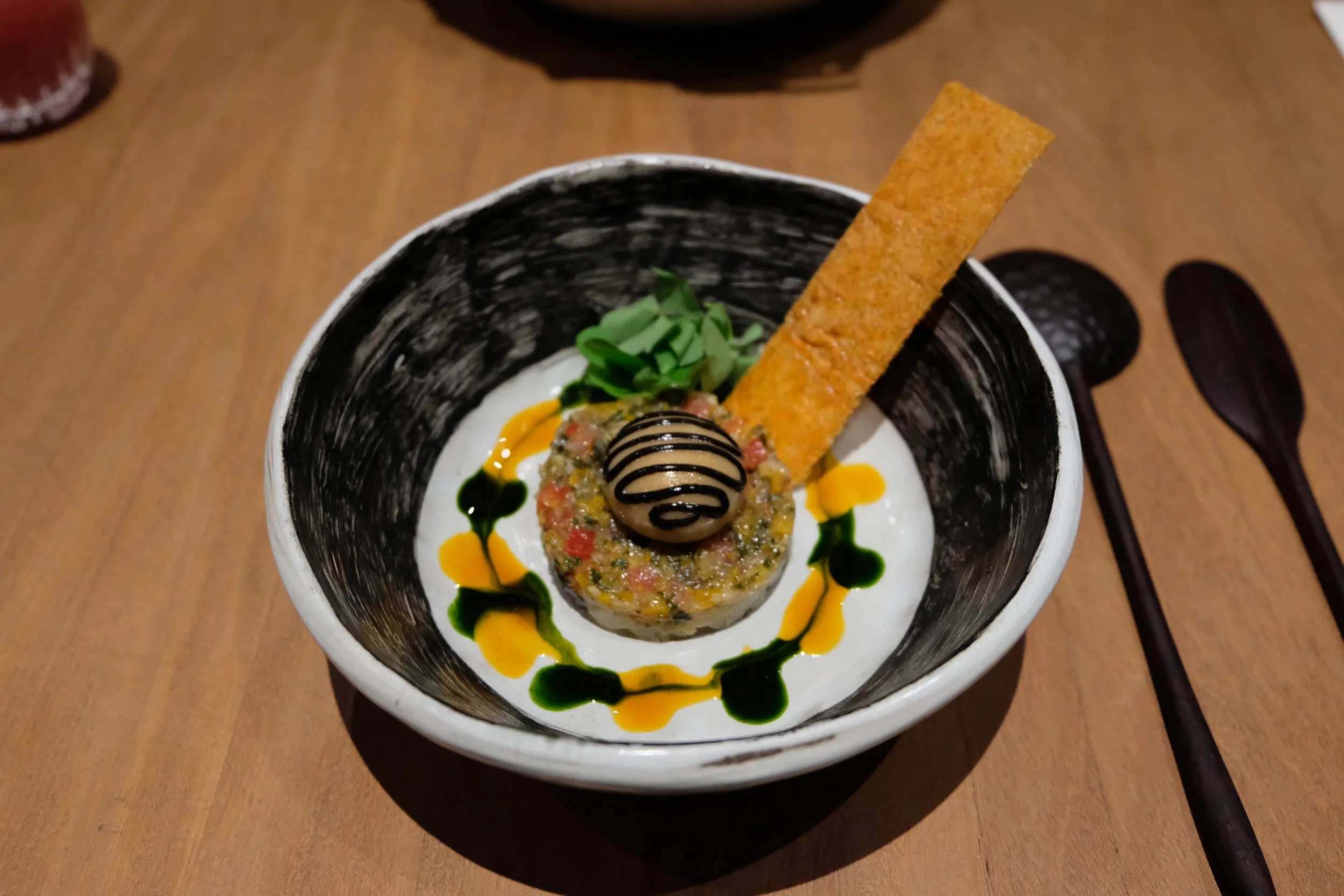
River Prawns from Moises (Ocoña), Limpets, Coral, Huacatay and Chicha
These prawns come from Arequipa, south of Lima. They look like crawfish, but without the nasty smell and taste (don’t hate me. I have bad memories with crawfish).
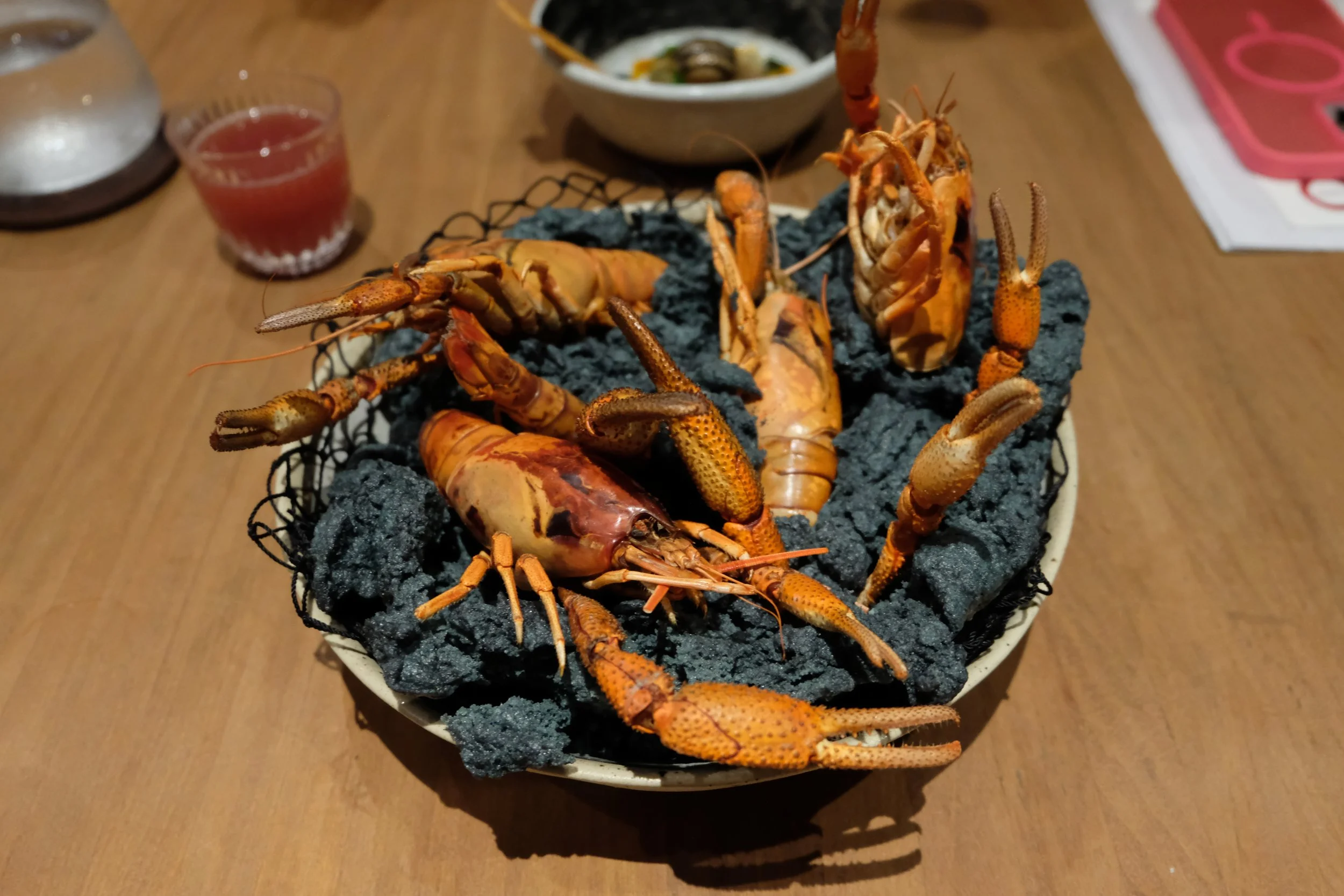
They created a tartare made with the River prawns, snails and limpets. The sauce was made of coconut, another common theme in Peruvian cooking. While visually stunning, I struggled to find the wow in this.
Pairing with the suckling pig taco is the Tumbito.
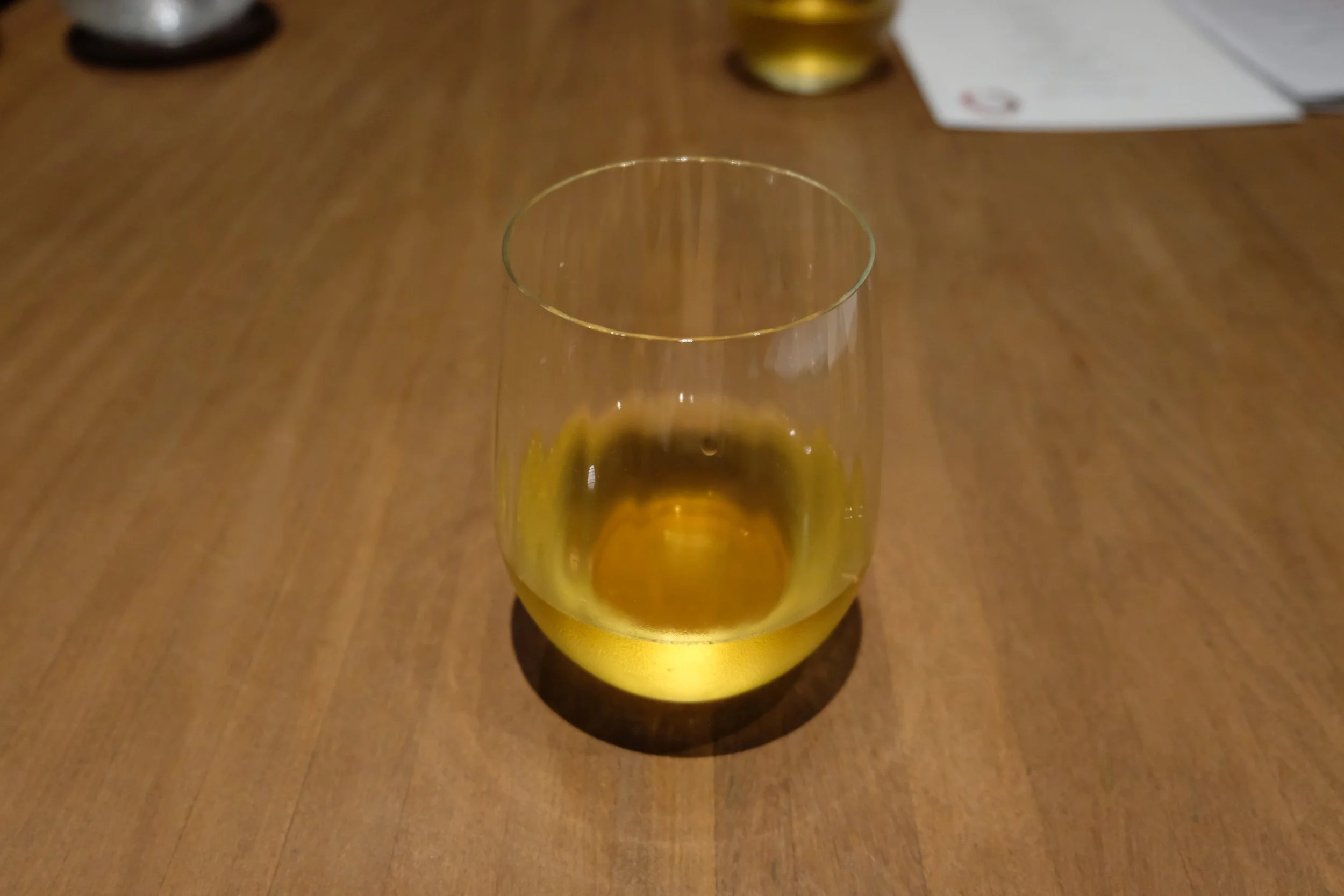
Tumbo, Huacatay and Lemon Basil
Tumbo is a banana passionfruit found in Peru that is pretty much utilized to make desserts, cakes and jams. It almost tastes like vanilla.
The addition of huacatay gives a floral and peppery taste.
Lemon basil gives it freshness.
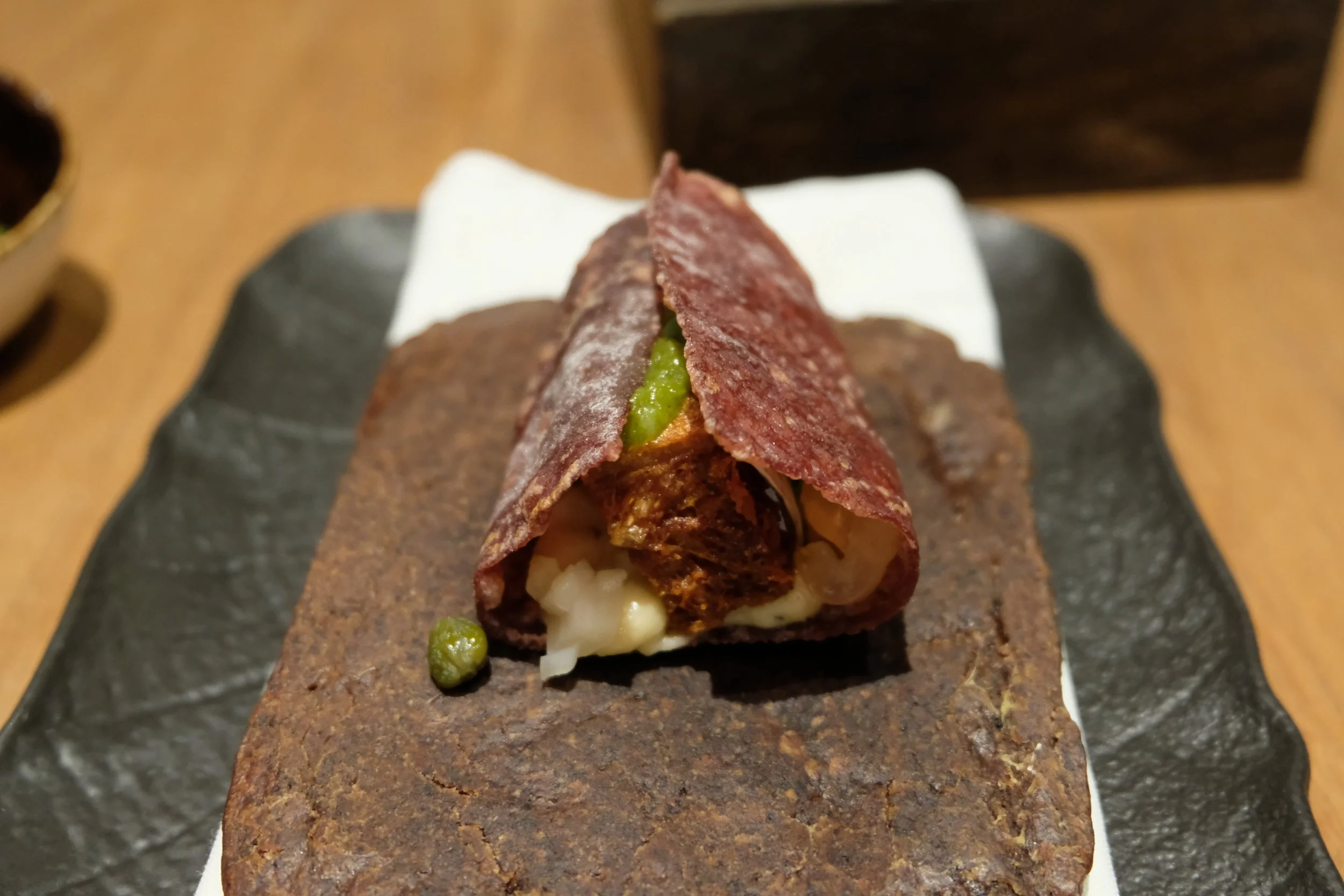
One of the best bites of the experience, Huaral-Virú-Ayacucho
A taco made with suckling pig, mashua paper, pickled onions, asparagus from Virú and Rocoto Verde Sauce. The presentation and flavor were amaziiinnng.ngngngngng….ngngngng..ng.
The server instructed us that the Rocoto (chili) verde sauce was going to be really hot, but it wasn’t (coming from a thai benchmark for spiciness, so be careful). We downed that dish like there was no tomorrow. The suckling pig was extremely light, didn’t leave any greasiness at all.
We were instructed to add the rocoto in the taco and roll it. I can eat 6 of these and head to the hospital with high blood pressure, happy.
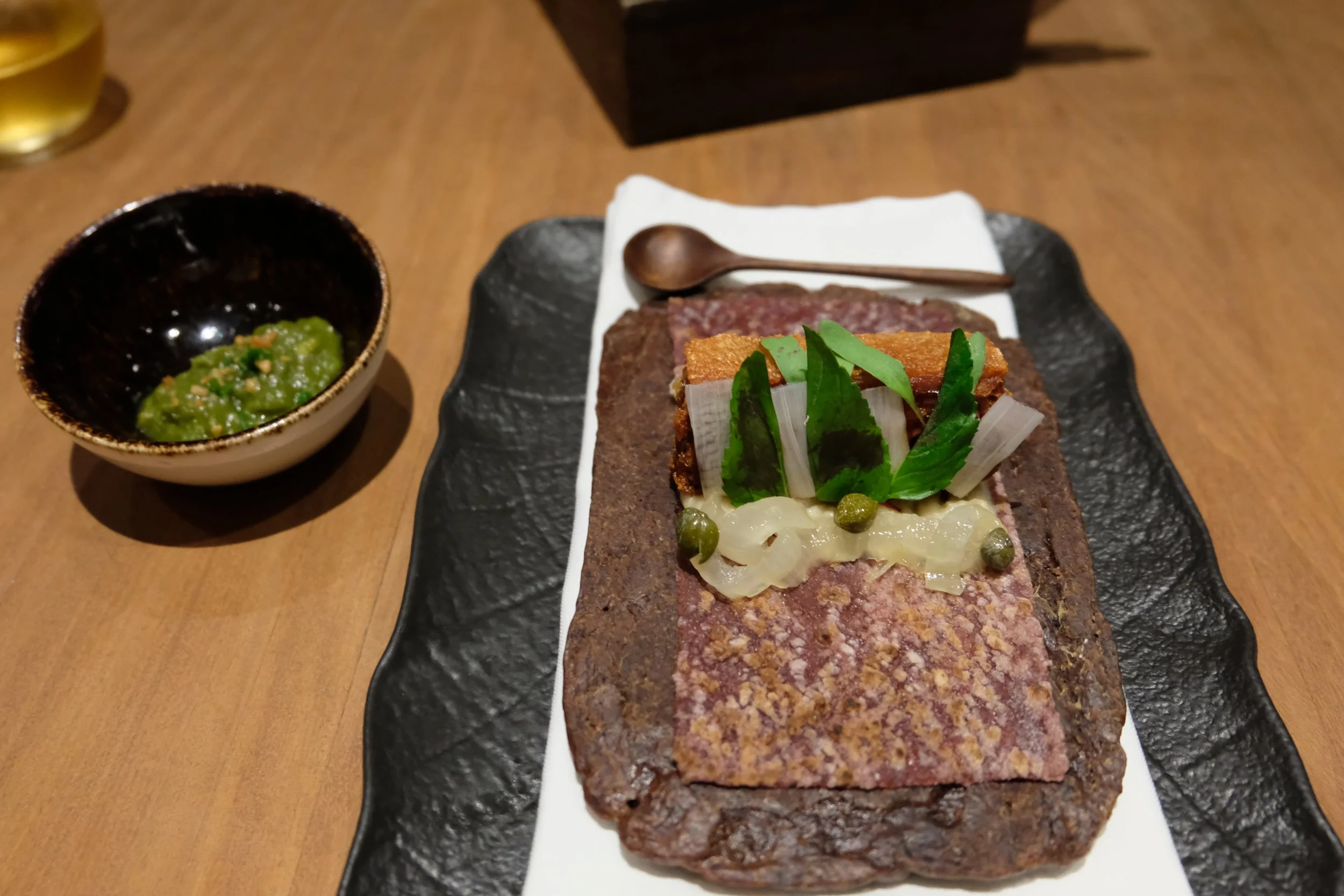
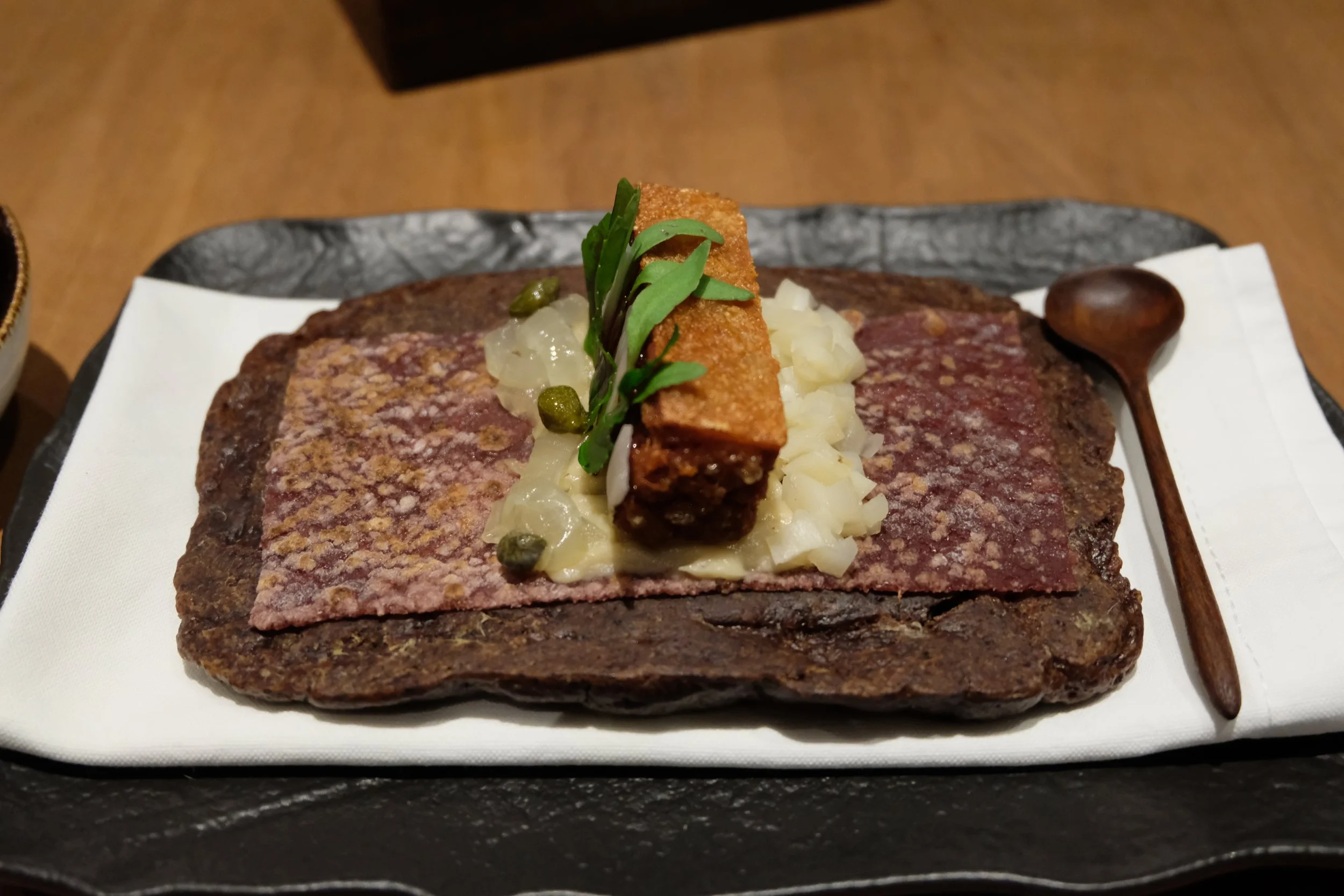
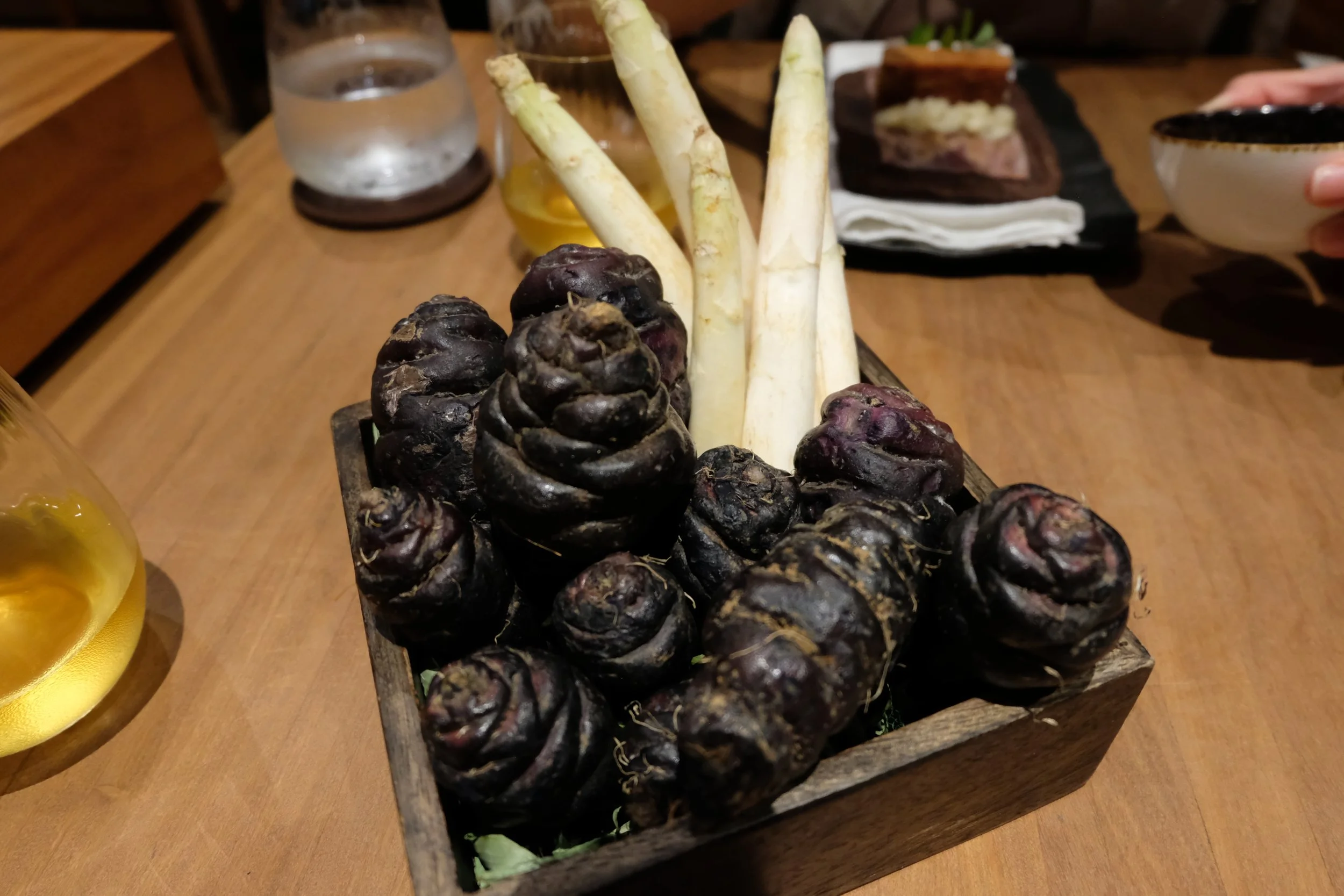
Mashua is a type of root vegetable and they take pride in sourcing amazing white asparagus that grows locally. The amazing thing about dining in high end restaurants in Peru is that they make sure to show you the source ingredient(s).
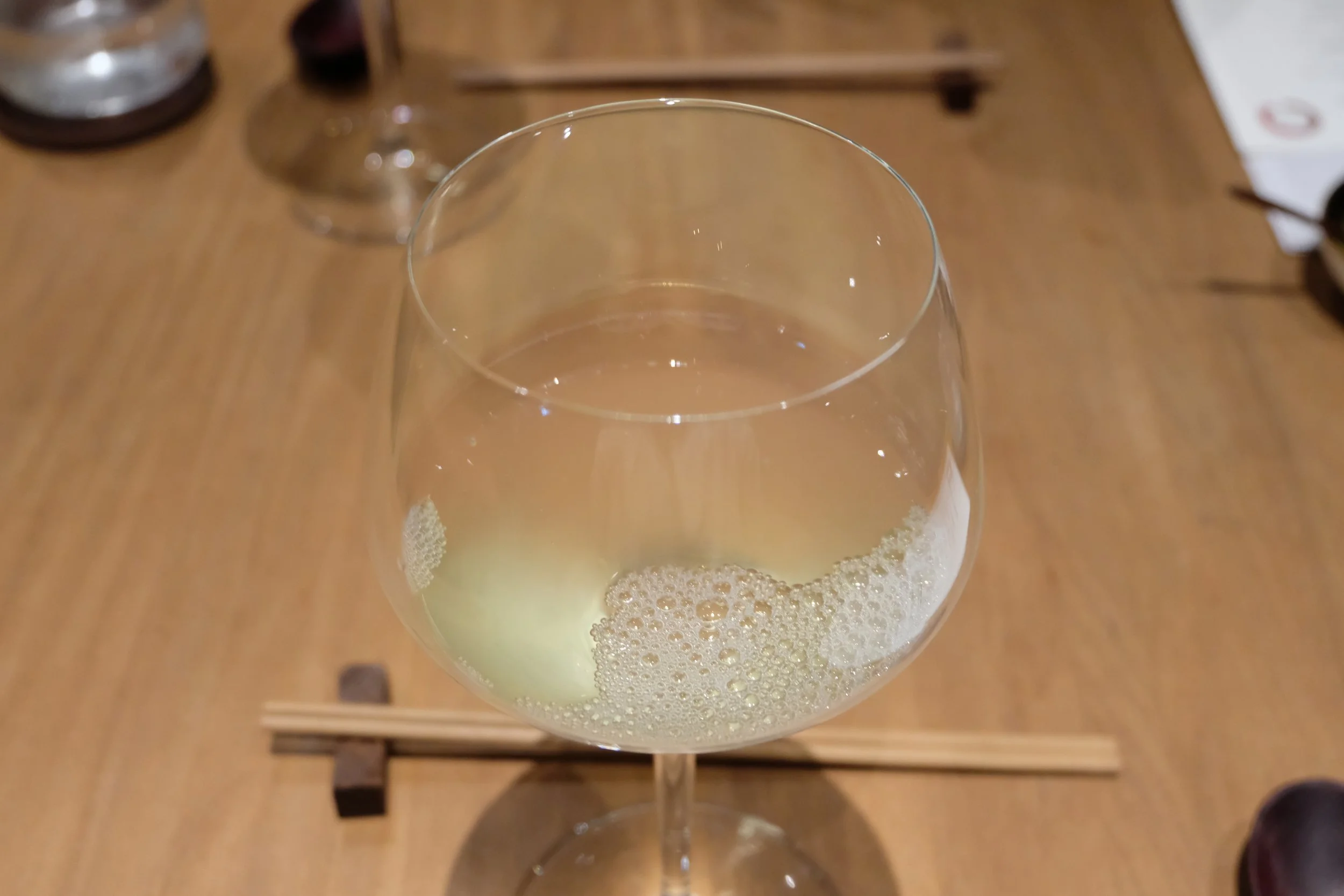
Next pairing is Oh Chardonnay
Pear, Pineapple and Apple
They wanted to create a style of drink that packs the same flavor like a white wine. This is their homage.
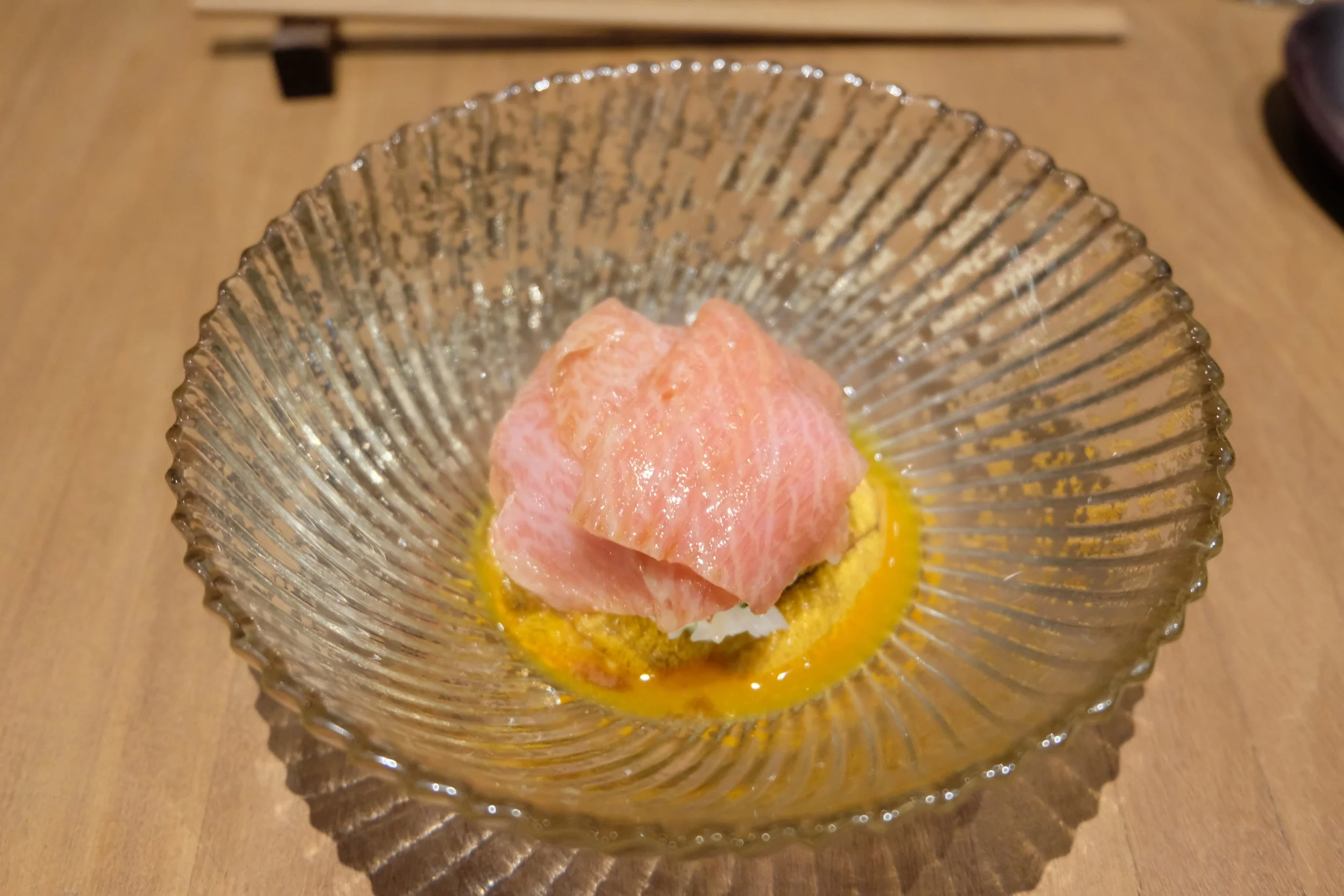
Up next, another one of the “wow” dishes is the Sushi
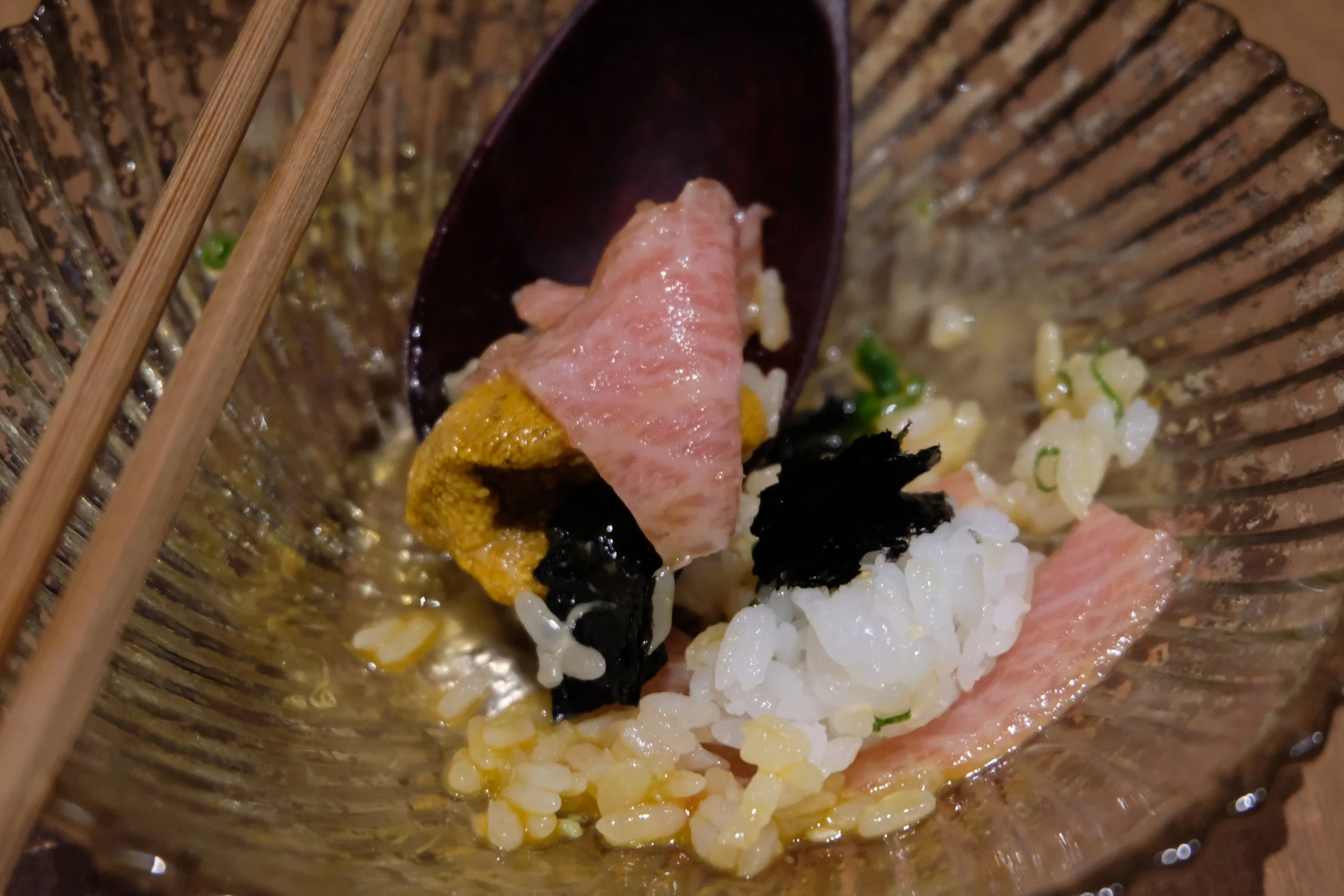
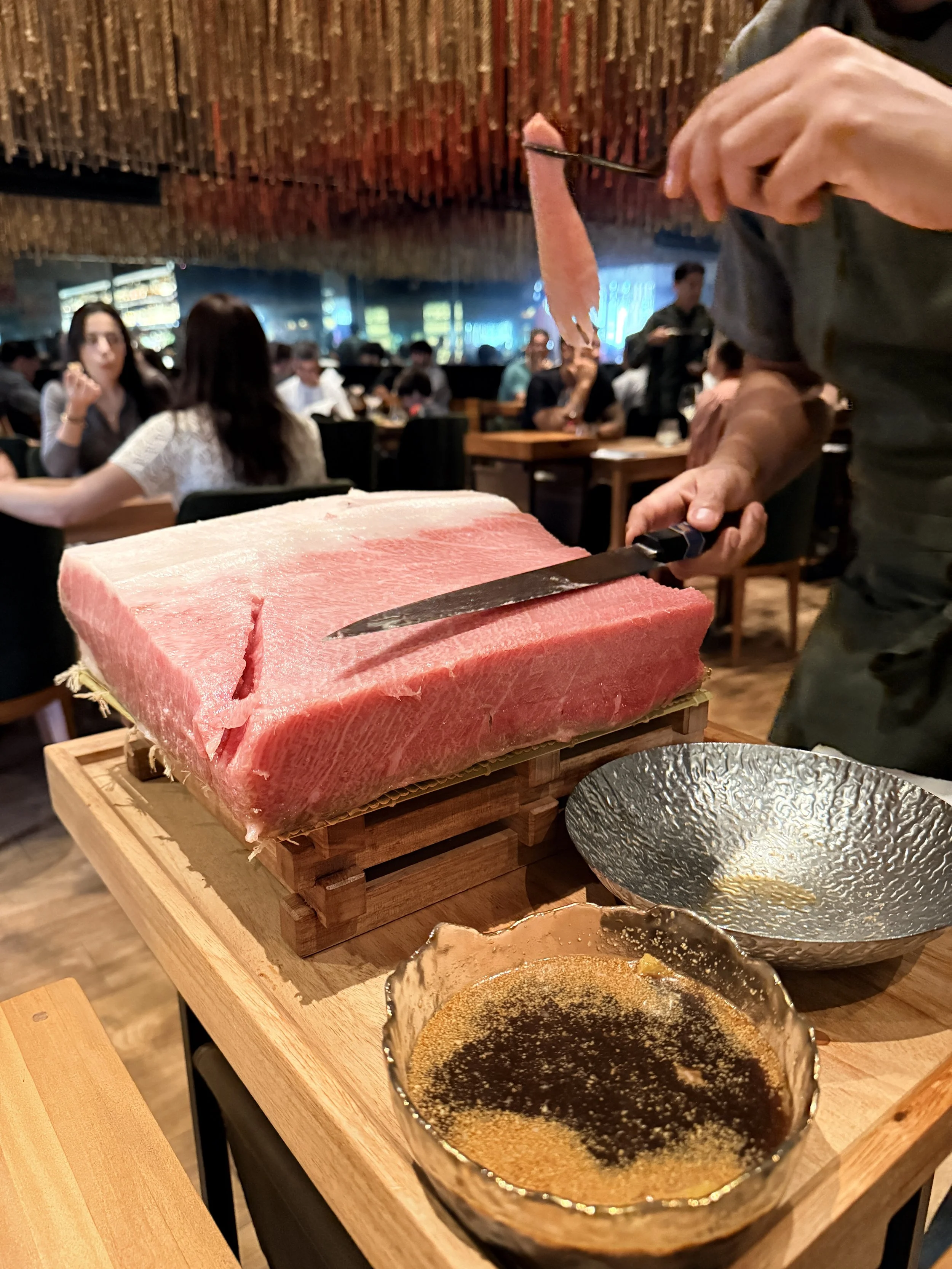
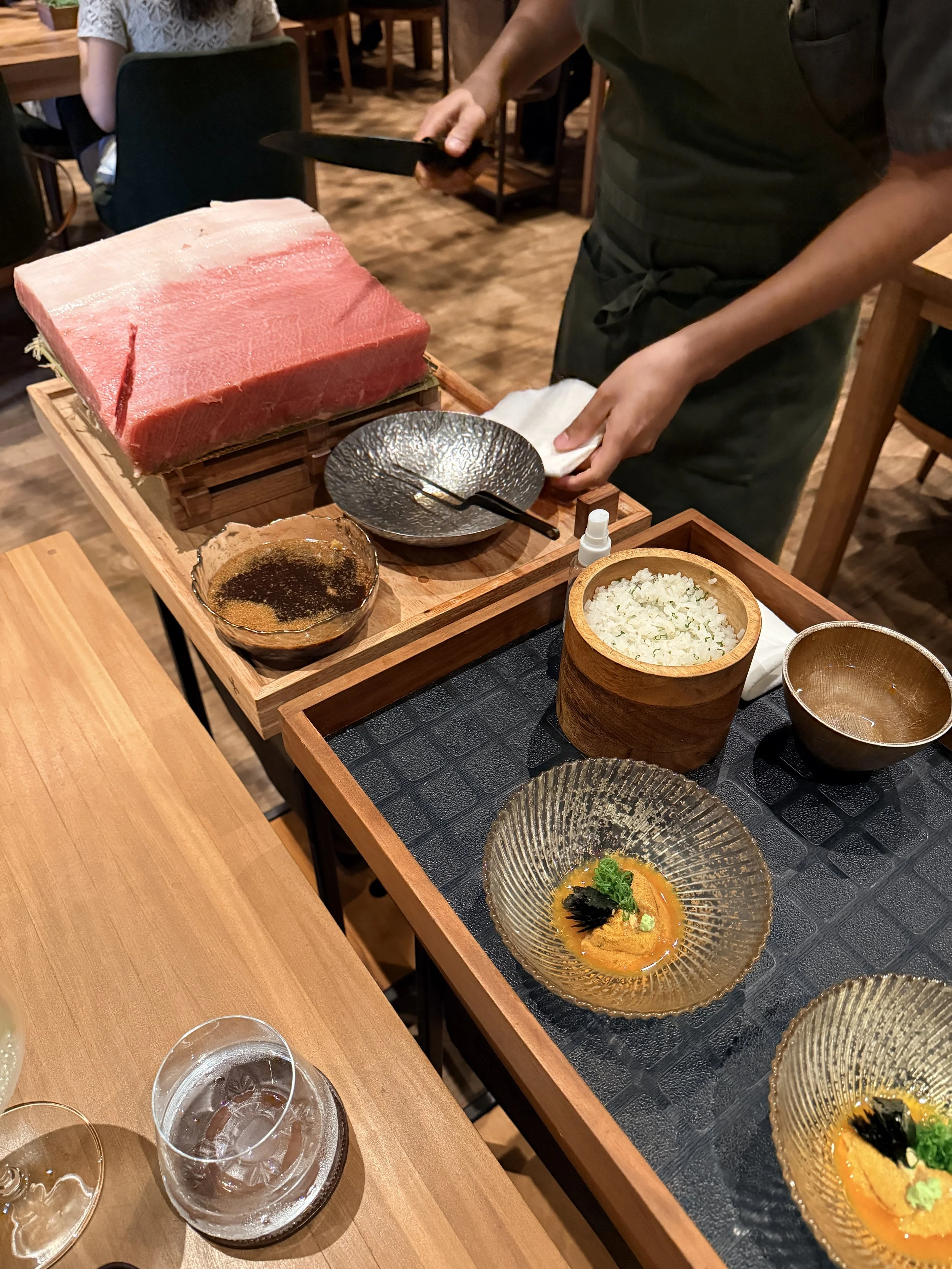
Spanish Bluefin Tuna Toro, Sea Urchin, Cured Egg Yolk and Shari
You just can’t go wrong with raw tuna fish on top of sushi rice with all the good stuff.
When they serve this, they bring out a huge slab of the tuna toro, sliced thinly by a chef and marinated in the shari, while he prepares your rice bowl with the uni and egg yolk. I mean, come on... This is nouveaux luxury. A heavenly bowl that doesn’t need any molecular or modern approach. The sushi rice was well prepared, as you can still taste the individual grains. 10/10 and I can eat 2 more servings before I pass out.
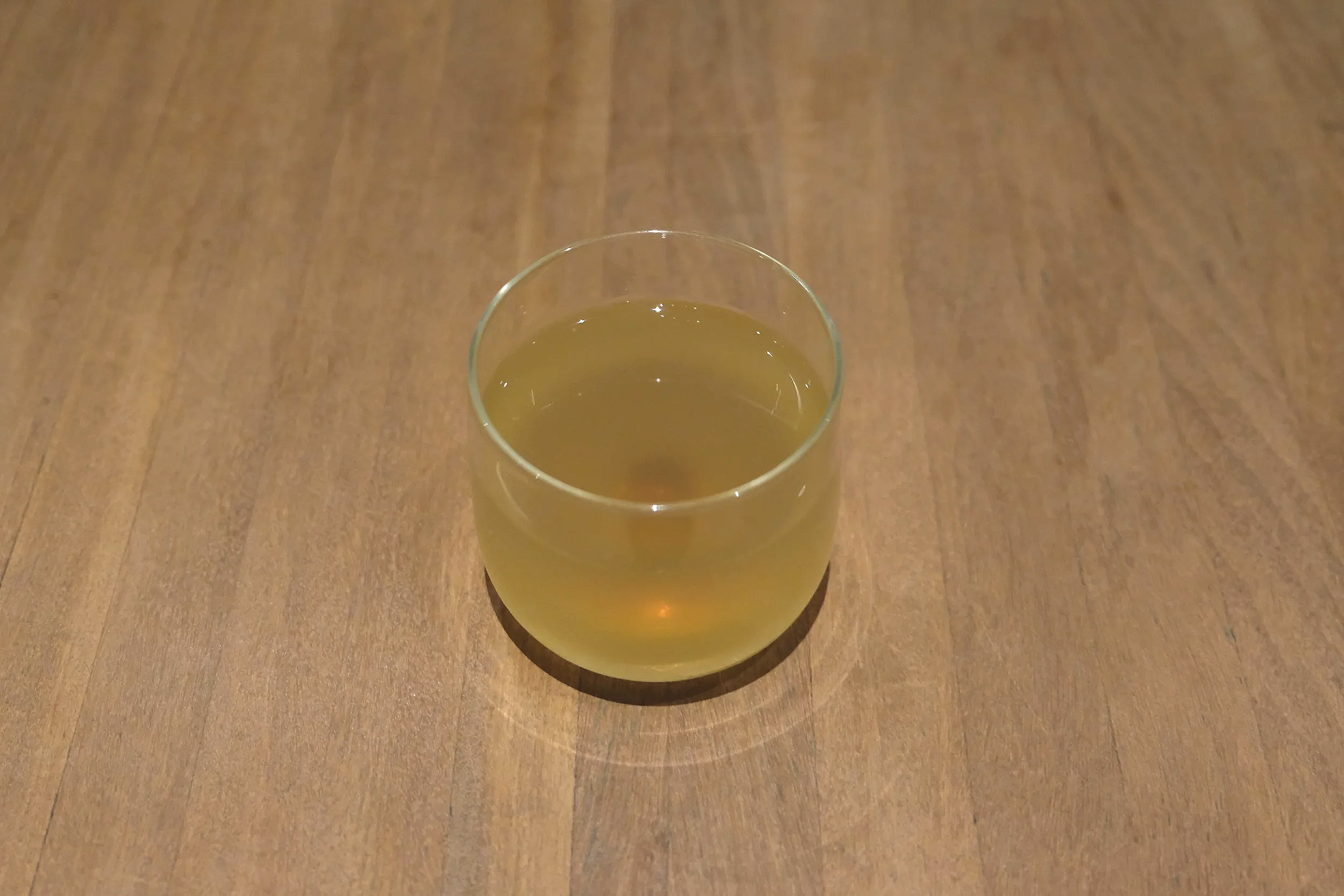
Genmaicha
with corn and toasted rice
Another amazing drink. The flavor raw corn shines through paired with toasted rice.
Up next, Costa Sur
Chilean Seabass, Nitsuke, Sekihan, Fukujinzuke and Cocona Chalaca
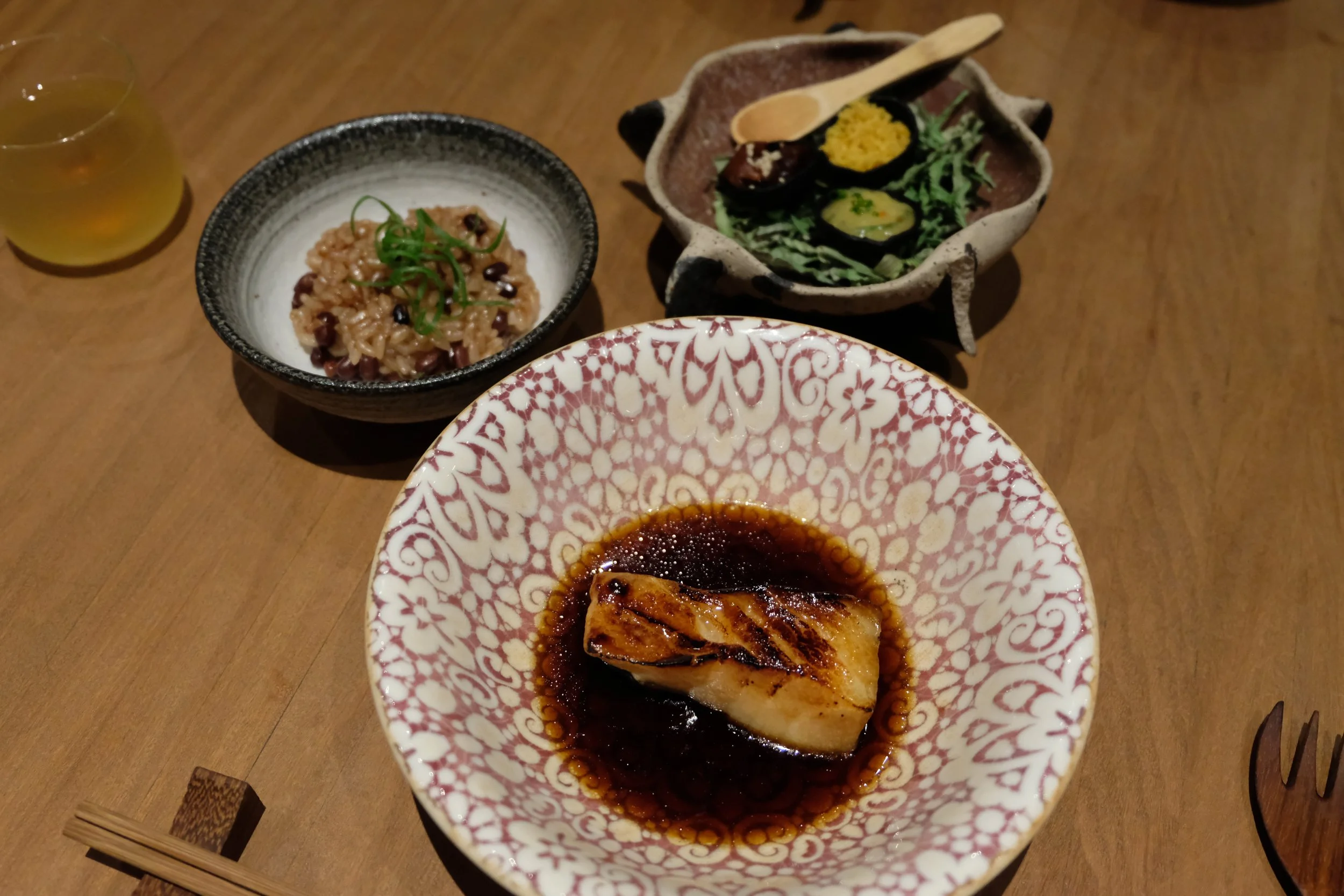
Perfectly cooked fish submerged in a bath of soy, sake and mirin, served with some sour and salty condiments. While the fish was cooked perfectly, this ranks a bit low on my ranking. It felt safe and didn’t deliver anything worth talking about.
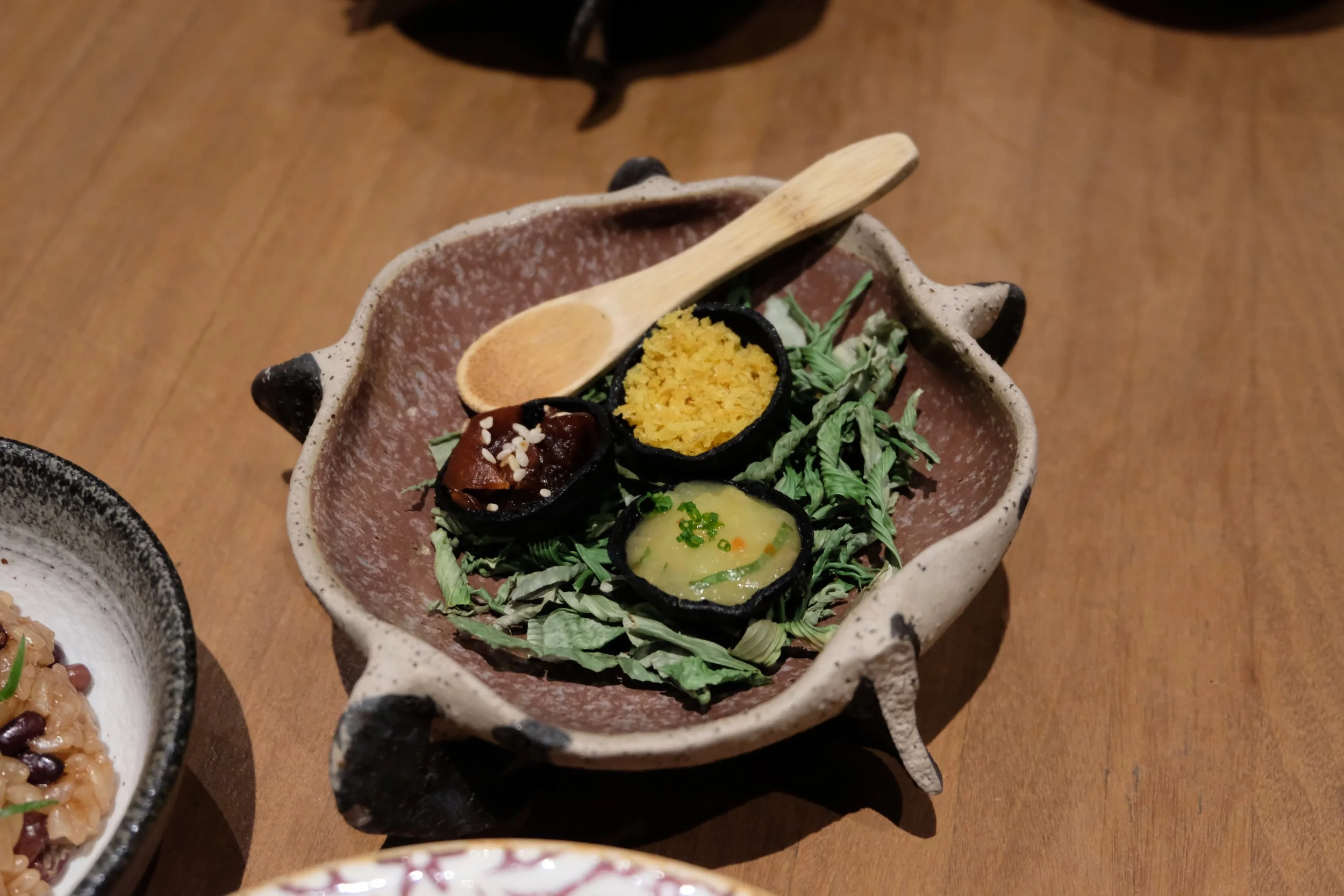
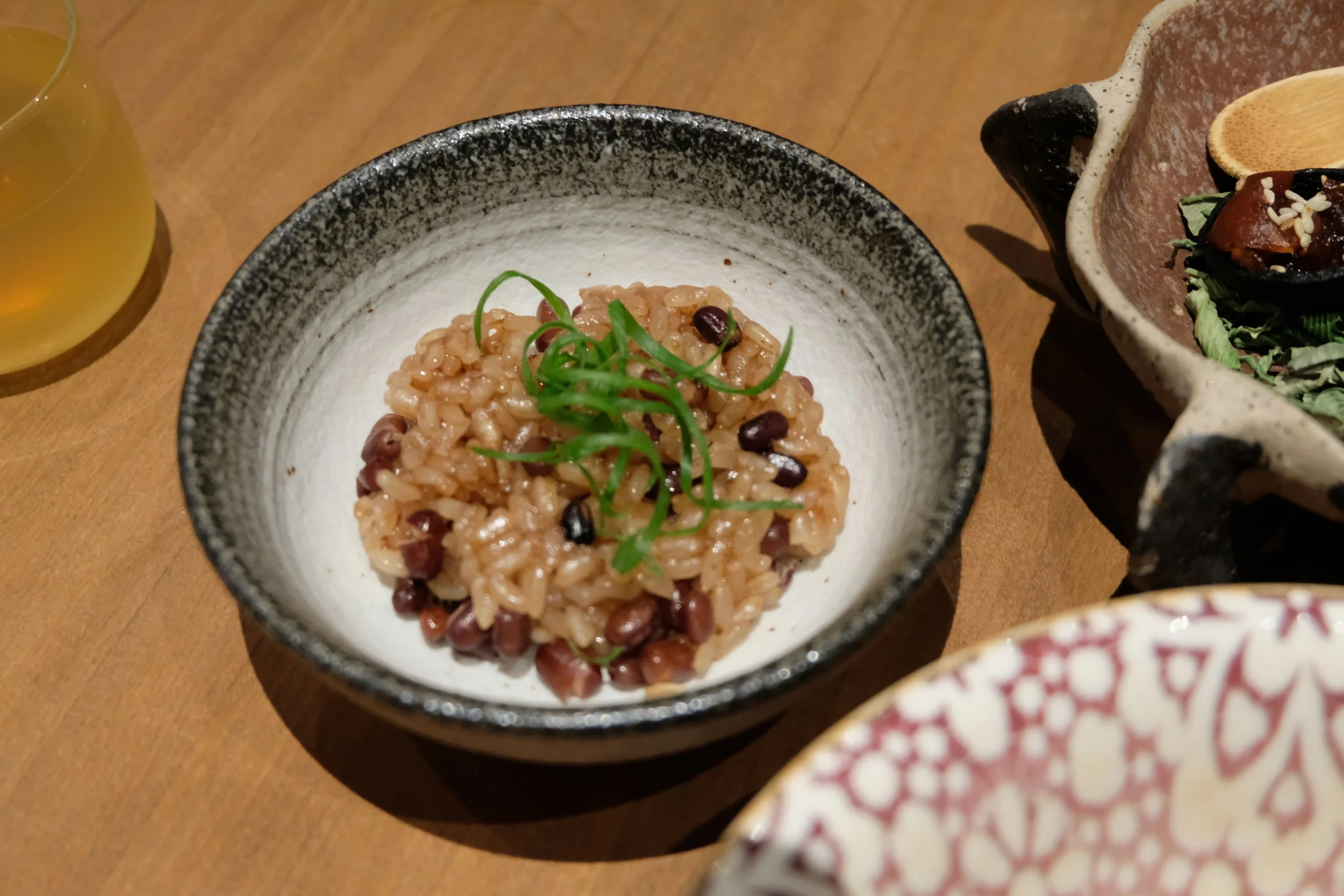
Uvachado
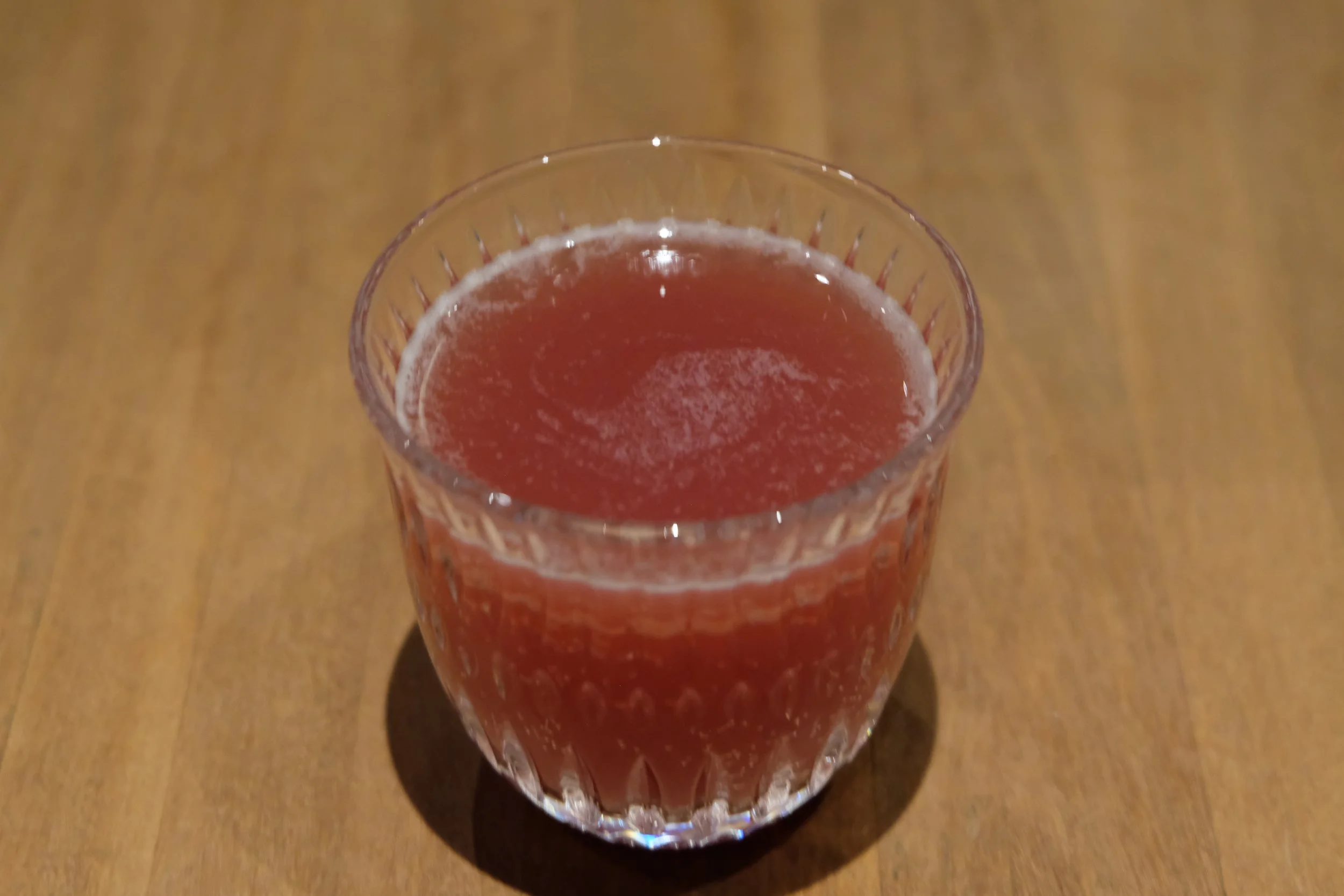
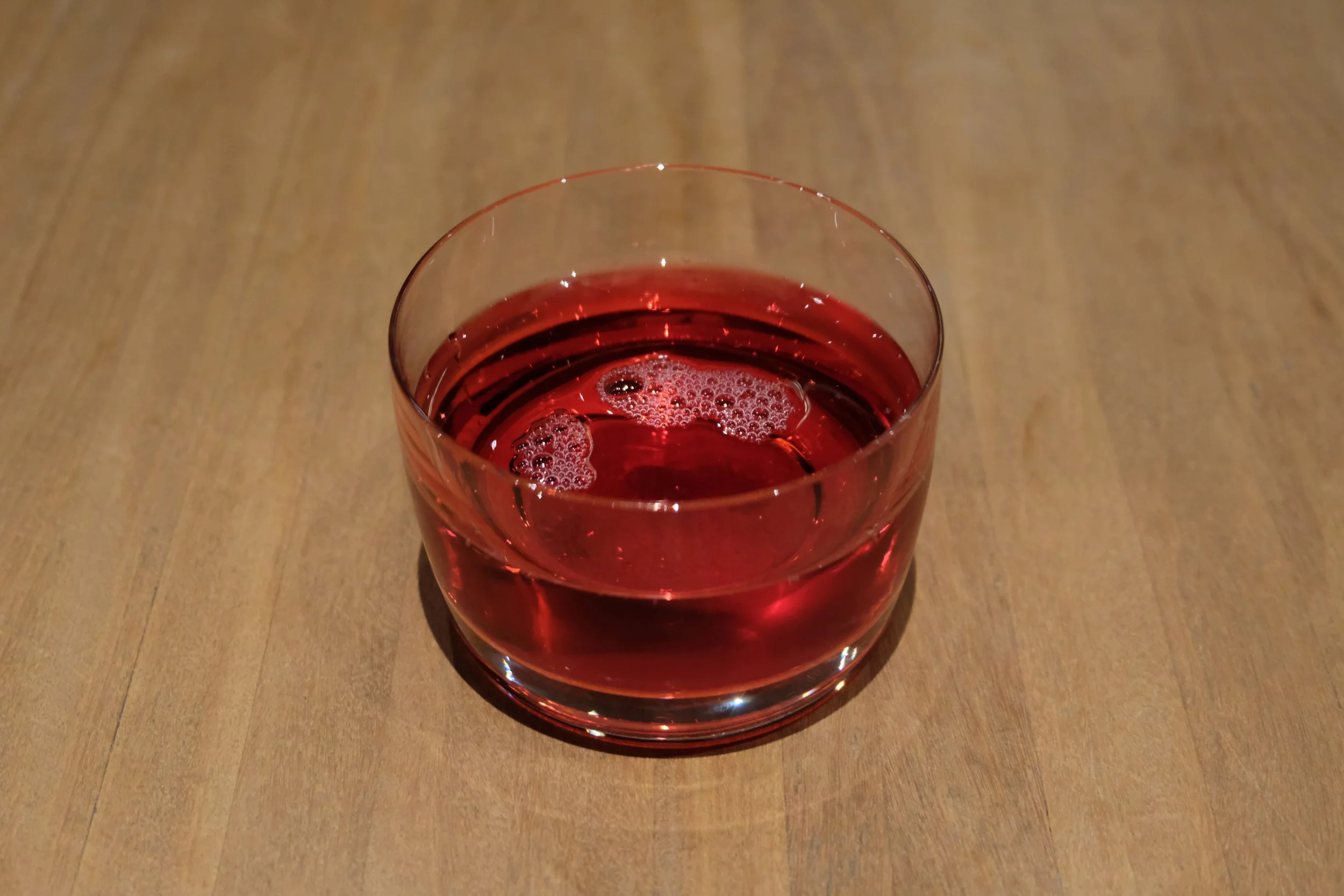
Grape, Lulo, Pu-erh Tea. This is the juice pairing for the veal cheeks.
Visually appealing. It tastes like a clear cranberry juice. I guess they were trying to pair something similar to a red wine that will go along with the braised meat.
For the main course, Chazuta
Veal cheeks, macambo, tucupi
Macambo is a type of cacao variety
Tucupi is a product of Yuca
This, my friends, is the most disappointing dish out of the entire dinner. It really pulled down the entire experience. To put it plainly, it is stewed veal cheeks with an earthy crispy chip of Macambo. It was flat, boring and just so-so. They could have done something exciting with wagyu or another fish.
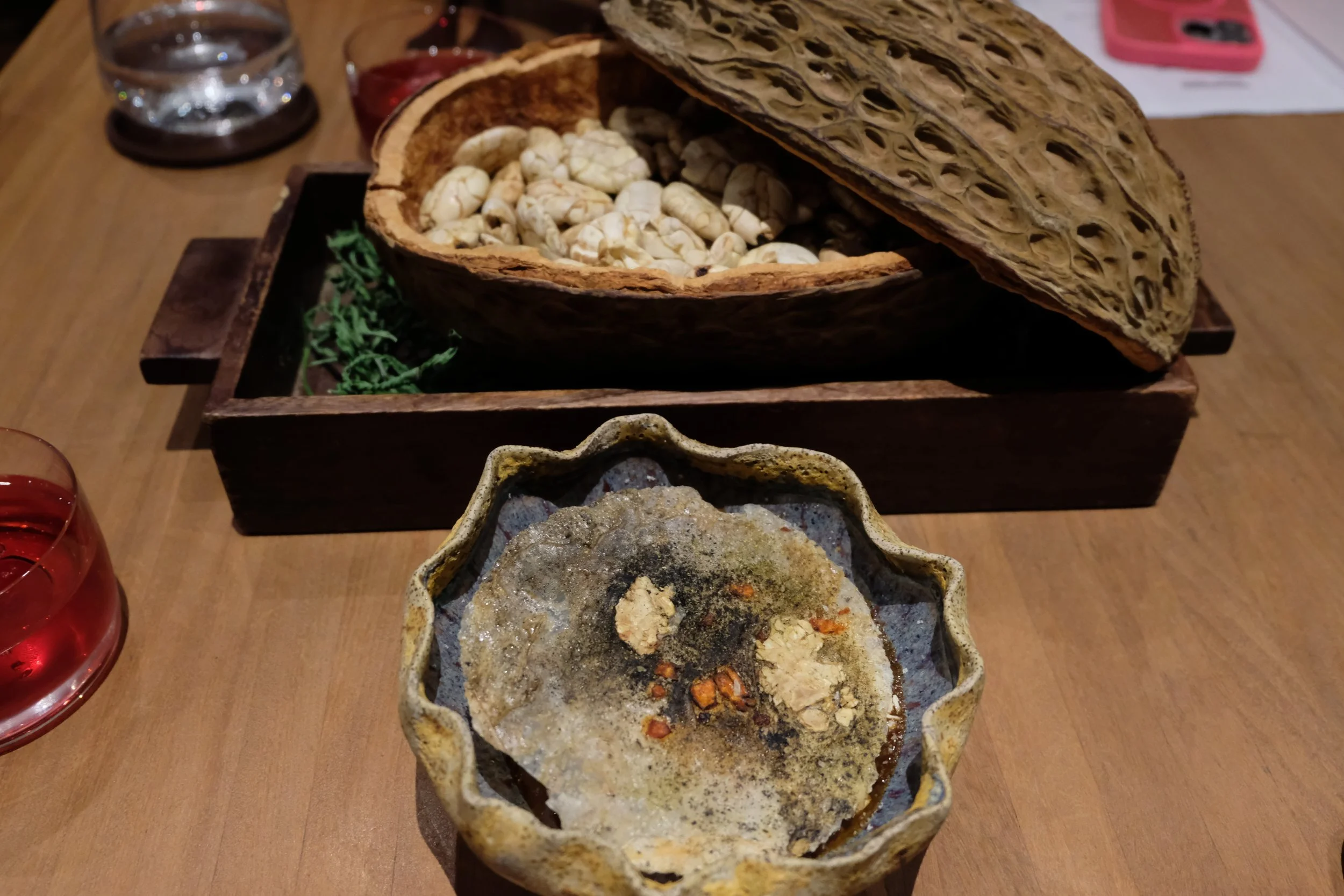
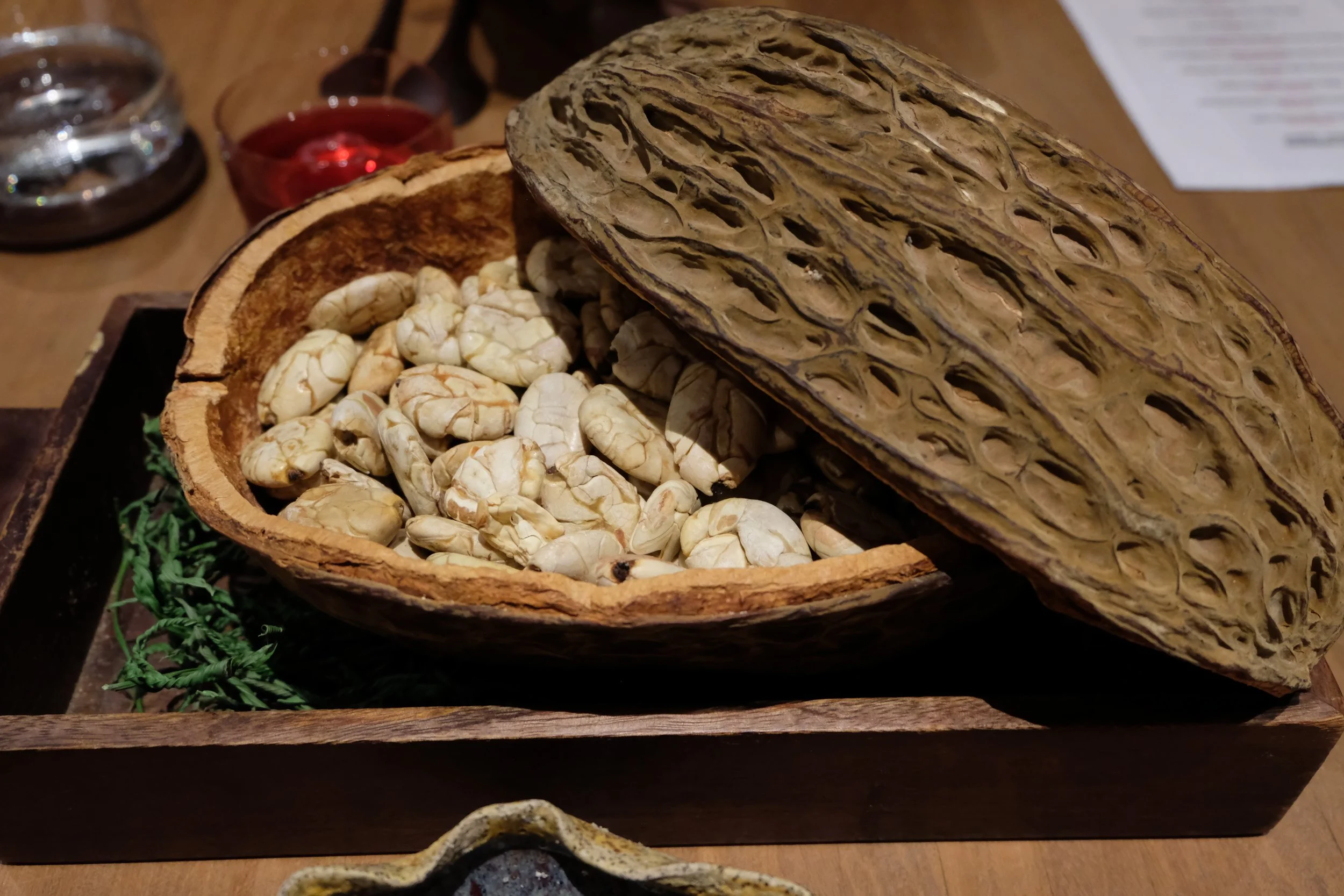
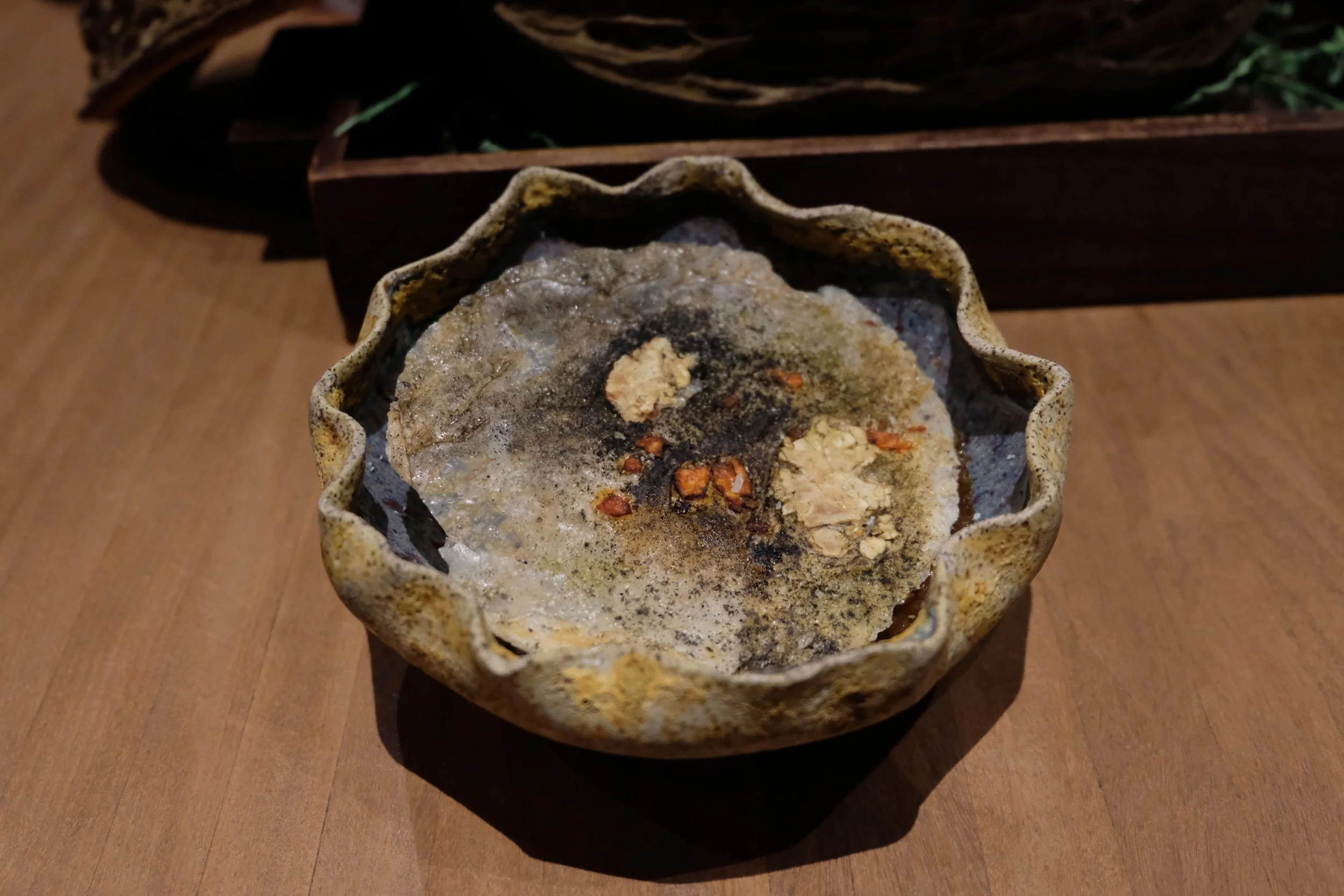
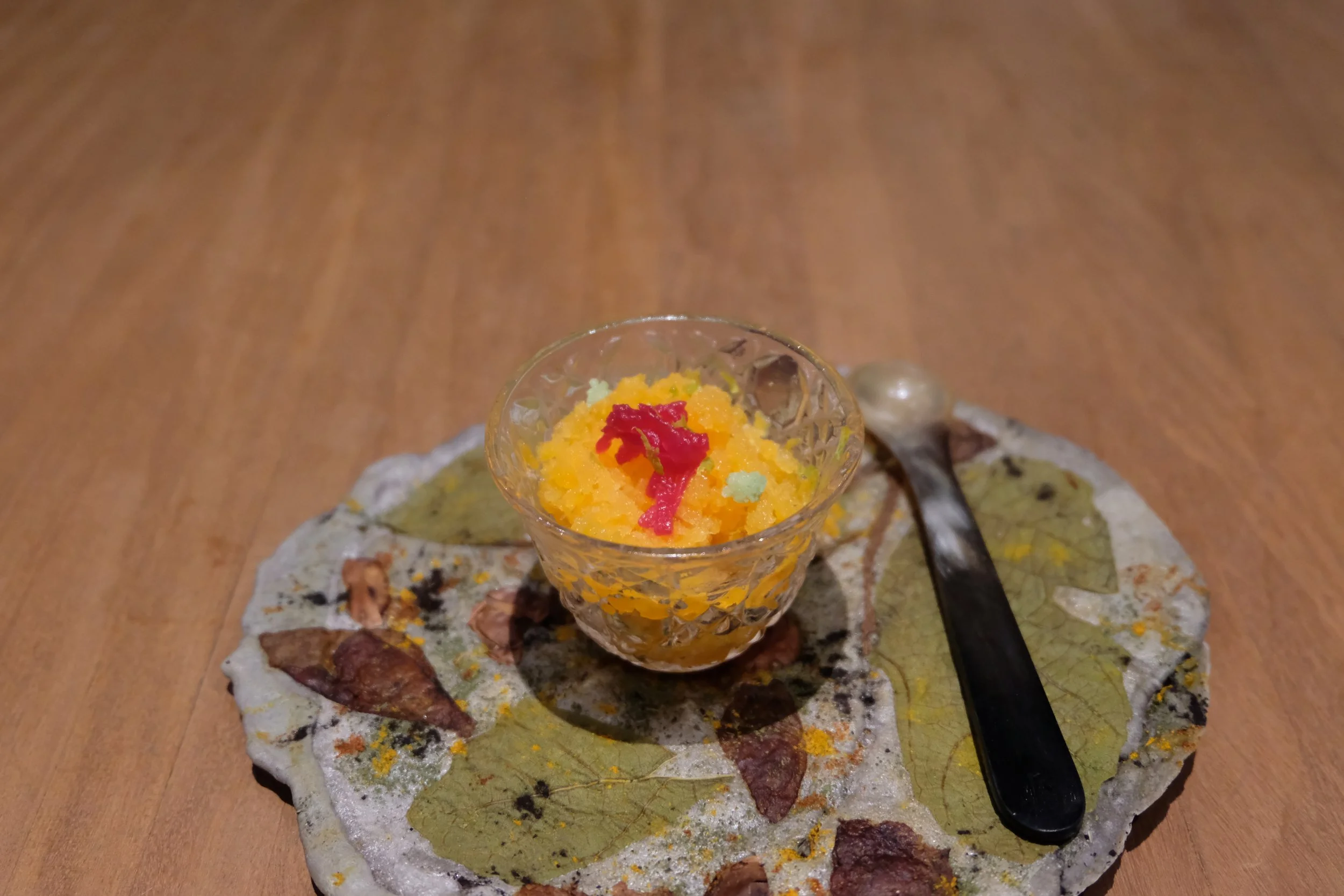
A palate cleanser, Raspadilla
Nisperos, Figs, Yacón and Wasabi.
The wasabi was a pretty nice touch. This is a granita made out of a sweet and sour fruit. The figs on top adds tanginess to the experience.
Maduro
Banana, Cocoa Mucilage, Ponzu
Cocoa mucilage is the white material that holds the cacao beans, something that is commonly discarded once the beans have been harvested. But chefs who are pushing the limits of Peruvian cooking come up with ideas like what you’re seeing below.
The mucilage lends a sour flavor that blended well with maduro and ponzu.
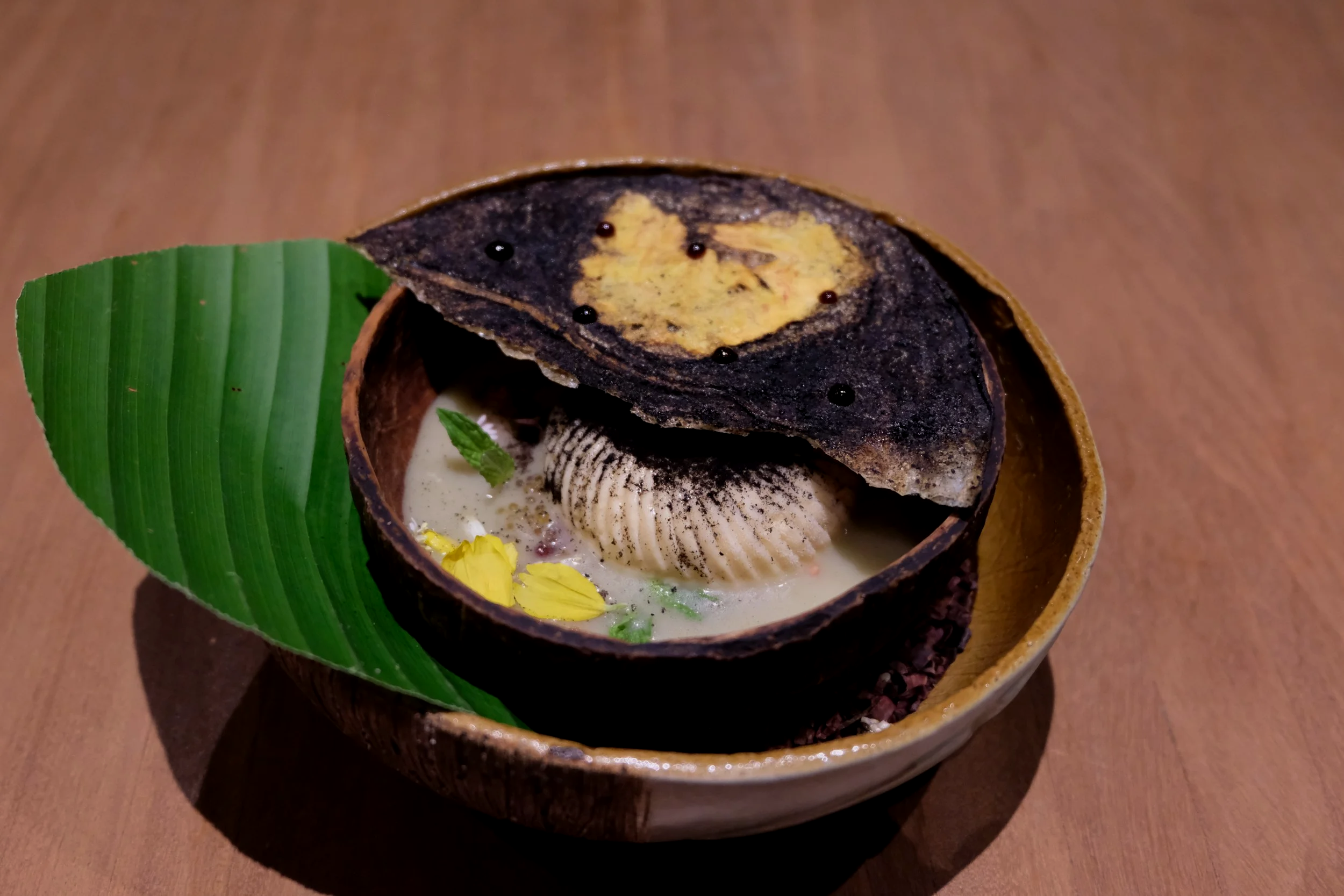
Maduro A La Brasa
Plantain Ice Cream with Shoyu, Seeds, Coconut, Tobiko, Camu Camu and Crackers
This dessert saved the entire experience as it reminded me of our Filipino dessert called Halo Halo (Mix, Mix). The idea is to mix whatever you have with crushed ice with evaporated milk, flan and even ice cream.
We were instructed to mix everything as well and take a bite of the cracker simultaneously. It had a lot going on, different flavors and textures, clashing in your mouth. Very earthy flavors. The most important thing about Peruvian desserts is that they are not too sweet. They know what they are doing! 10/10.
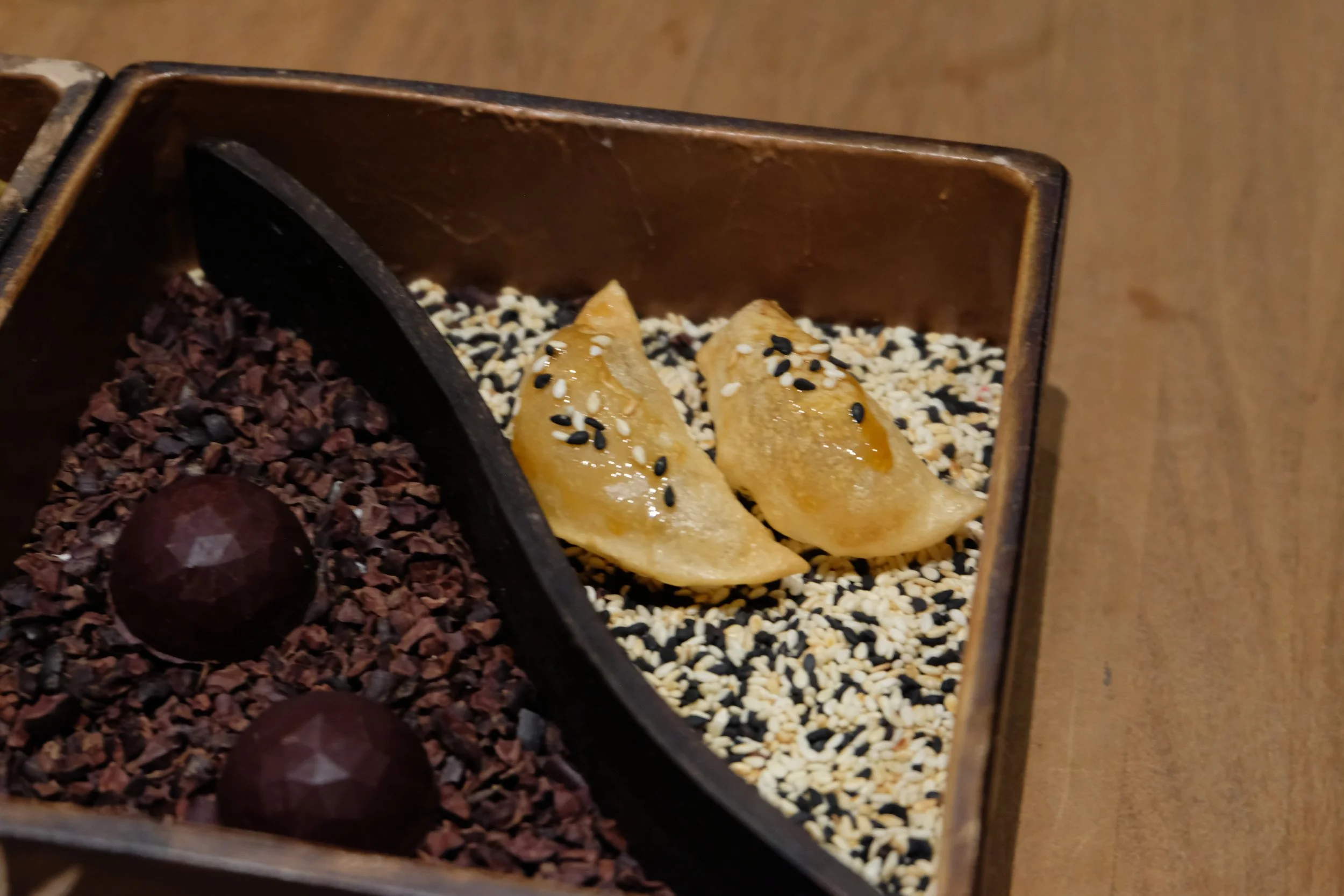
Petit Fours
Empanda de Aire, tasted like fried and aerated gyoza wrappers that tasted like nothing.
Chocolat bonbons at 70%
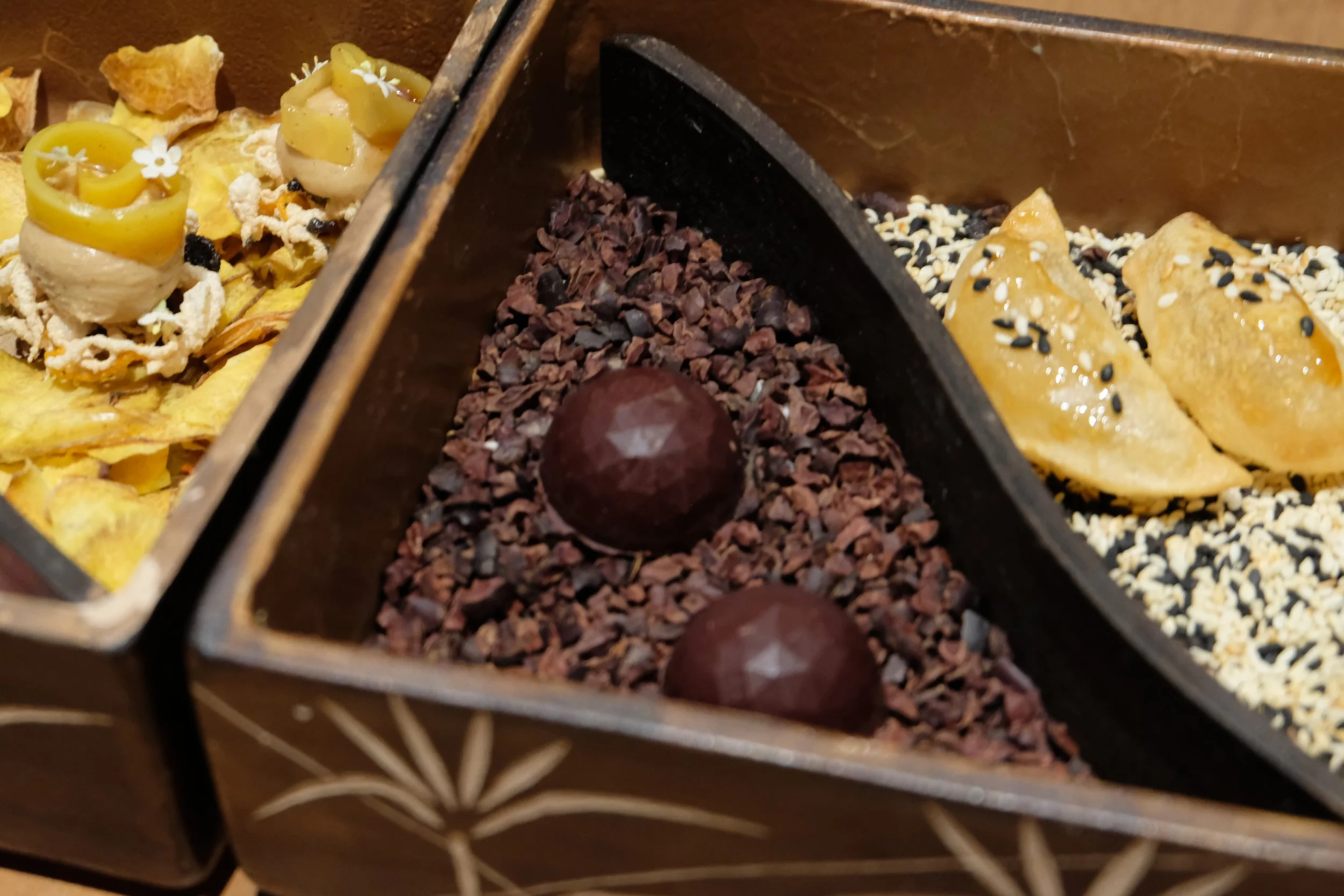
Macambo Miso Tubers
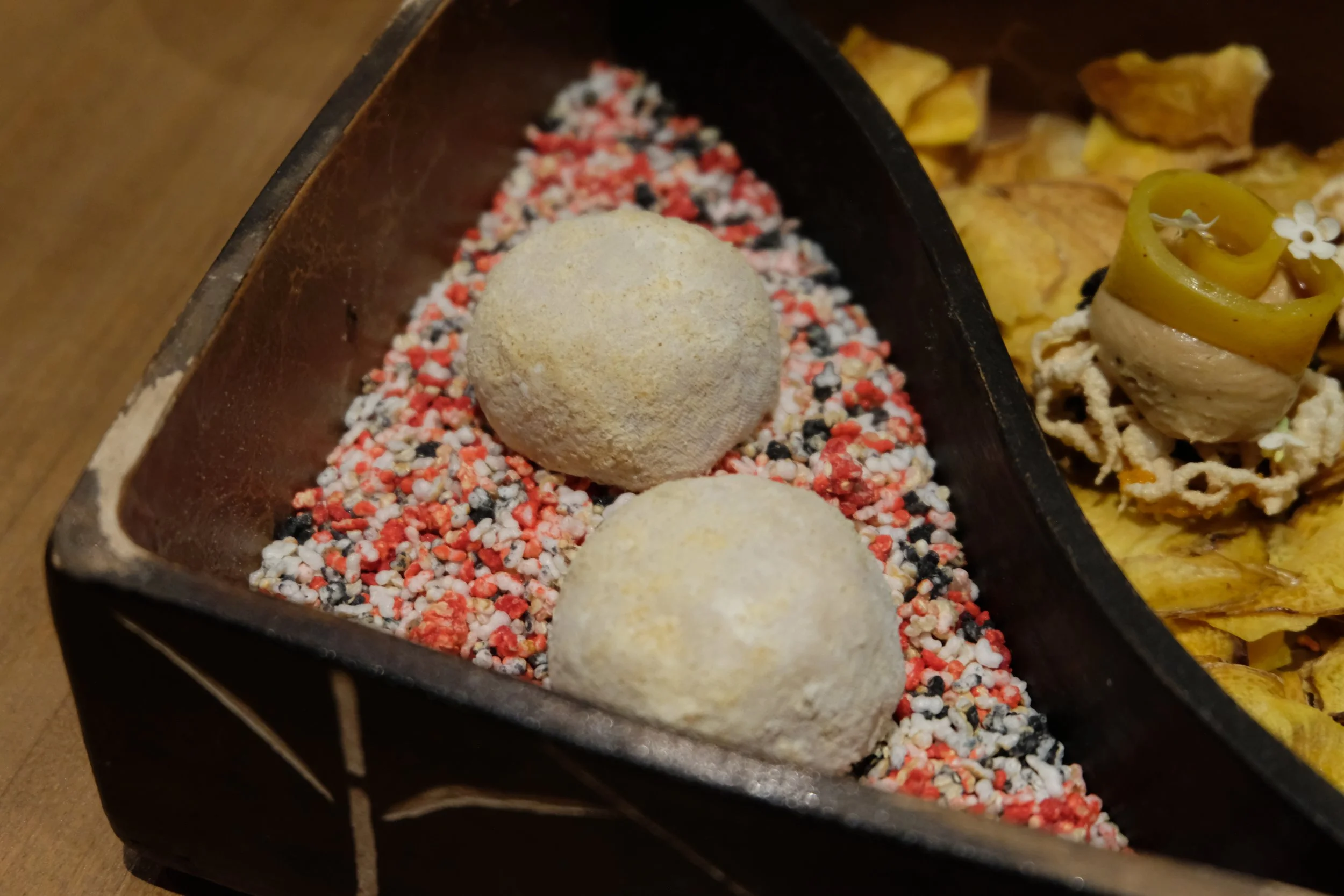
This tasted like a potato dessert, really, really good.
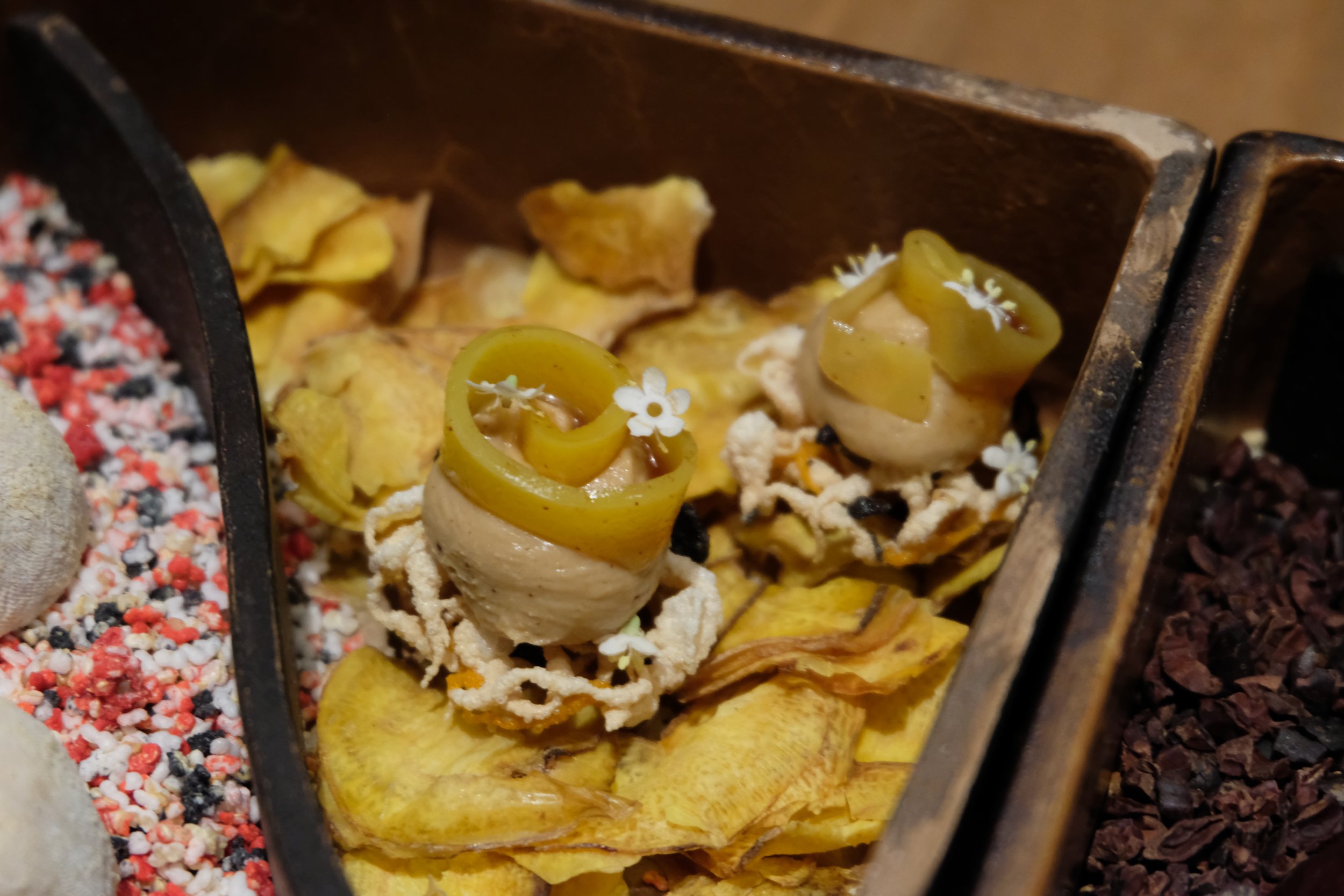
The Lúcuma Mochi was so smooth to the mouthfeel, it felt like it was just melting in your mouth.
Despite the creative dishes, I feel that Maido opted to focus more on the profit by taking advantage of the status, sacrificing on quality rather than controlling the books and say, “Let’s do things right.” There’s still a lot to go for them, from the service, atmosphere and overall experience, and I apologize if I sound blunt and harsh.
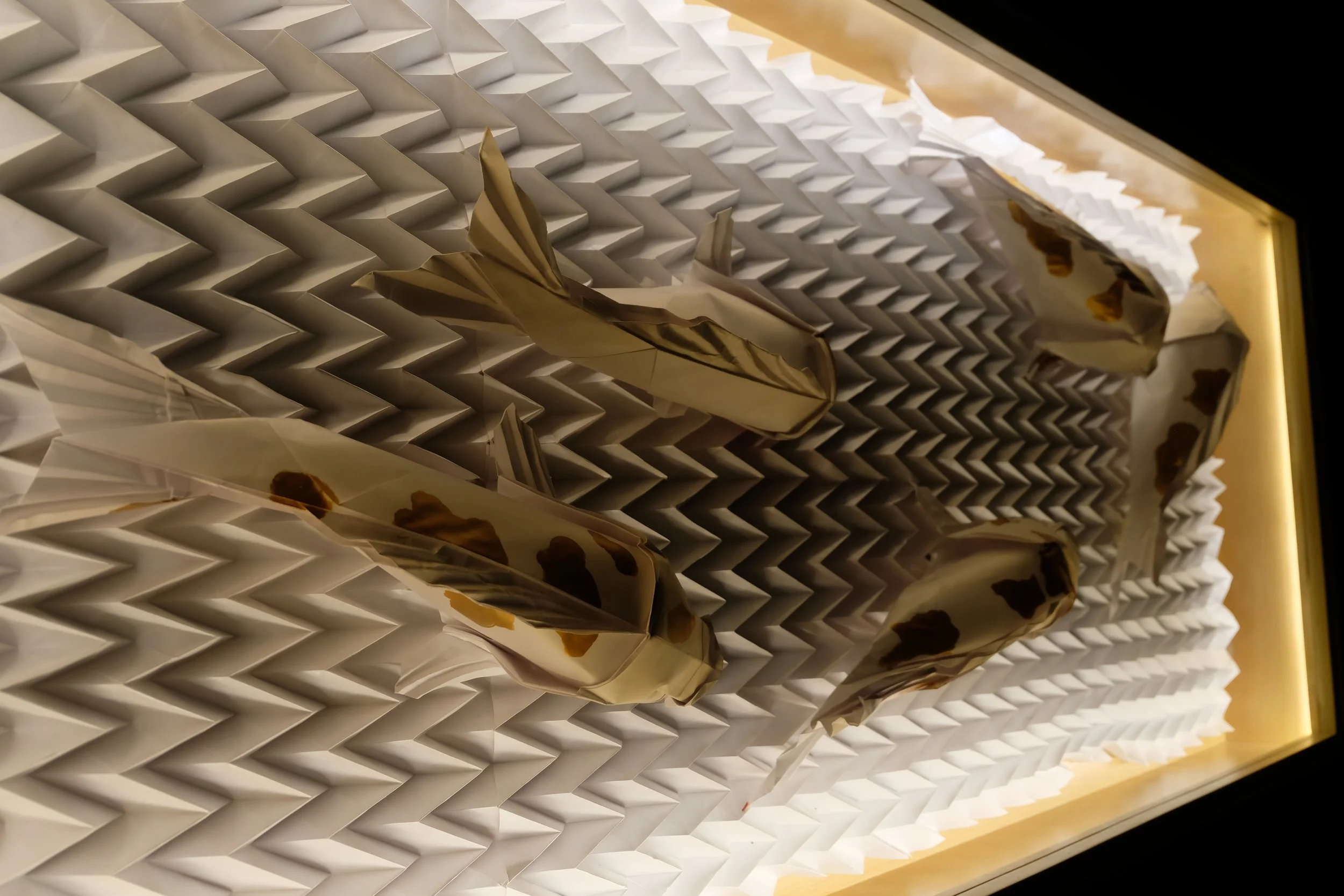
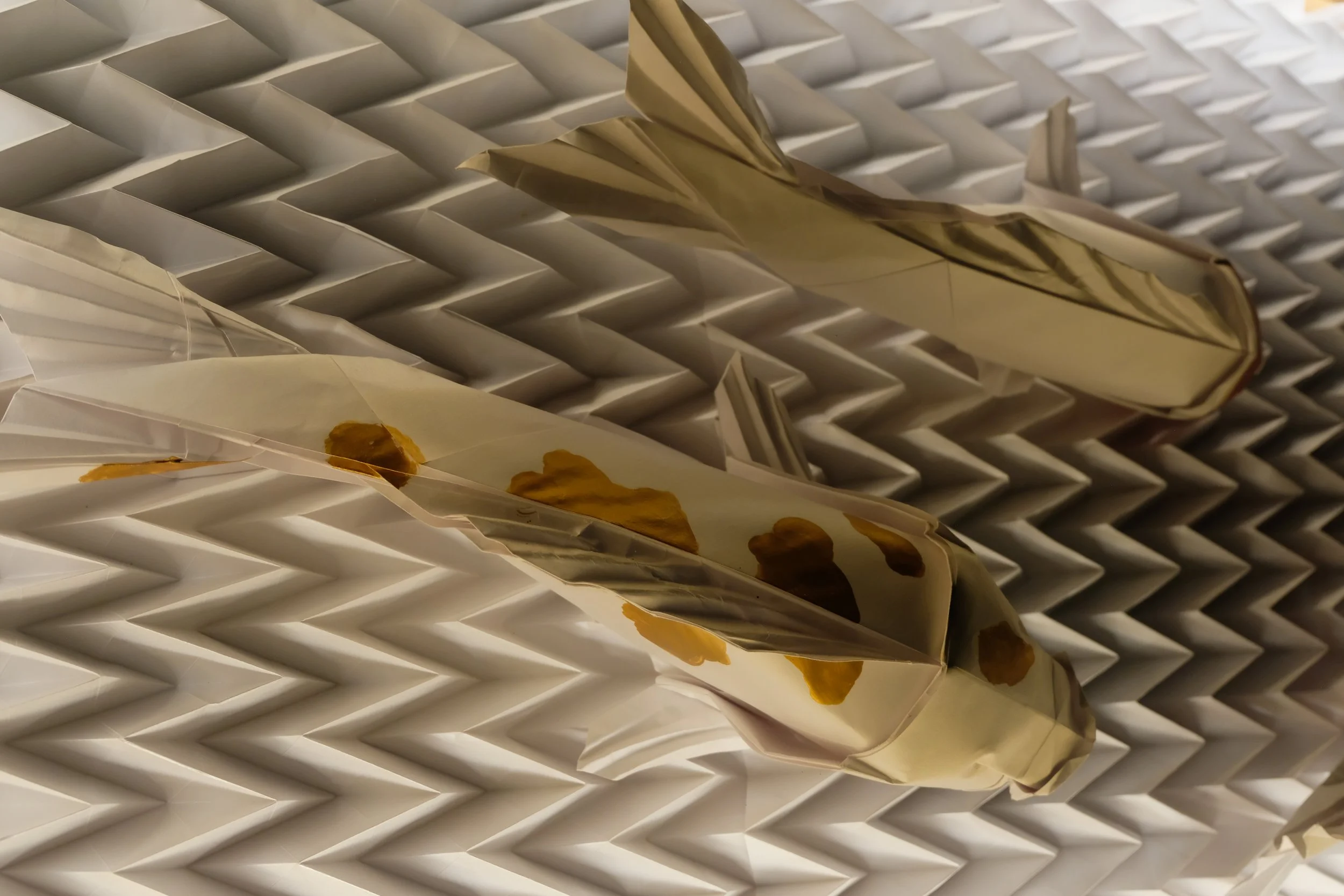
Good thing is they have these coy origamis next to the restrooms on the third floor and an automatic toilet seat.
If asked, will I come back?
I’d still say yes, to order a la carte and with a lower expectation of just a casual lunch out.