

Mérito, Lima
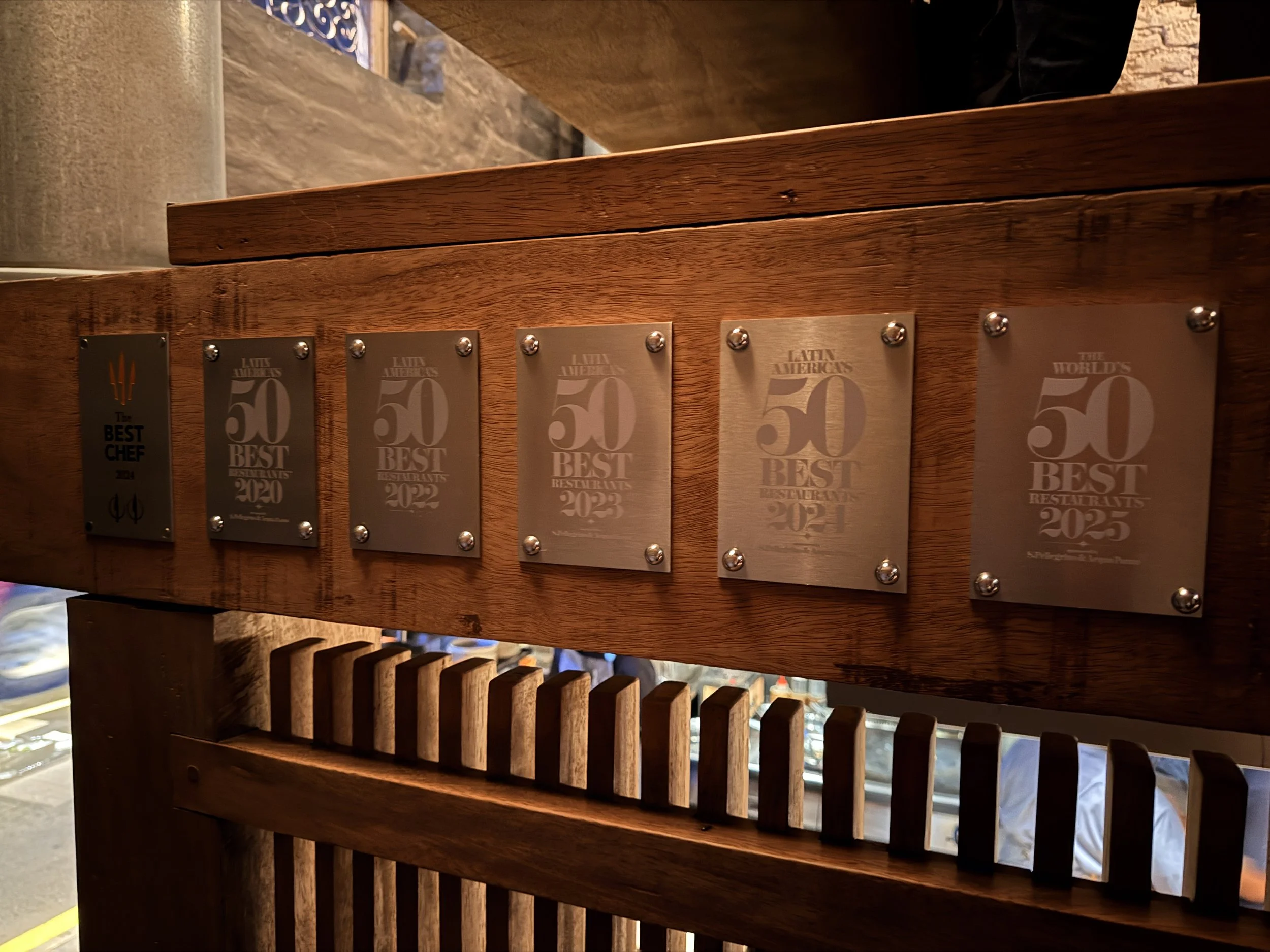
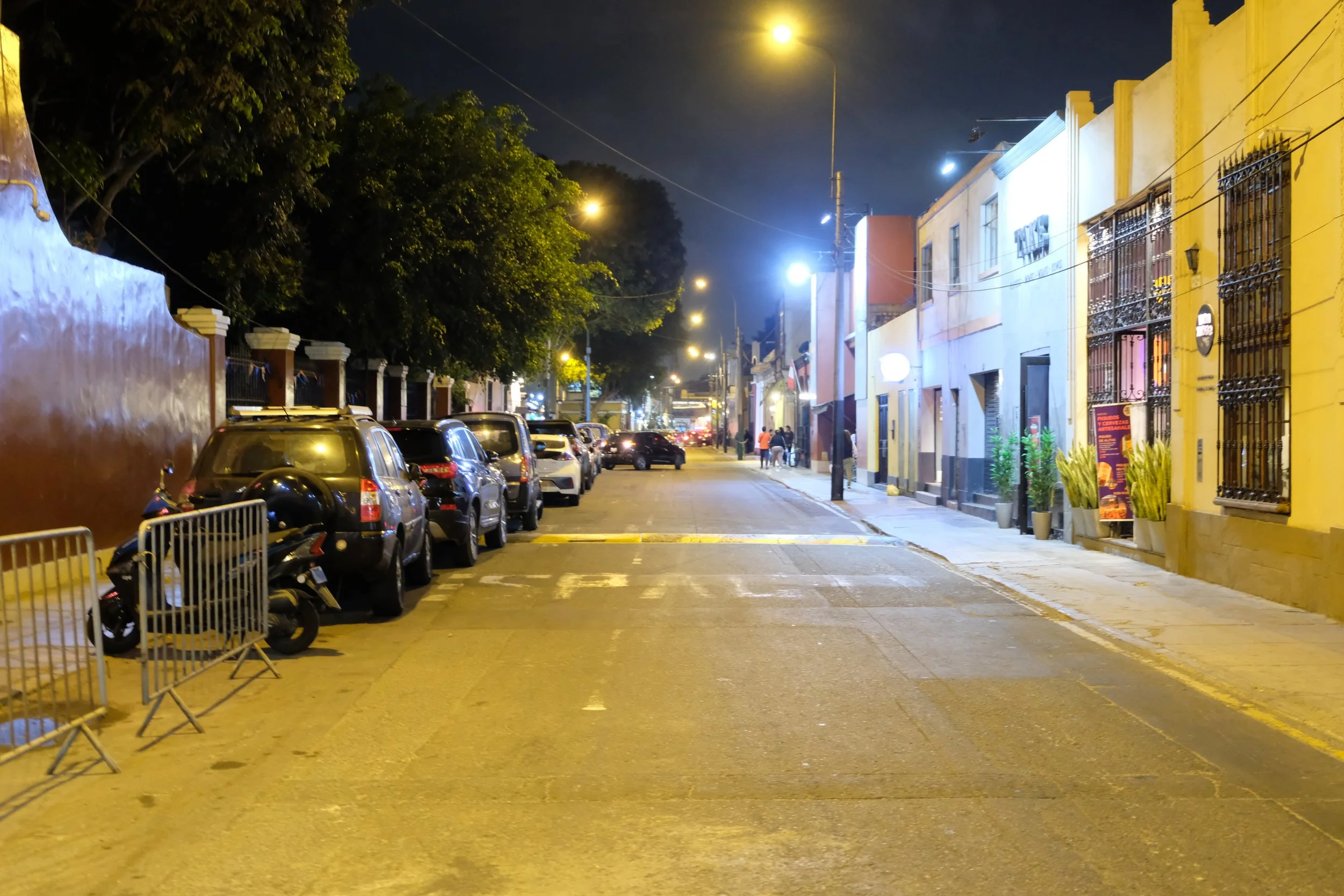
Currently standing as the 26th Best Restaurant in The World while simultaneously guarding its helm as the 8th Best Restaurant in Latin America, Mérito (or Merit in english) is an elegant culinary affair amidst the bustling life in the town of Barranco. I mean, literally, outside the restaurant is a chaotic backstreet where thousands of vehicles pass through, while commuters, just eager to go home, endure the dreaded rush hour. Amidst the urban clamor, Mérito stands unassuming in isolation, quietly preparing for its patrons who are eager to try modern comida Peruana with a brigade full of talent and passion.
This is our first passage to the world of high-end dining in Peru.
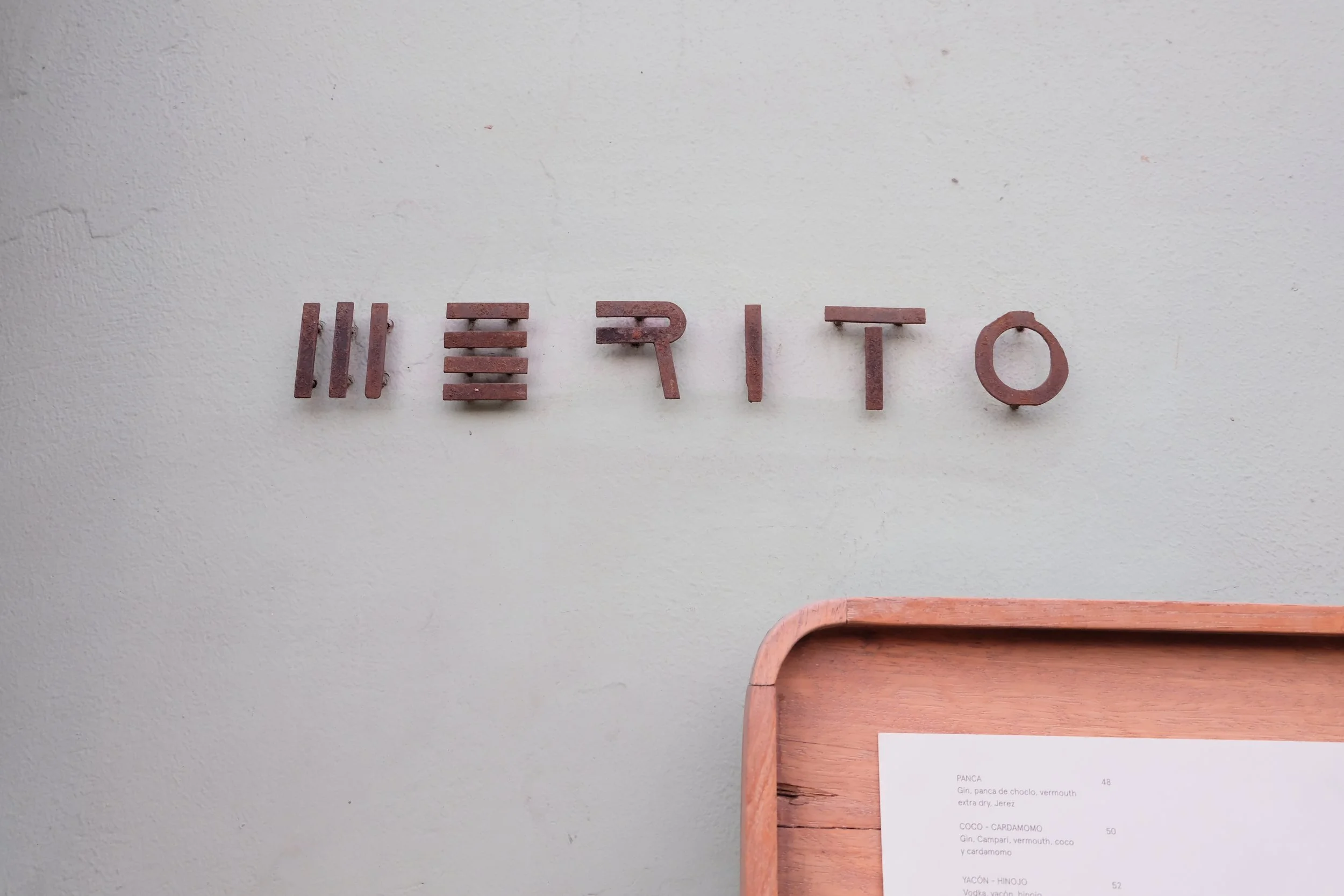
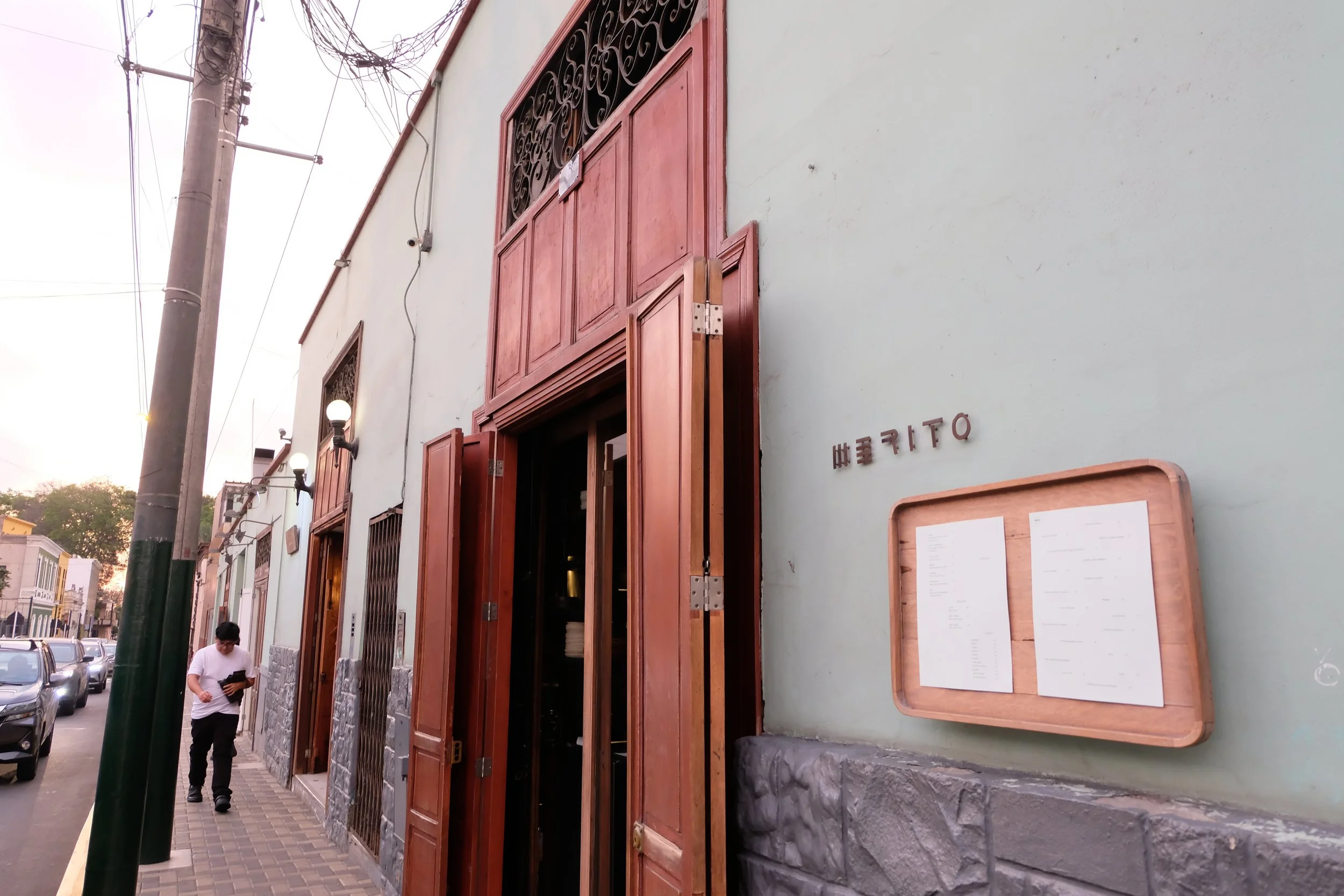
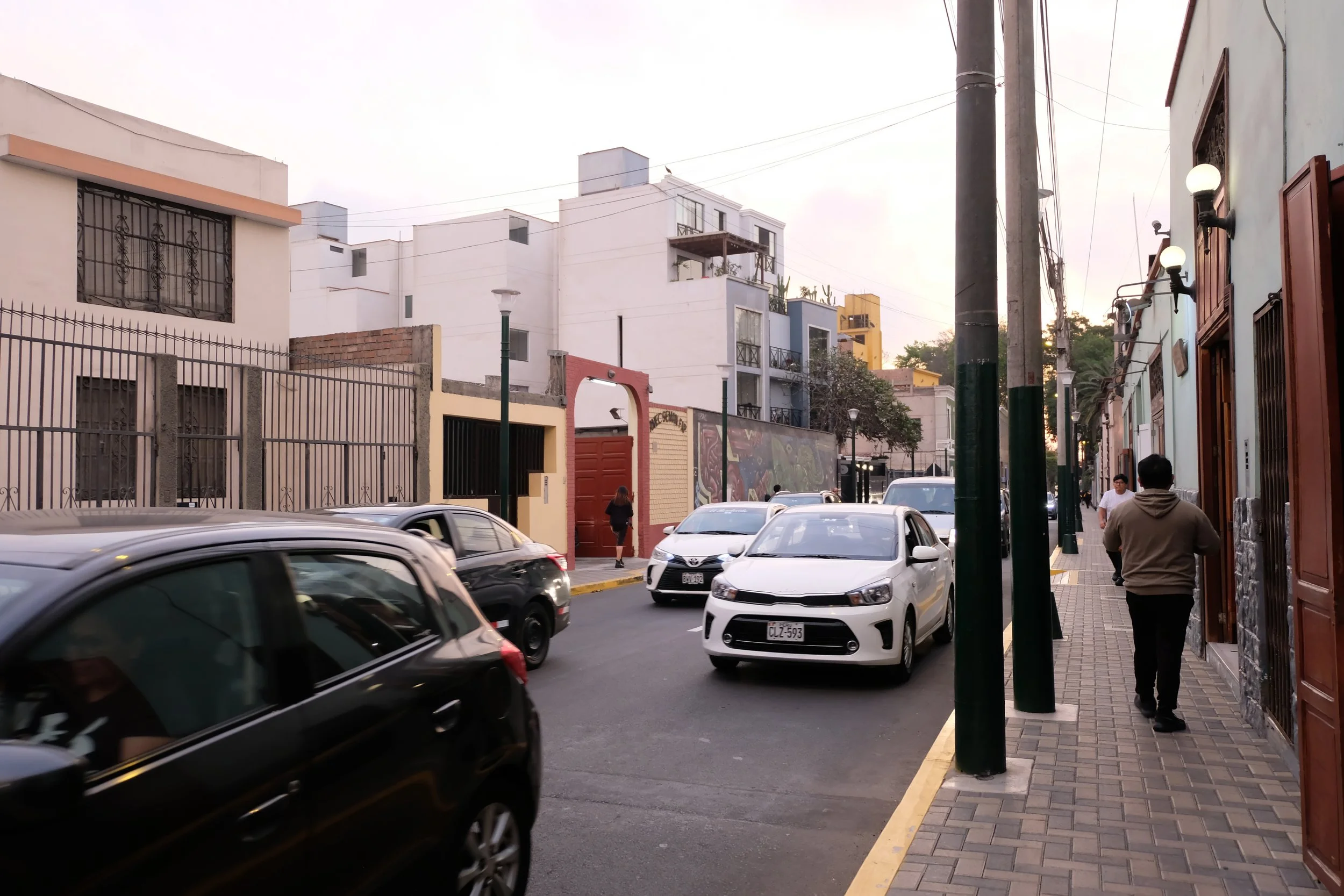
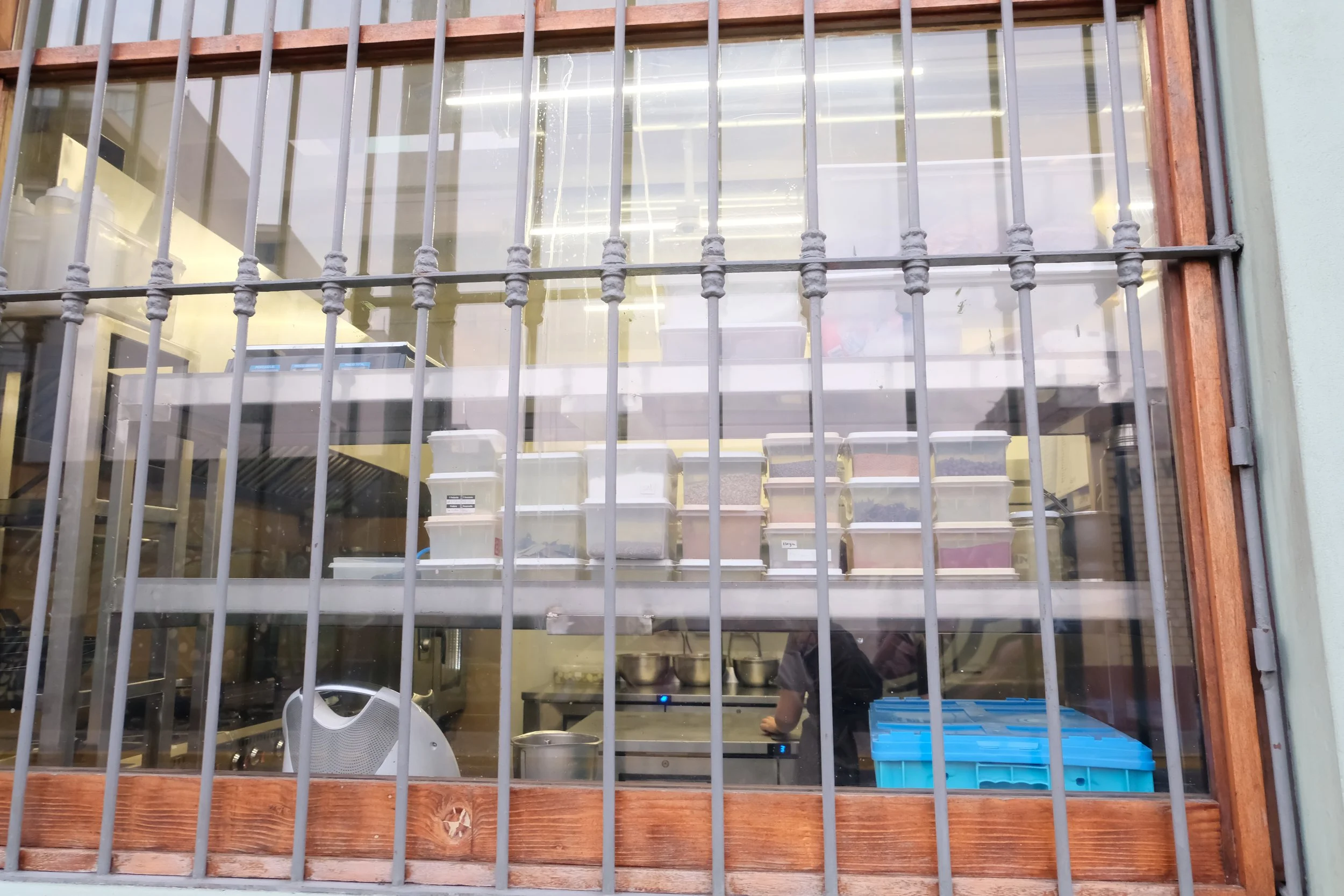
The restaurant, a two-storey post-colonial spanish edifice, allows people to take a glimpse through clear glass doors, where you can see chefs in their element, of a kitchen that is well-crafted, modern and bespoke. The moment I saw a Rational oven and well-groomed chefs, I was sold. Inside, there’s nothing but wood, bricks, cement and proper lighting—pulling away from attraction to focus and stimulate on what’s important: the food.
Upon entering, you are transported to a serene world and will instantaneously forget that there’s a jungle outside. None of the noise penetrates once you’re sat down, the only thing that builds up is the anticipation of a wonderful stationary voyage ahead.
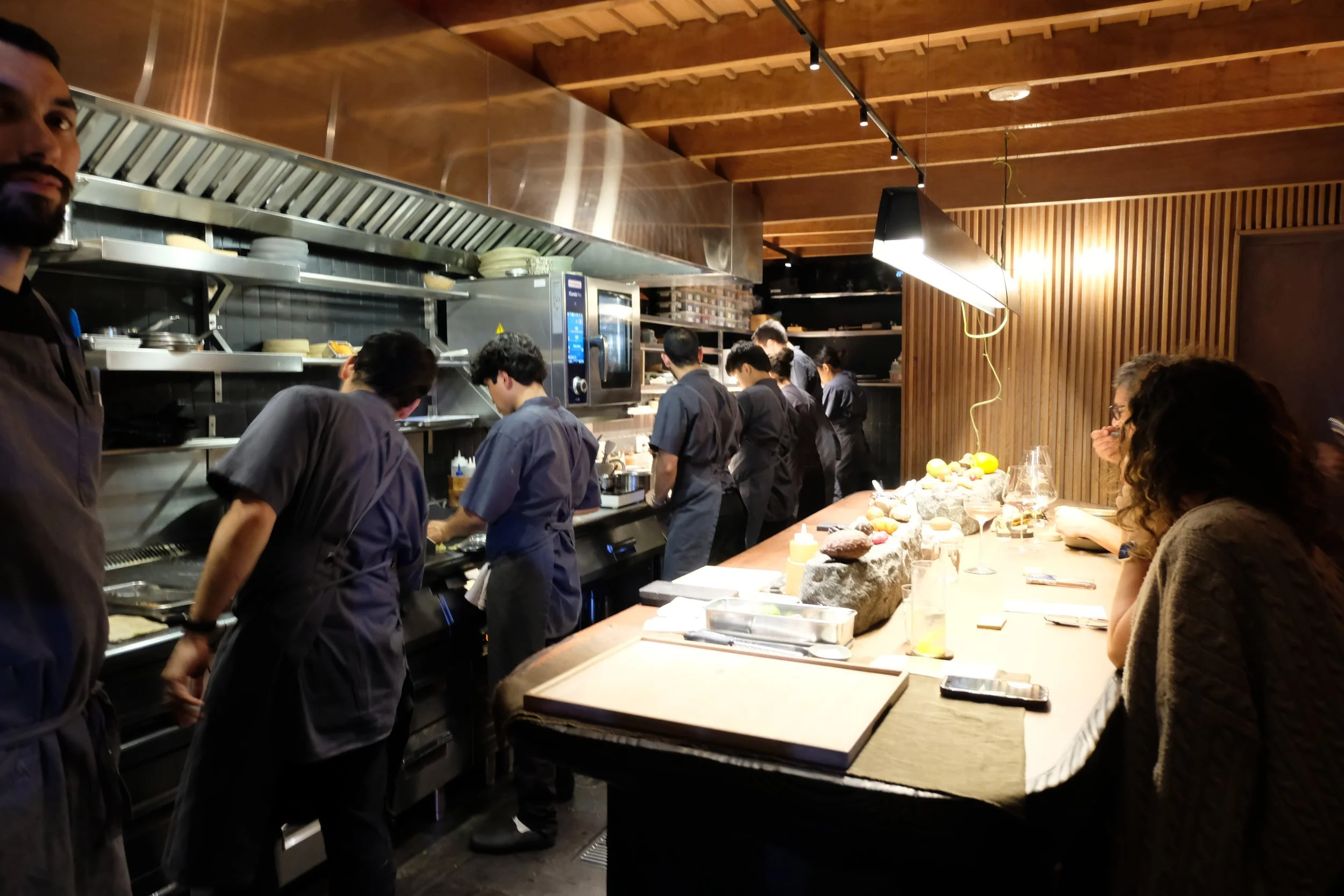
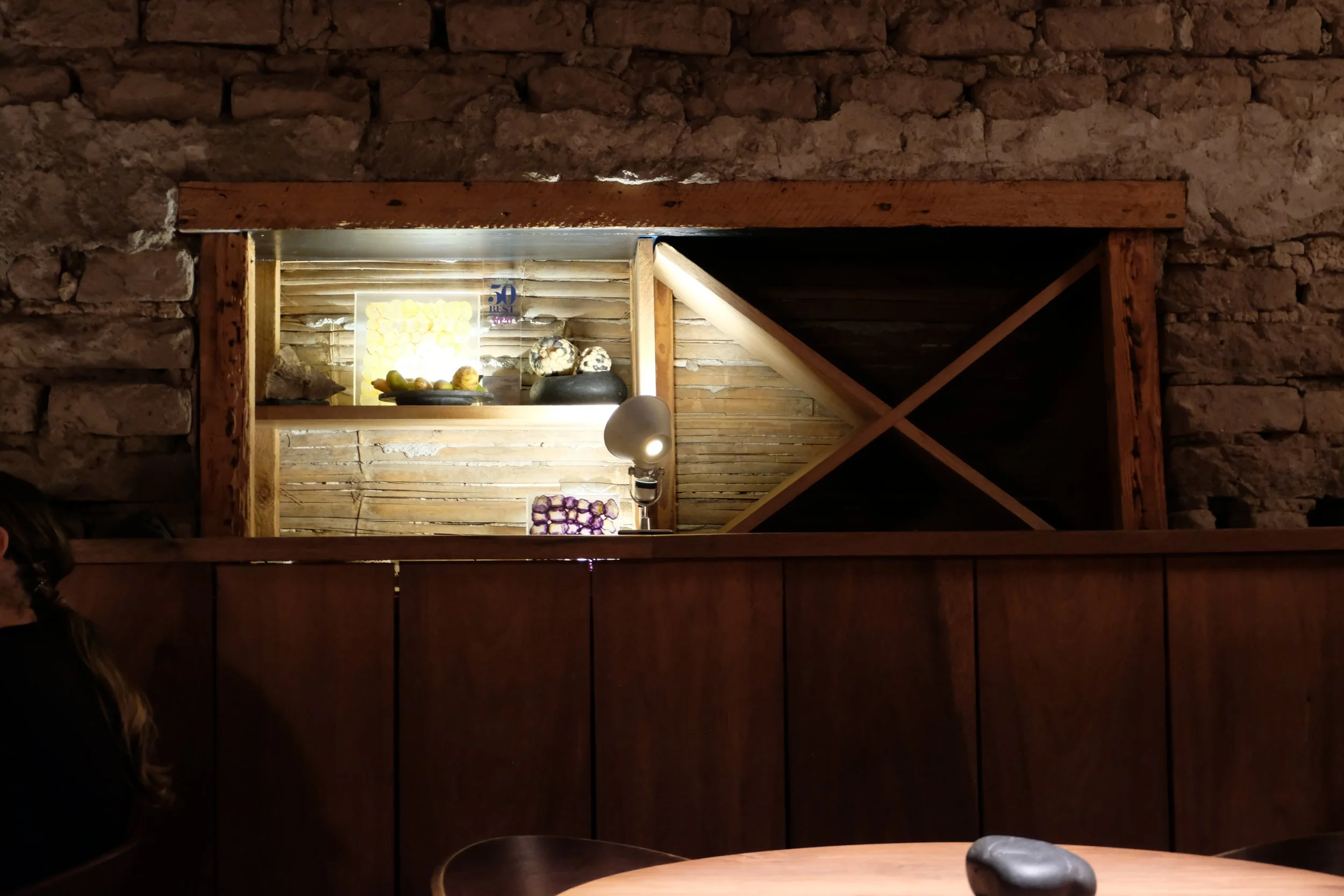
We had a two and a half-hour dinner, consisting of eleven unique dishes that showcased amazing technique, texture, flavors and unique ingredients. I had to take notes to educate myself as most of the ingredients are very native to the geographic location of Peru, Chile and Brasil.
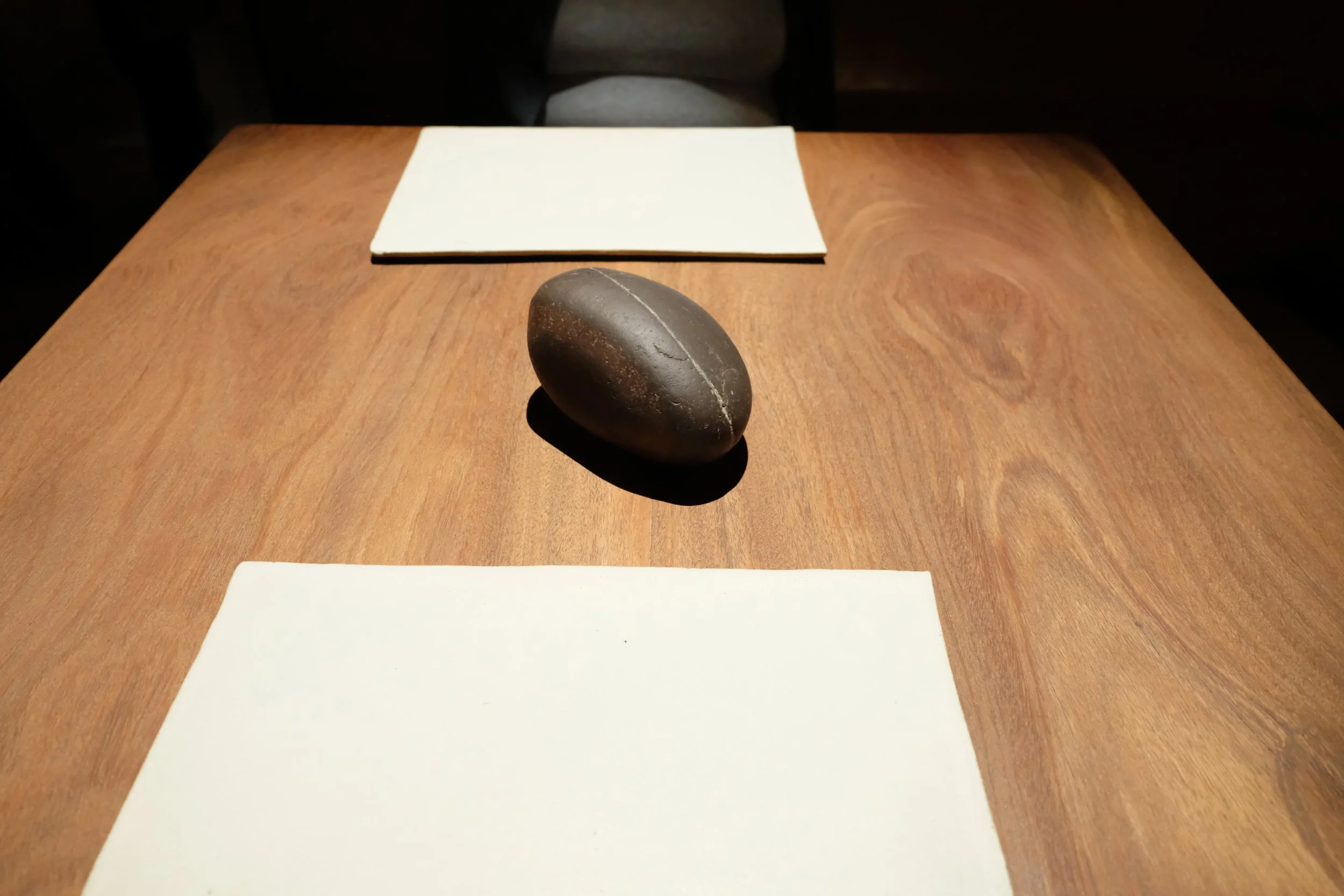
The table setting was simple, having. two rectangular white platforms that I would say are made of a cork-like material. In the middle, a polished rock.
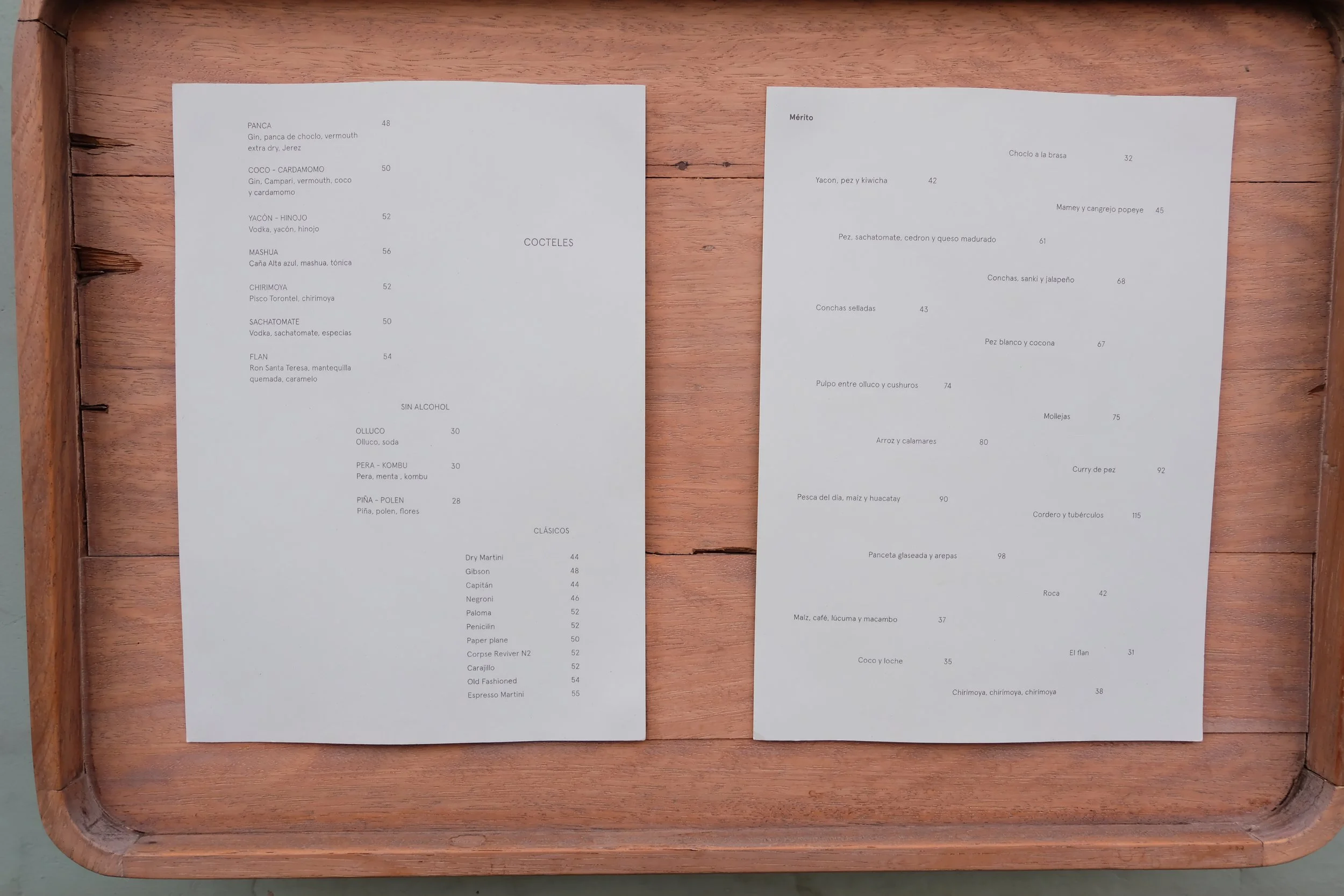
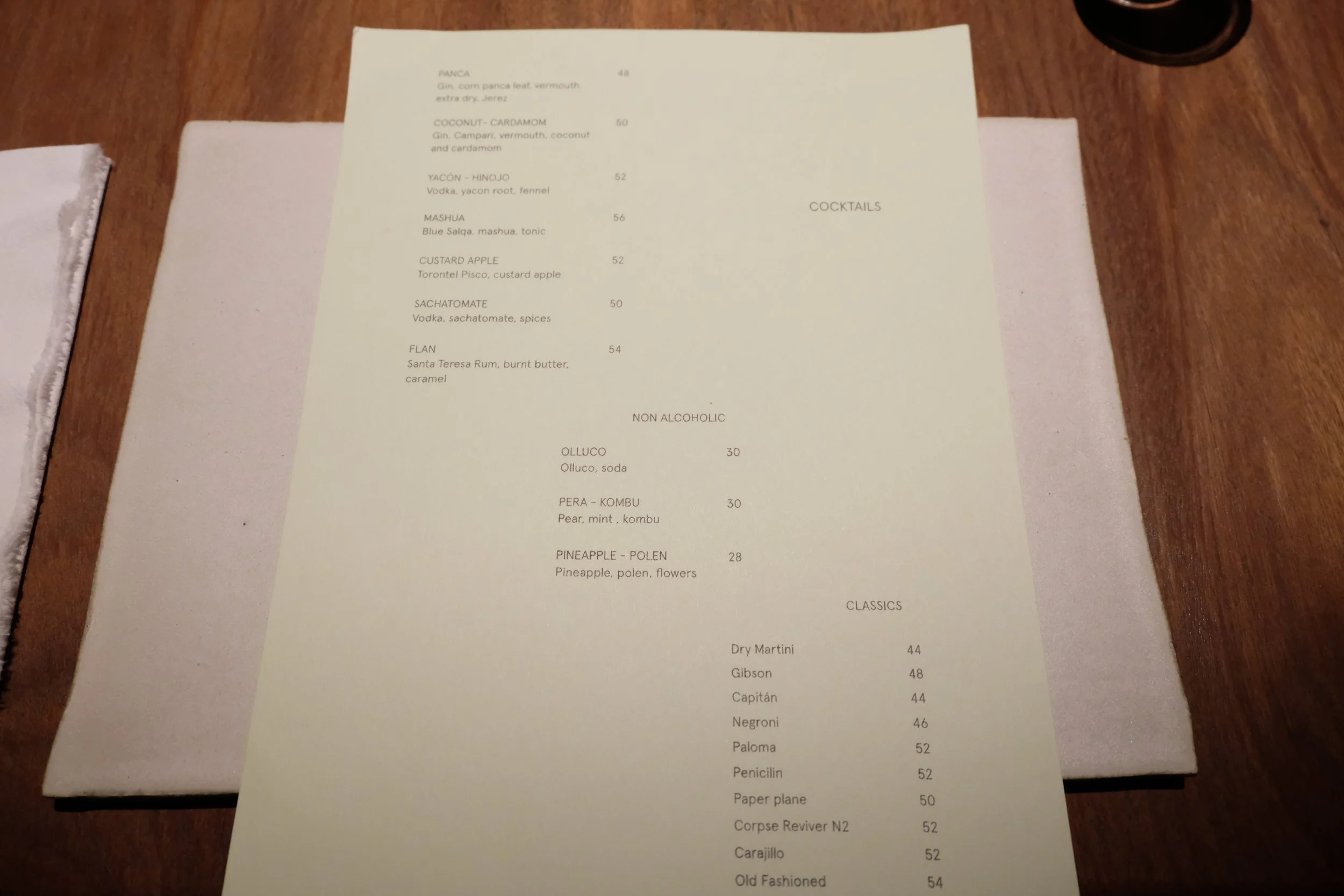
The menus were presented with simplicity as well. You can choose between the tasting menu and an a la carte menu (not pictured).
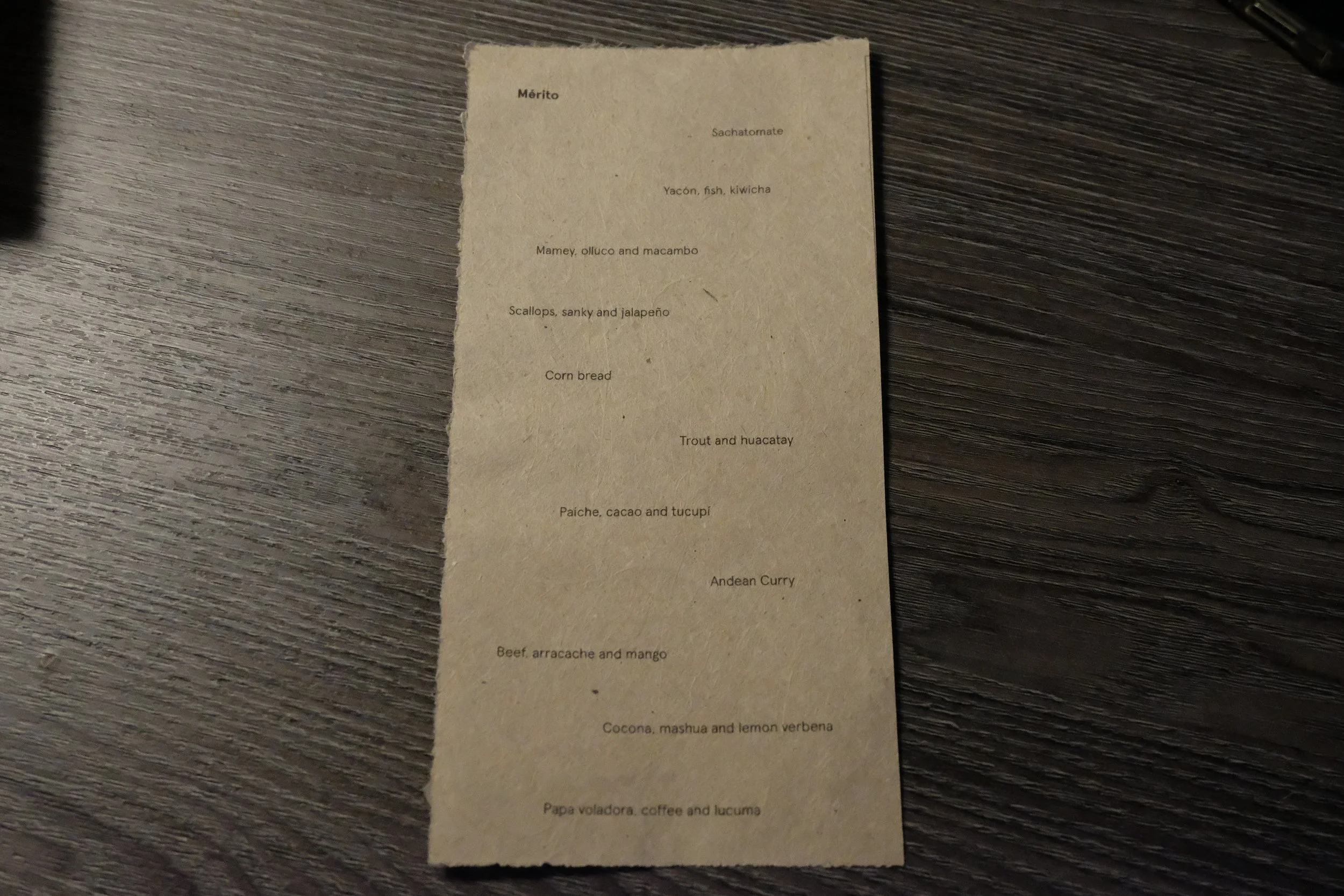
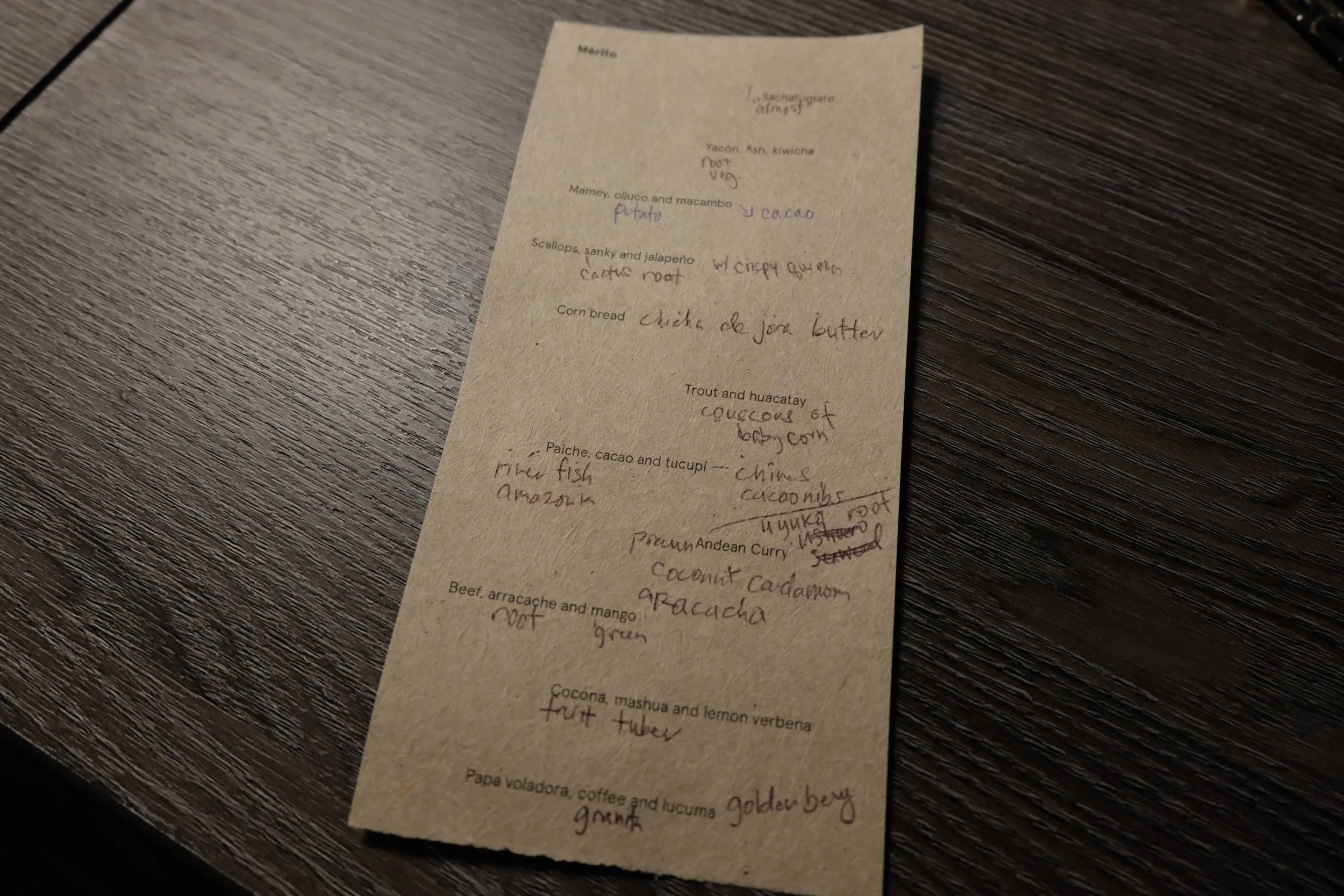
Things like Yacón, Paiche and Arracache are all indigenous ingredients, where the Amazonia provides some of the most-sought after ingredients in modern gastronomy. At the end of our experience, I was able to enlighten myself with most of the things that we had. All it took was a pen.
__________
We opted to order a la carte cocktails as we were seeking to experience well-crafted drinks that are true to the terroir and character of the city. I know that South America produces amazing wines, although, we didn’t want to commit to too much alcohol. Mérito’s cocktail program delivered what we were looking for: something unique, local and ethnic flavors and combination, foreign to where we live.
For our first round of drinks:
Panca, made with gin, corn panca leaves and vermouth.
Peruvians love their extractions and you can see it with the final product. Clear liquids that had been clarified while retaining the strong essence.
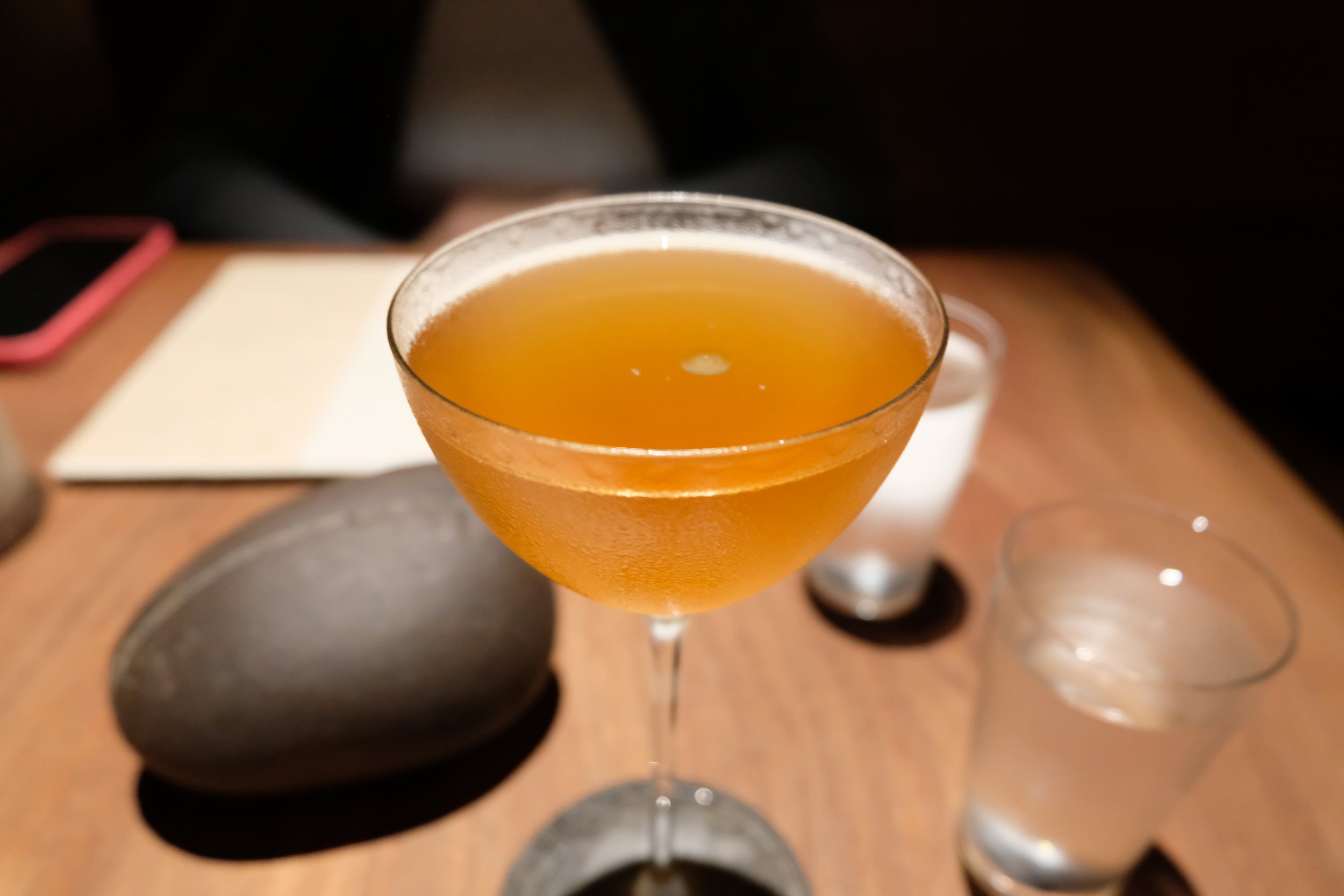
Custard Apple-torontel pisco, custard apple.
Strong on the pisco, fruity, refreshing, very balanced and not too sweet. Flavors were a mixture pear and apple.
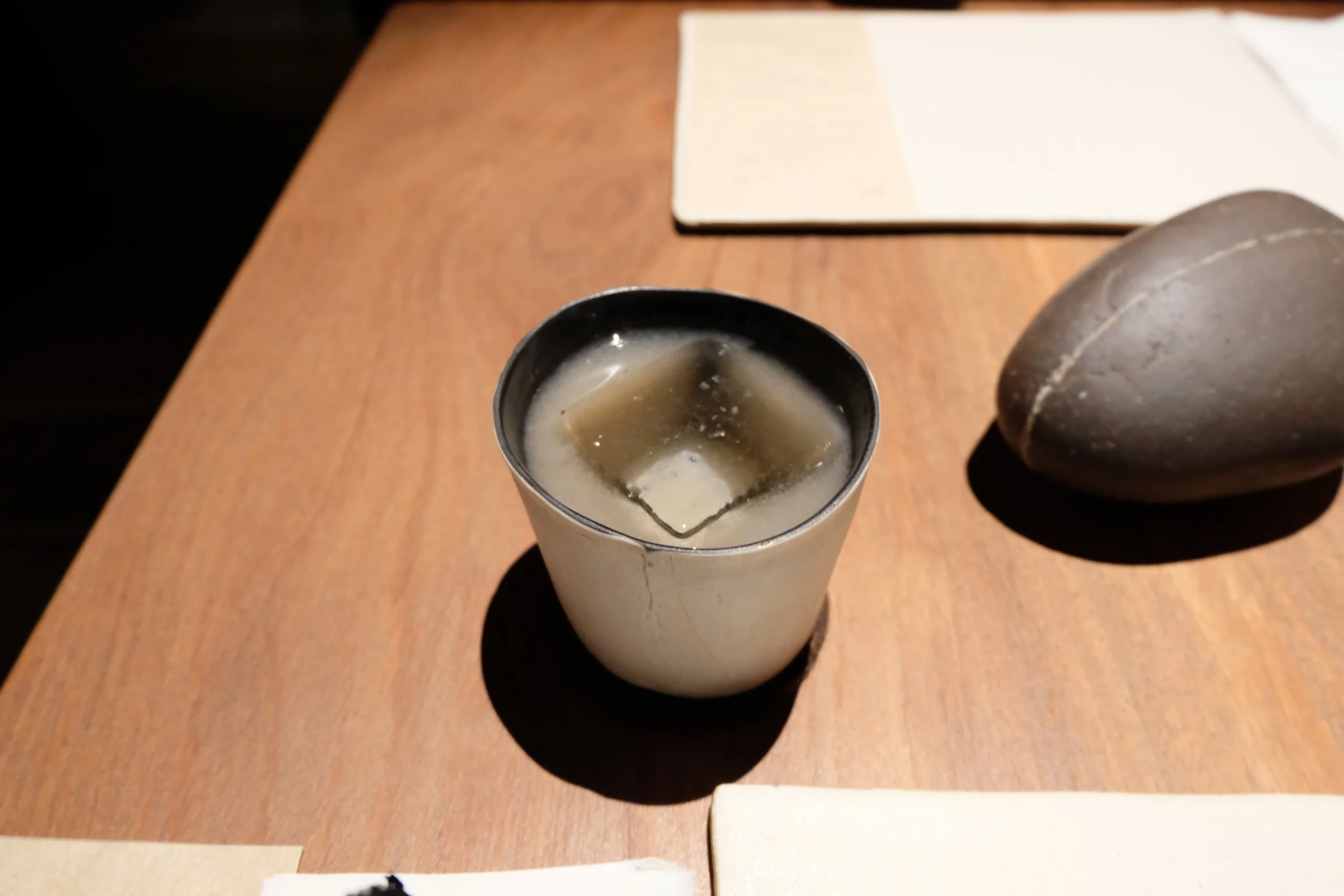
Second round of drinks:
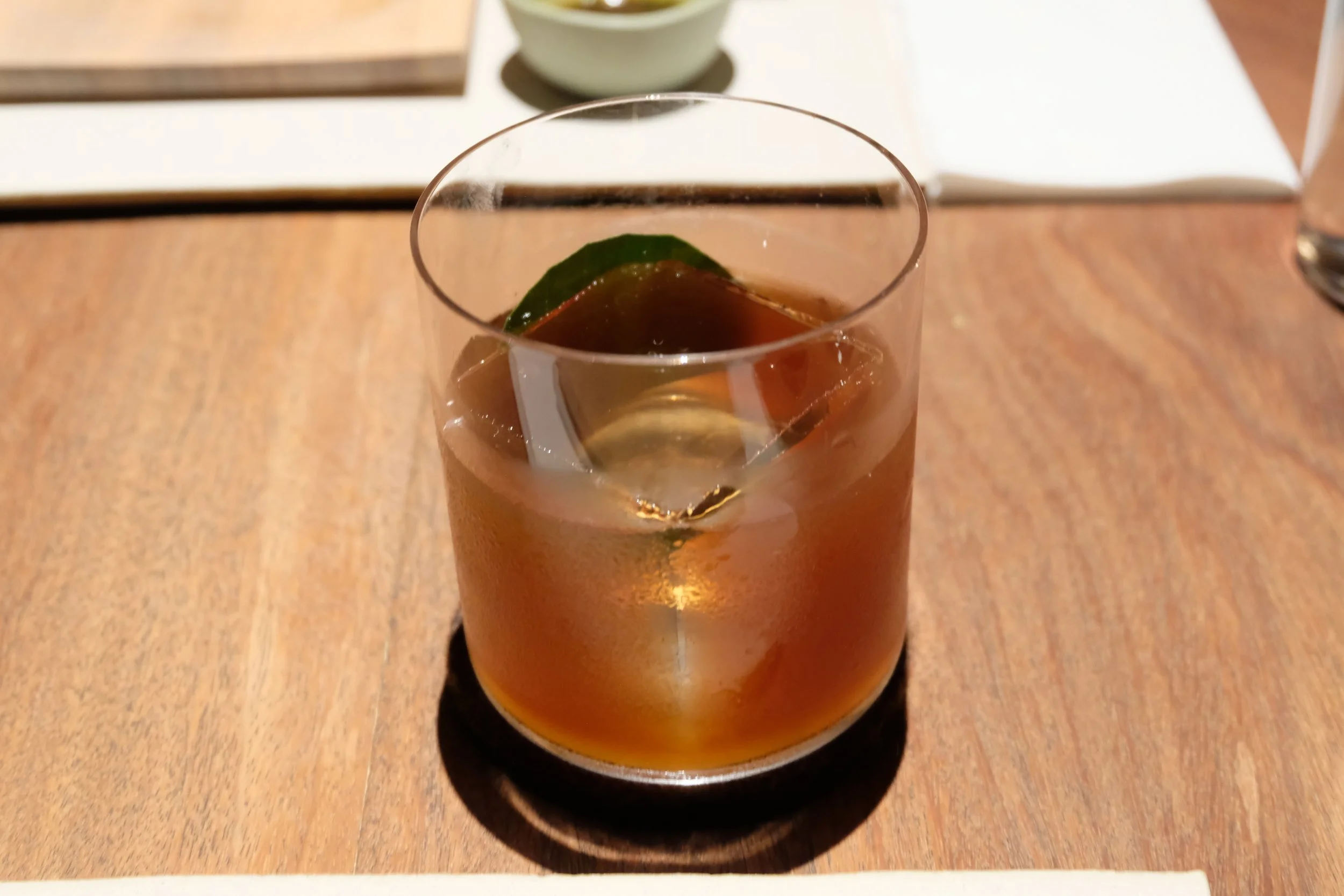
Coconut-Cardamom is gin, campari, vermouth, coconut and cardamom.
The server said that this is their version of a Negroni. Earthy and floral, the coconut shines through while the cardamom hugs your tongue gently.
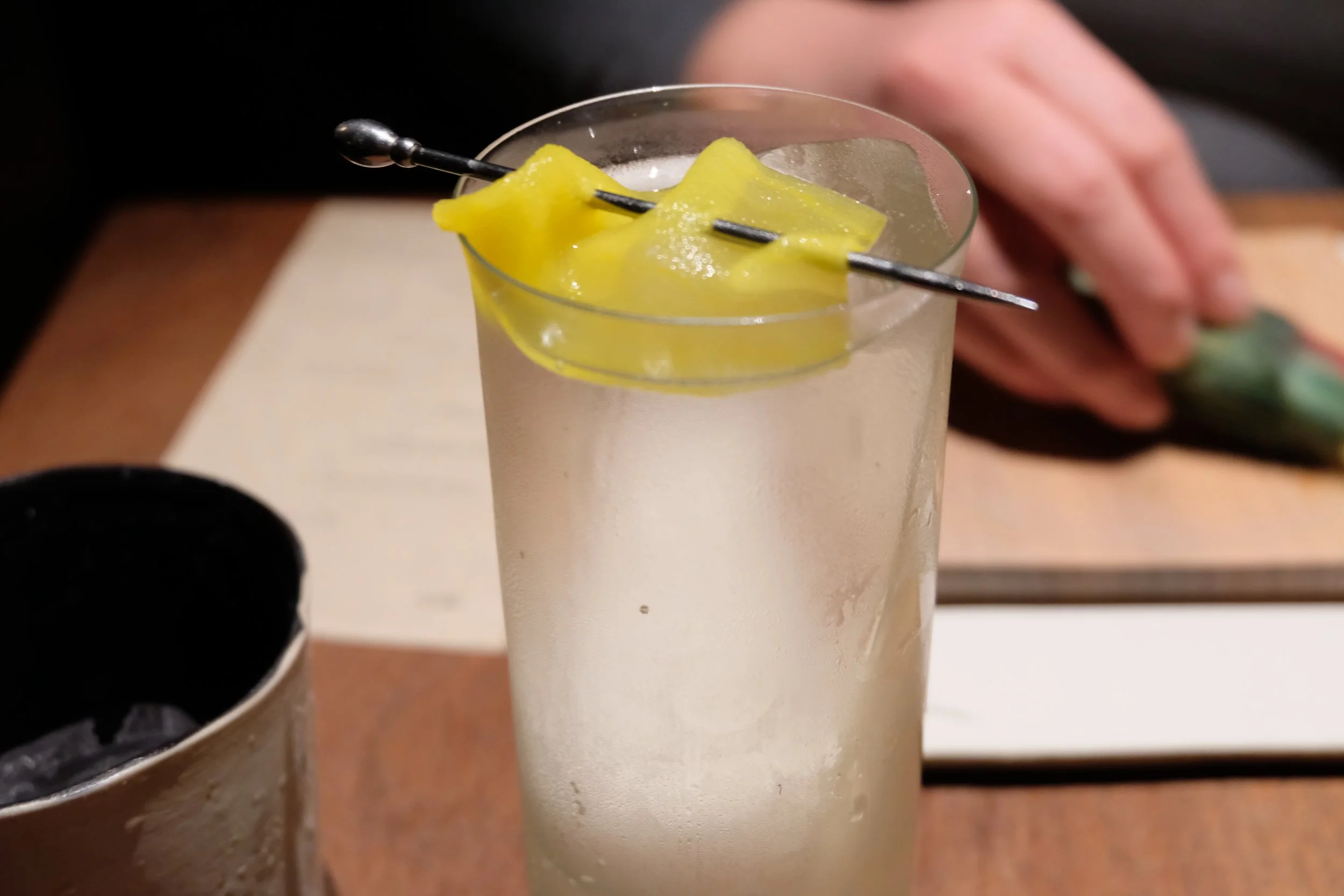
Yacón-Hinojo Vodka, Yacón Root and Fennel
This is by far my favorite drink. A clear extraction of fennel essence and the Yacón root (tuber vegetable). You get hints of citrus and cucumber with a clean finish. They were able to turn the Yacón into something creamy to the mouthfeel.
__________
The team’s artistic expression of every dish is superb. The presentation, portion size, flavors and progression have all been accounted for.
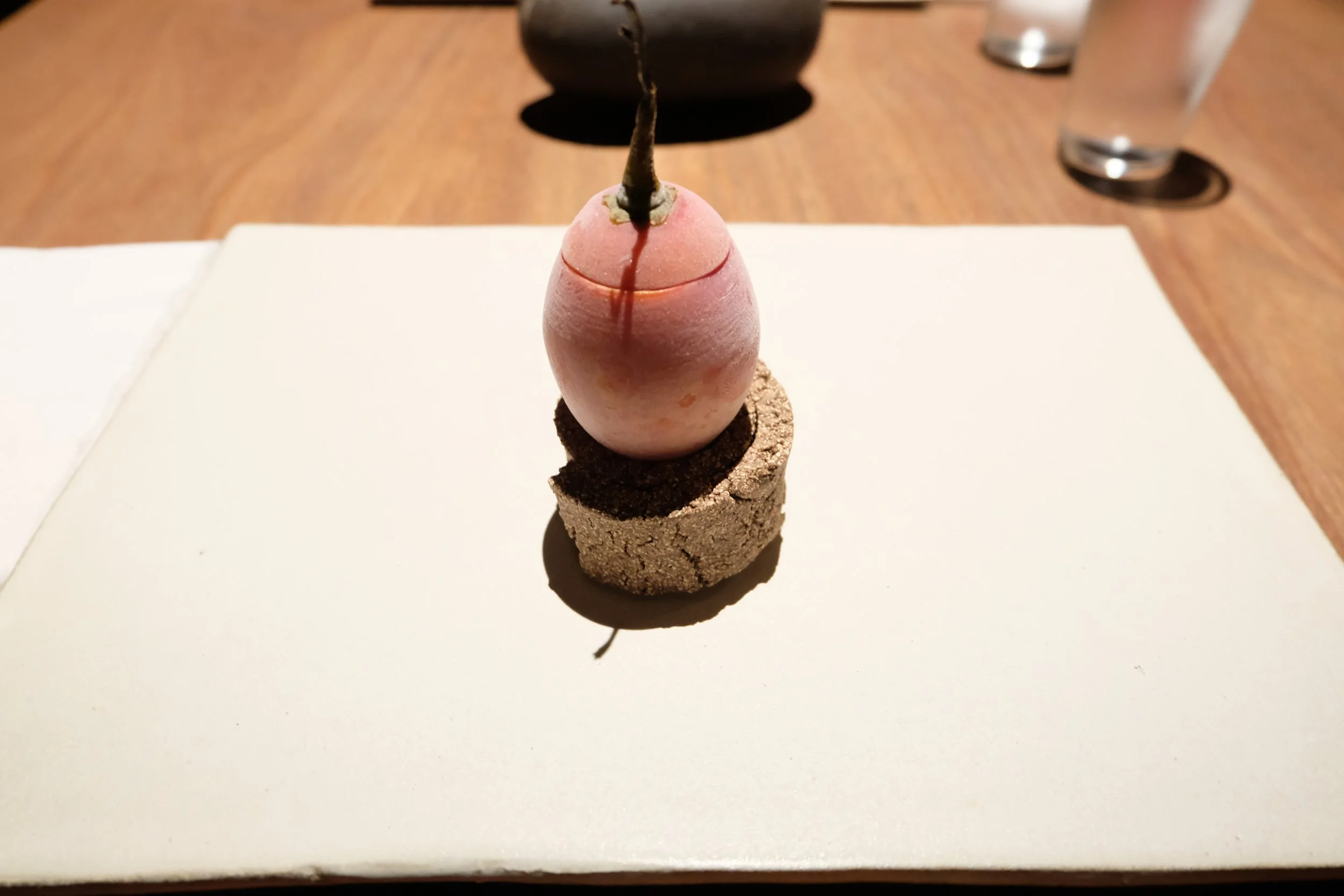
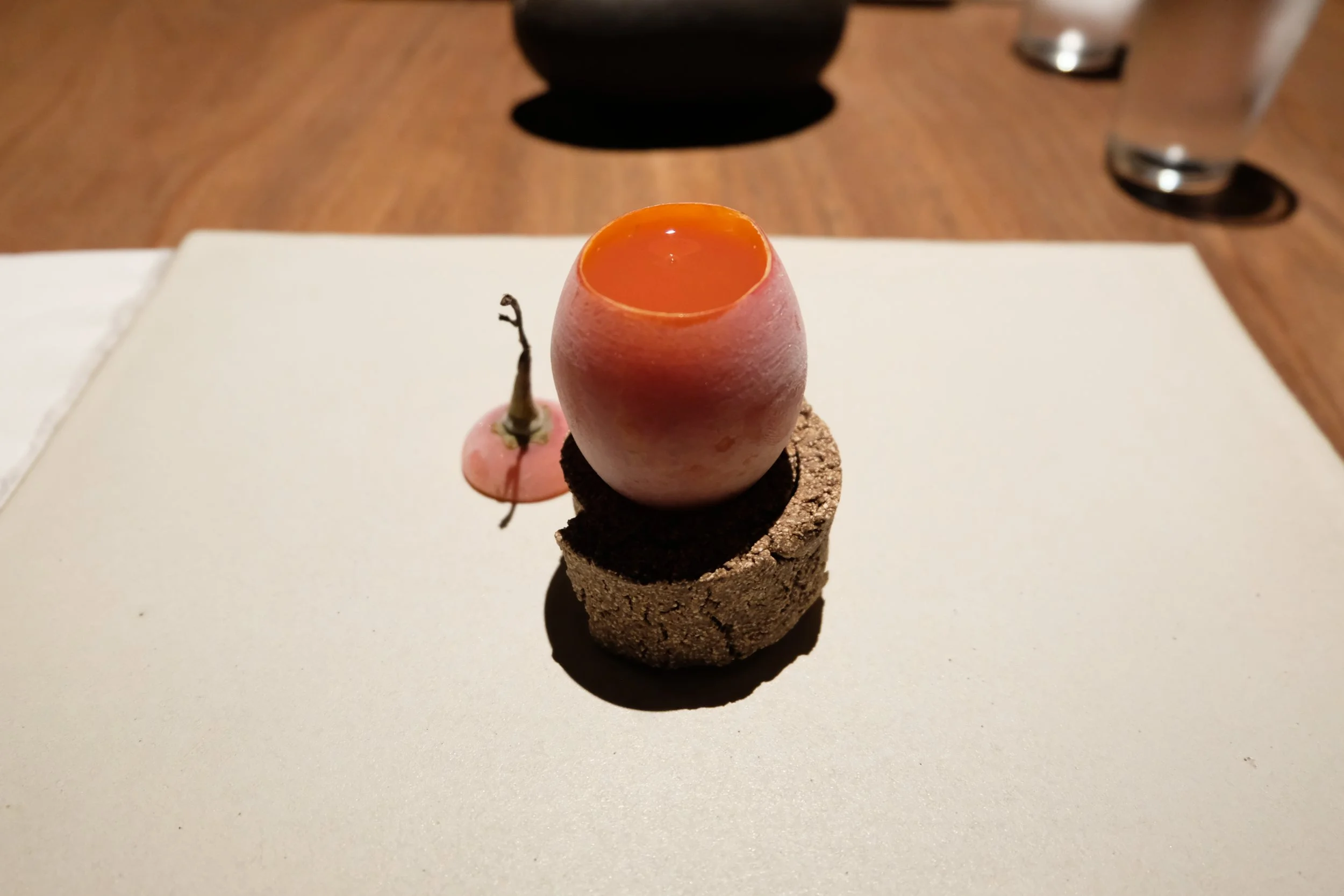
Starting the journey, we were given the Sachatomate.
Sacha in Peruvian Spanish means “almost.” In this application, we were given a native fruit, leaning towards being a plum, that has been hollowed out and frozen. Inside, is a juice that tastes like tomato, well… almost. I got hints of tomato, plum, passionfruit, mango and even mustard as well. There’s also a component that has been lacto fermented according to the team, I just can’t remember what.
Very refreshing.
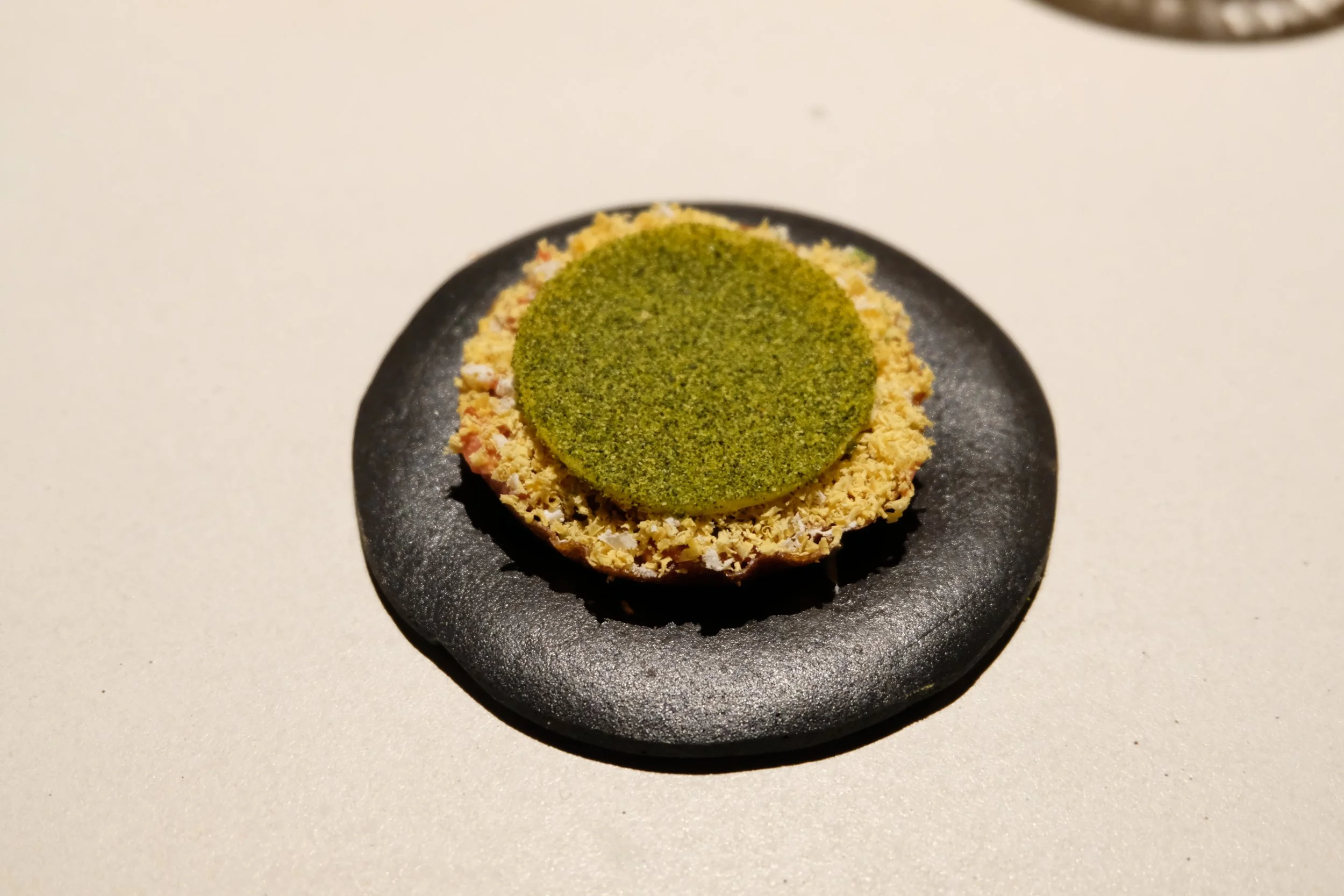
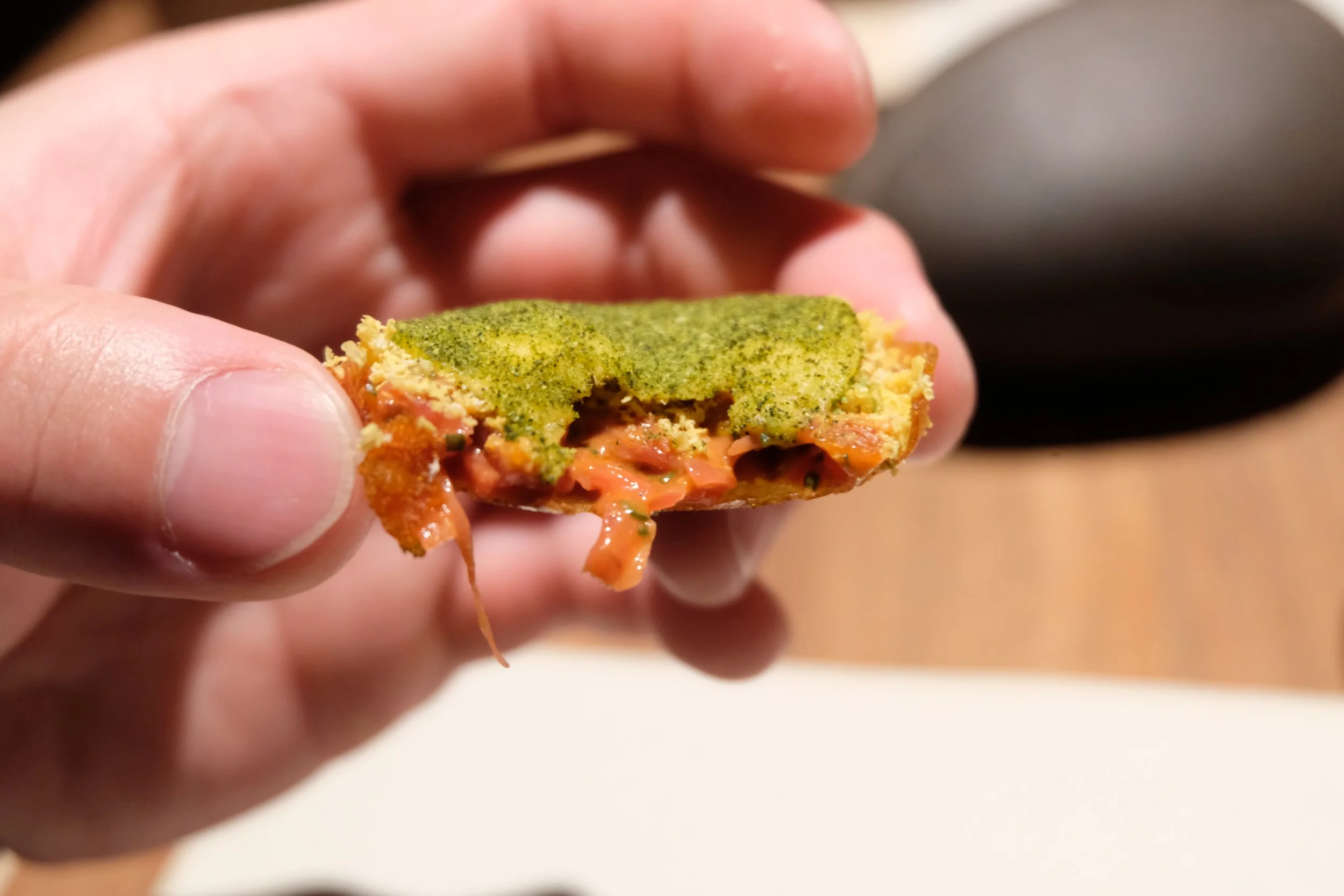
Up next, a bite of Yacón, Paiche and Kiwicha.
Yacón is a native root vegetable, similar-looking to sweet potato, but with a dark peel.
Paiche is a local freshwater fish, abundantly found in the Amazonian basin, similar to a carp.
Kiwicha is a grain, almost similar to couscous.
In this application, the chefs created a crunchy chip of Kiwicha. On top, is a tartare of Paiche, chopped, paired with a floral leaf that brightens the bite and a rich mayo-like binder that bright—similar to yuzu. to top it off, a jelly made out of Yacon. The flavors were amazing, leaning towards the tart-side.
Up next, Mamey, Olluco and Macambo Tart
Mamey is a tropical fruit, widely used in Latin American cuisine.
Olluco is a type of potato
Macambo is coco bean, part of the complex chocolate / cacao family
In this application, the olluco has been turned into a tart. The shell is then filled with puree of olluco and macambo, mamey tartare and shavings. The bite is creamy, rich and very decadent. My moment it touches your tongue, the puree melts and coats your mouth, while the mamey cuts through all the richness.
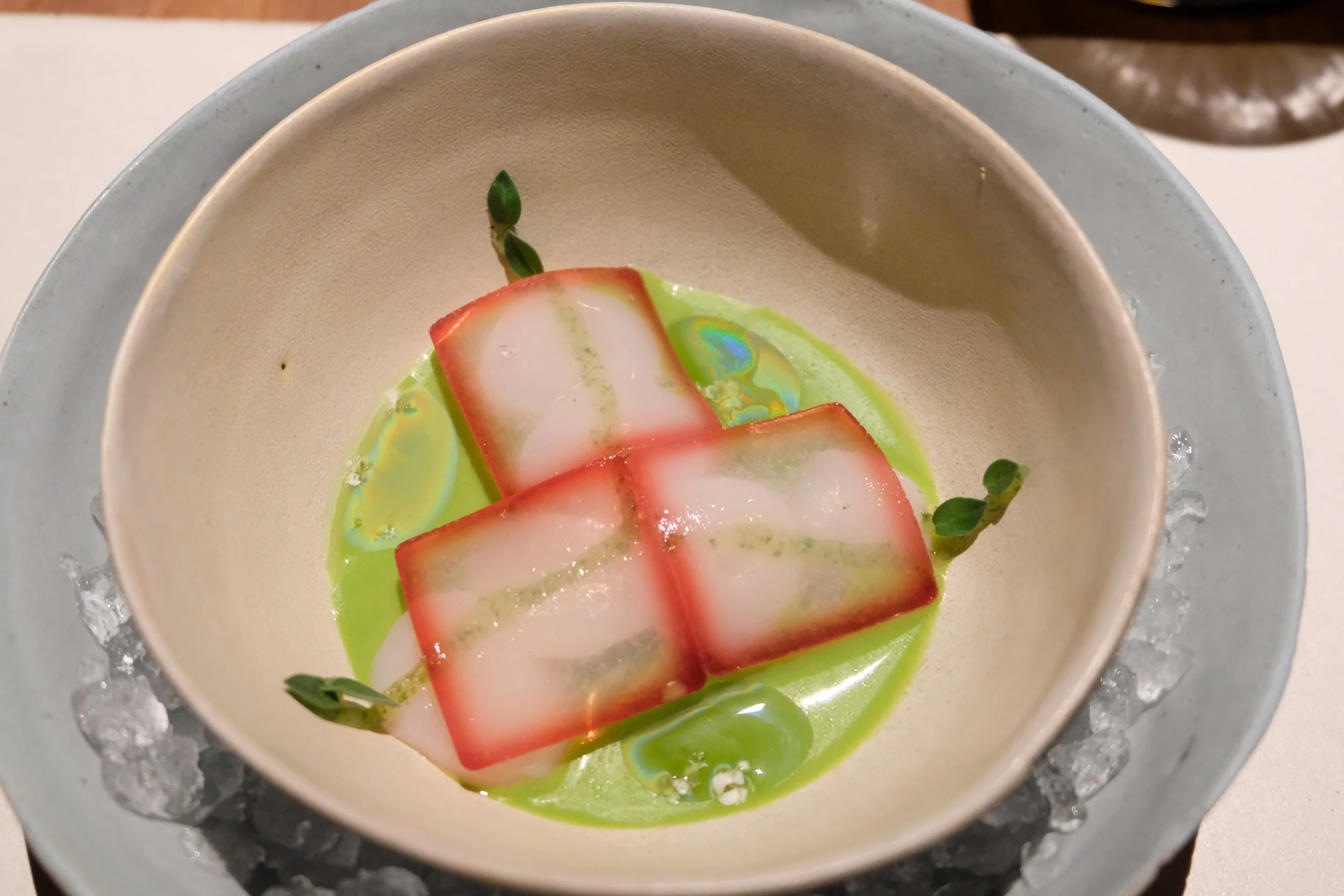
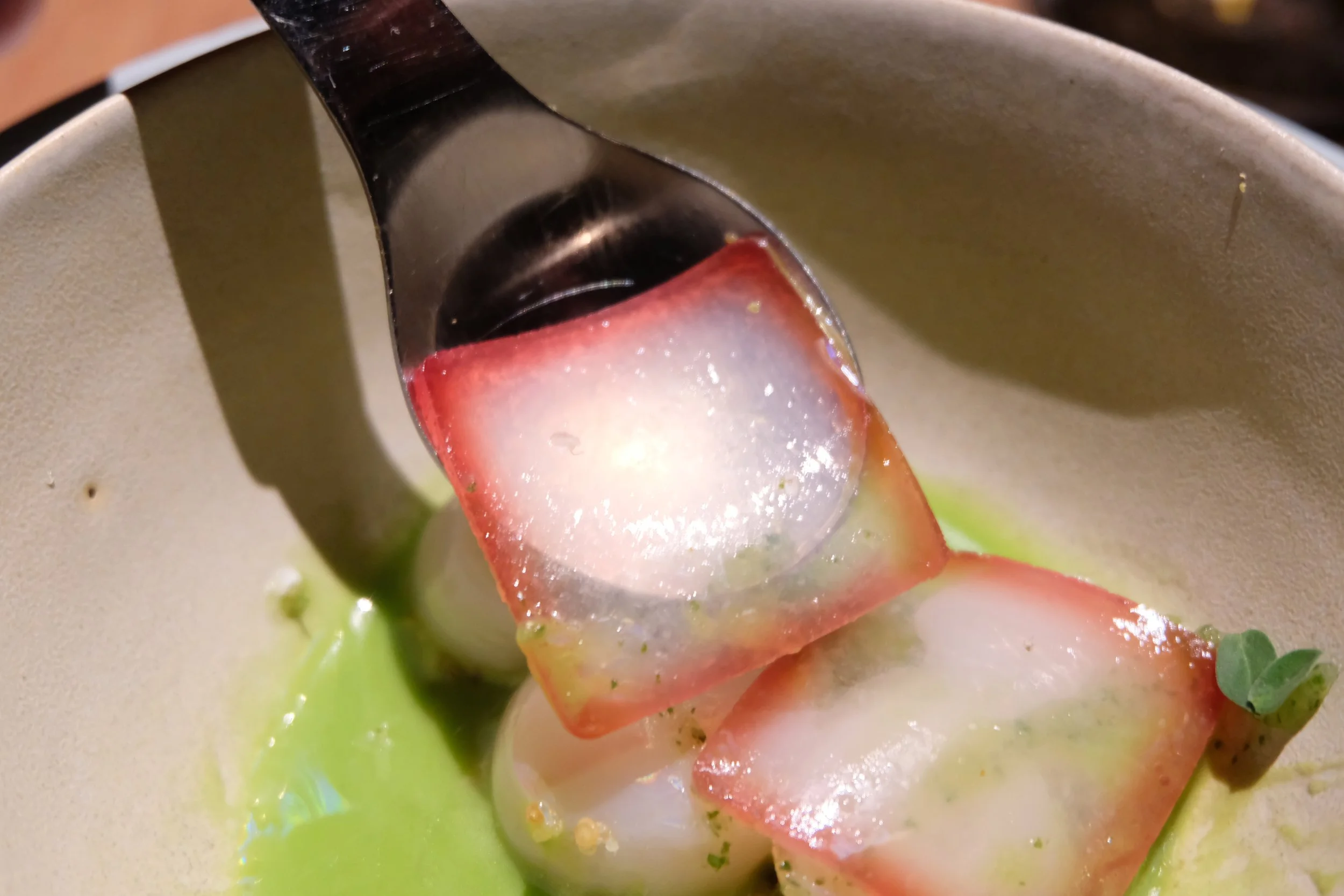
Scallops, Sanky and Jalapeño, with crispy quinoa
Sanky is a cactus root that bears fruit.
In this application, the sauce is made from coconut milk, sanky and jalapeño. It is creamy and lends a tiny kick of spiciness. These square jellies that you are seeing are made from the Sanky. Under, you have the tiny bay scallops that are local to Peru, very sweet and neutral in flavor. They incorporate crispy quinoa along with the sauce for the added crunchy texture and fresh marjoram leaves for a floral burst.
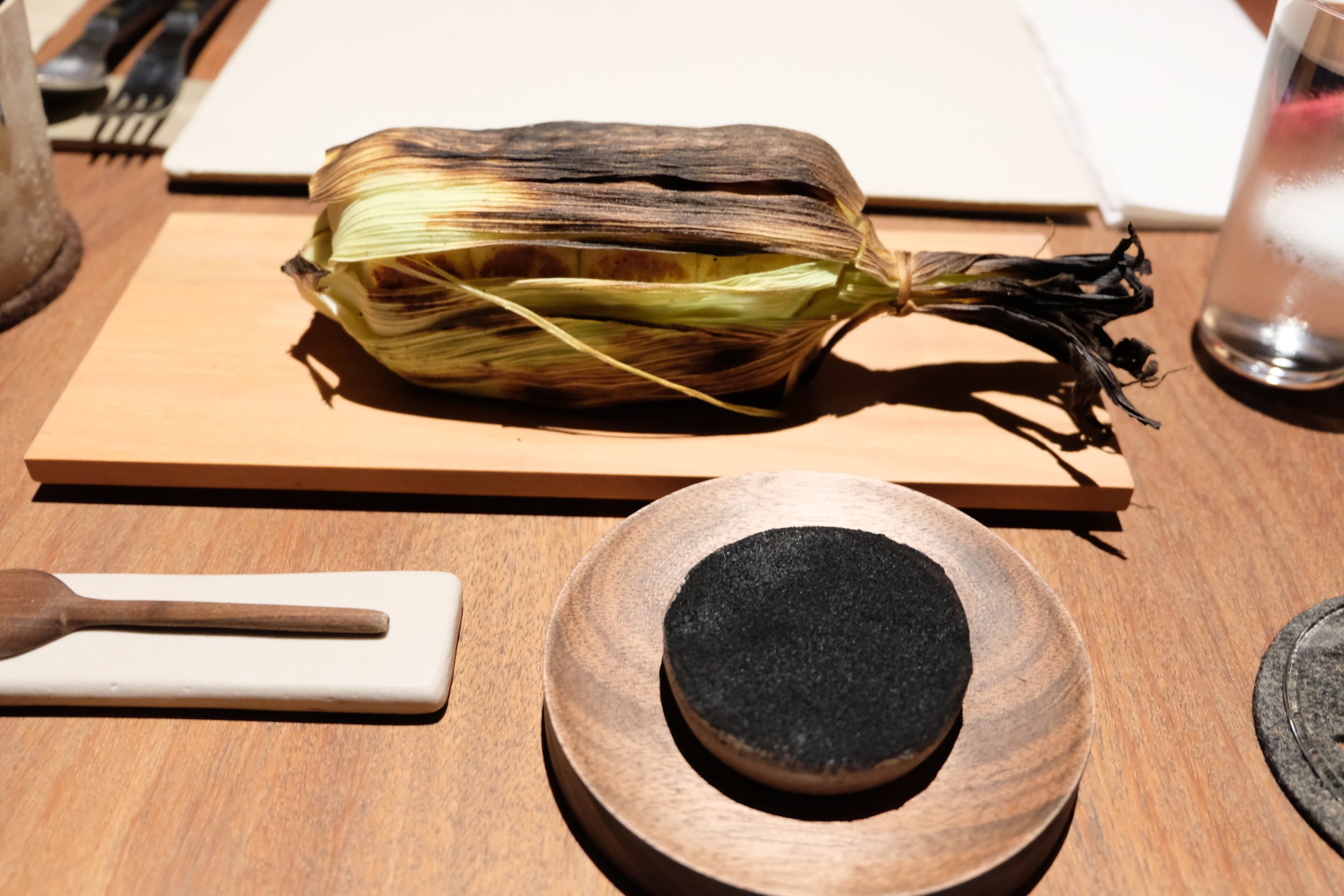
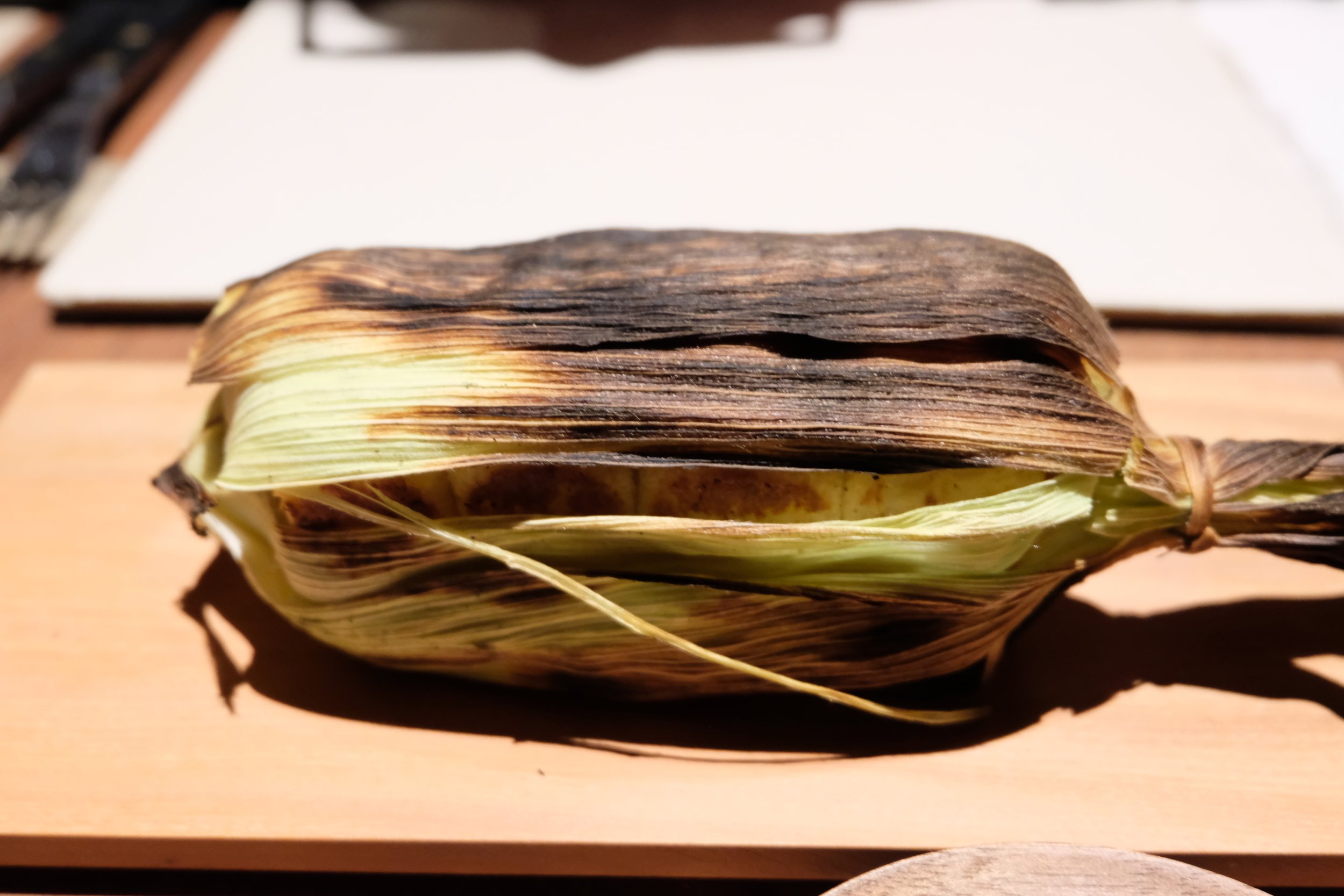
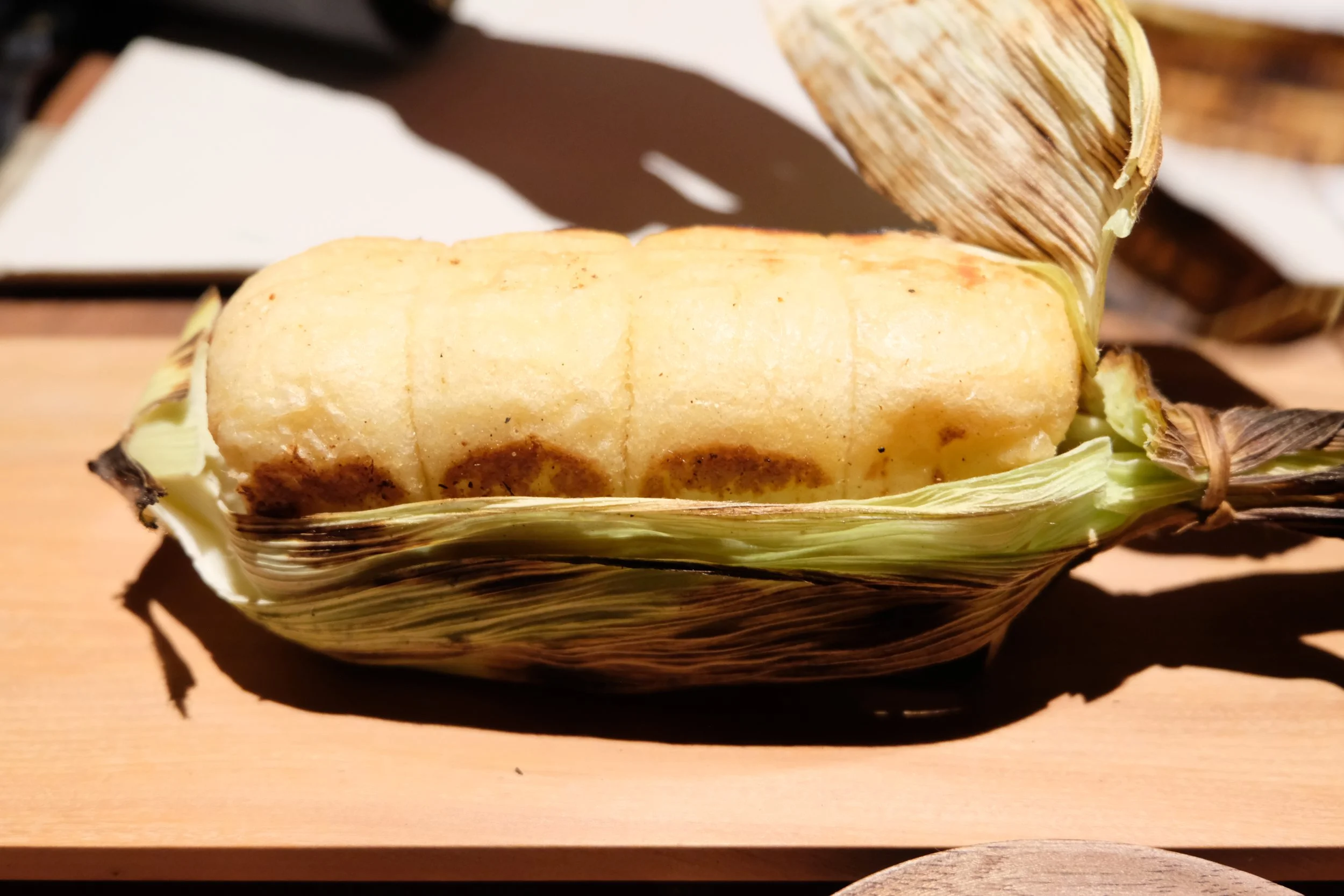
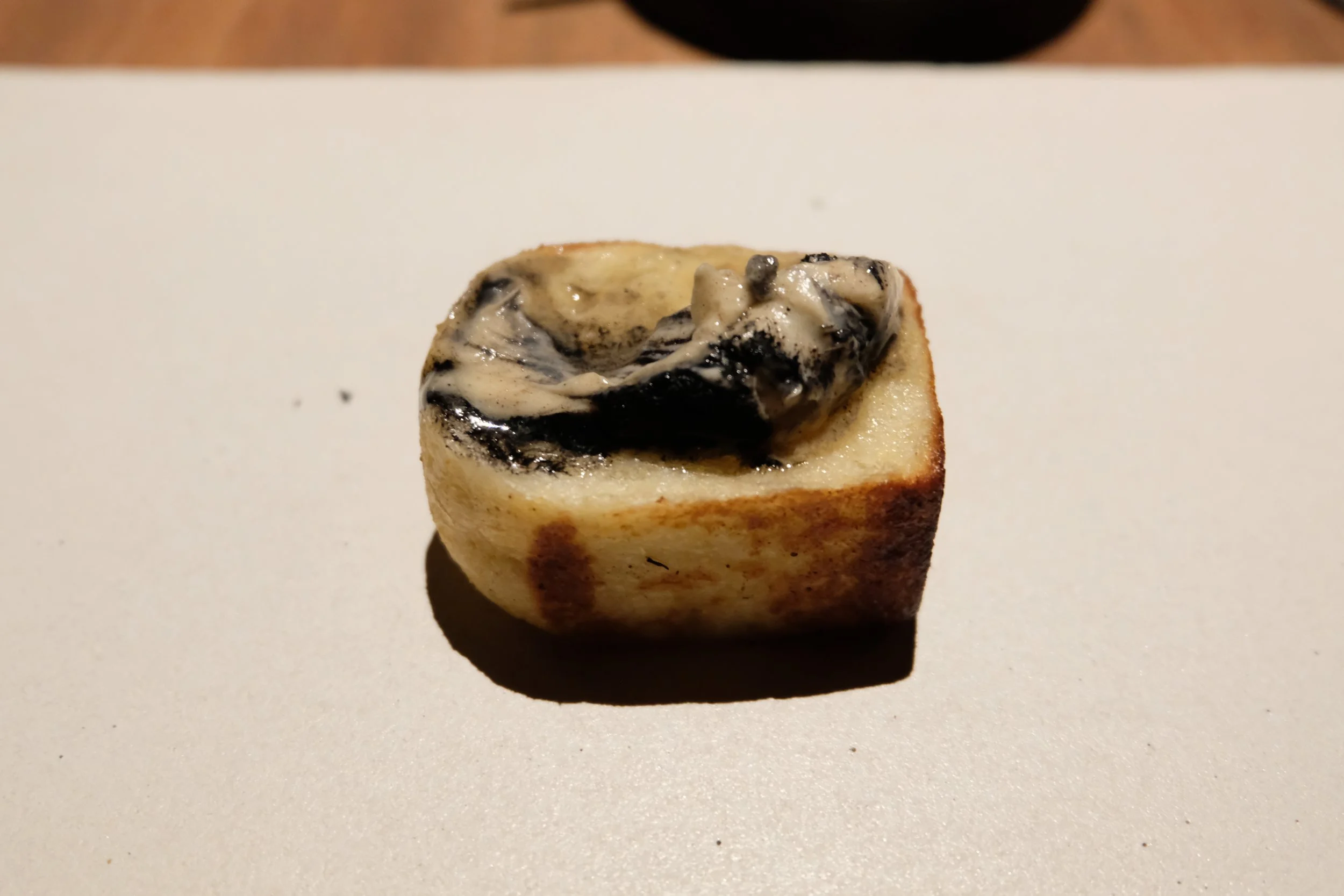
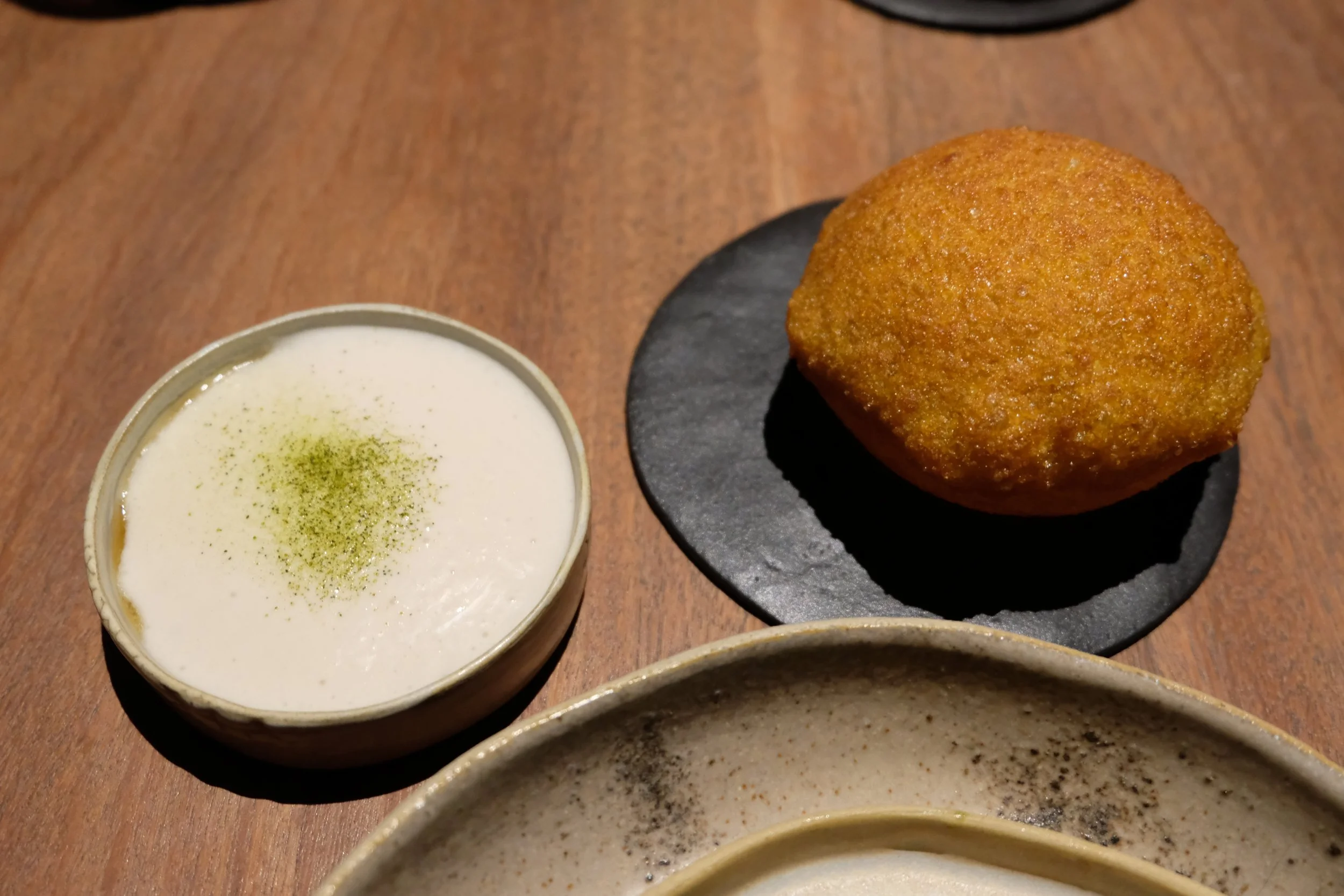
Cornbread with Chicha de Jora butter
This is by far the most amazing presentation that touched my heart. When they dropped it to the table, you are instantly surrounded by the smell of burnt corn husk, very nostalgic of my childhood, where we burn or grill banana leaves back in the good old days. While predominantly corn, the bread lends a brioche-like flavor and mouthfeel. It’s not too sweet and is very tender. The outside layer lends a crispy texture and contrasts with everything.
Chicha de Jora is a fermented liquid corn product, widely used in Peru for different applications both in food and drink. It is tart but is full of flavor, think kombucha or apple cider.
You take a piece of the cornbread and spread the semi-sour yet creamy butter and boom. Magic. I could have eaten another round of this.
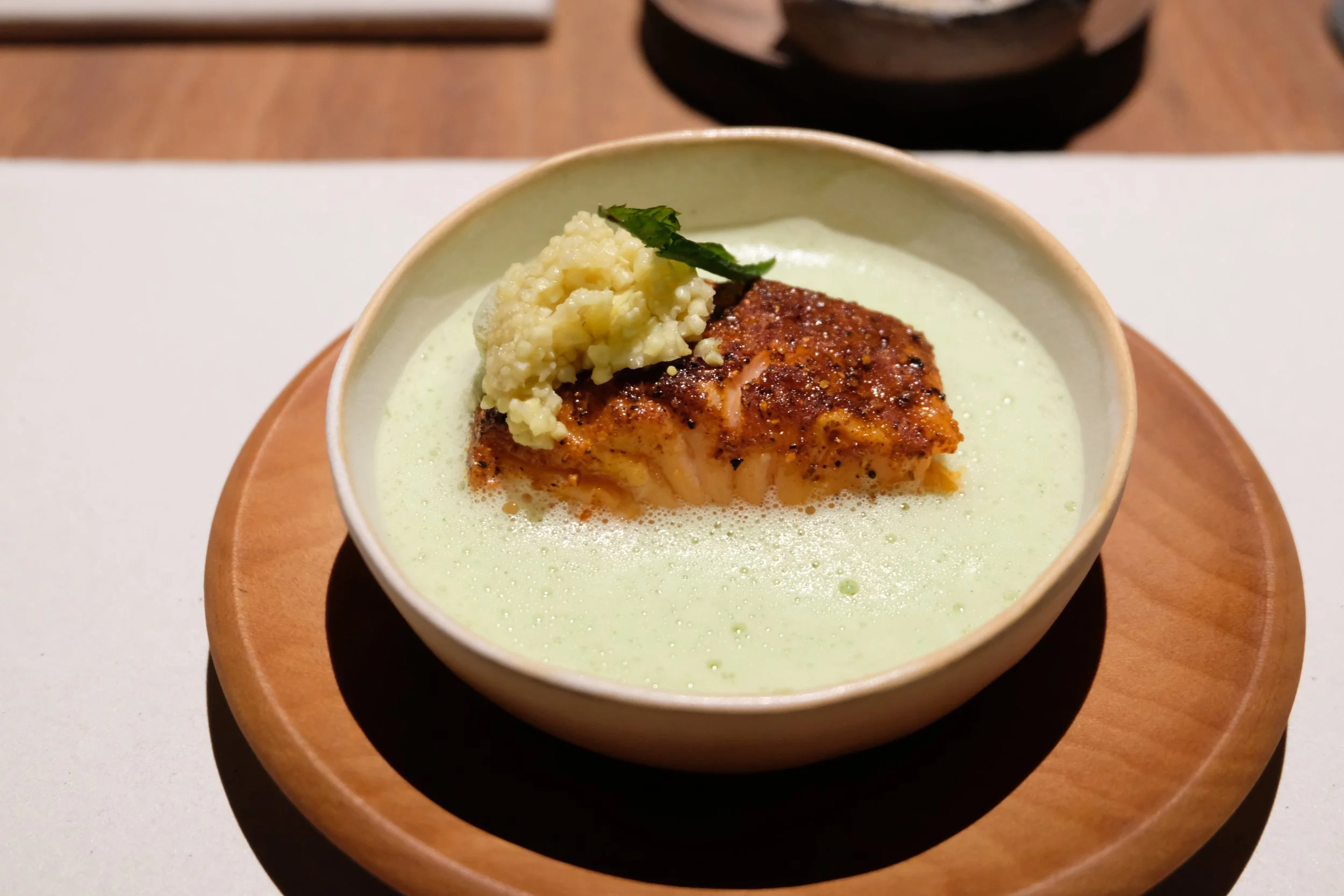
Trout and Huacatay, with couscous of baby corn
Huacatay is the “black mint” of Peru, a green, leafy herb that is versatile for many applications.
Perfectly cooked trout paired with creamy huacatay foam sauce. You can taste the “mintiness” of the sauce. This might be the safest dish out of the menu, but still tasty.
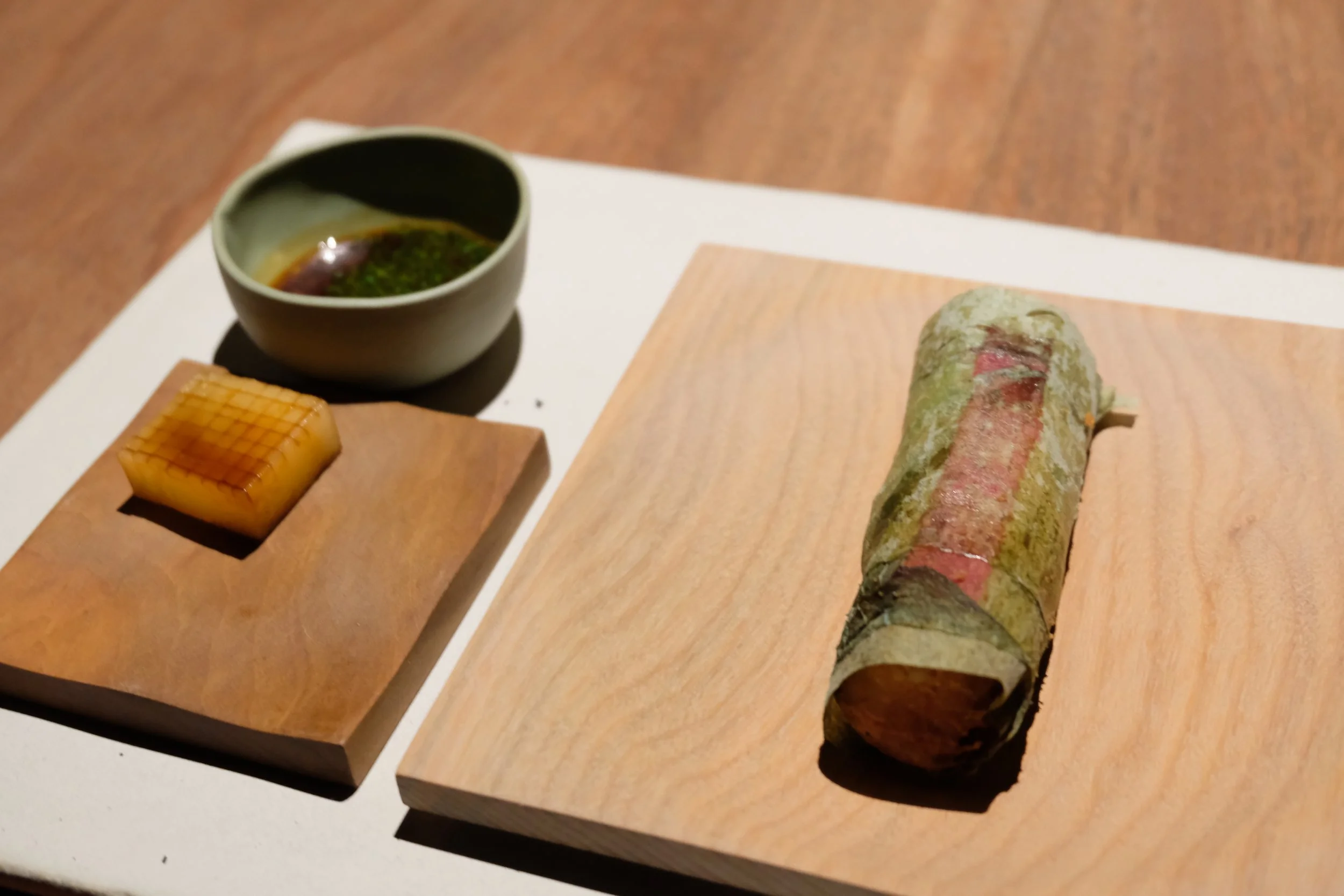
Paiche, Cacao, and Tucupi, with chives and cacao nibs
As mentioned, Paiche is an Amazonian river fish, similar to Carp.
Tucupi is a root vegetable coming from Peru.
In this application, the Paiche, is breaded and deep fried, wrapped in a leaf with other vegetables. You dip the fish roll in the sauce made out of cacao and jus. The sauce reminds me of a really strong beef jus with chocolate and chives. It had an umami and super savory flavor that pairs well with the fried fish roll. You then take bite of the crunchy tucupi to cut through the richness.
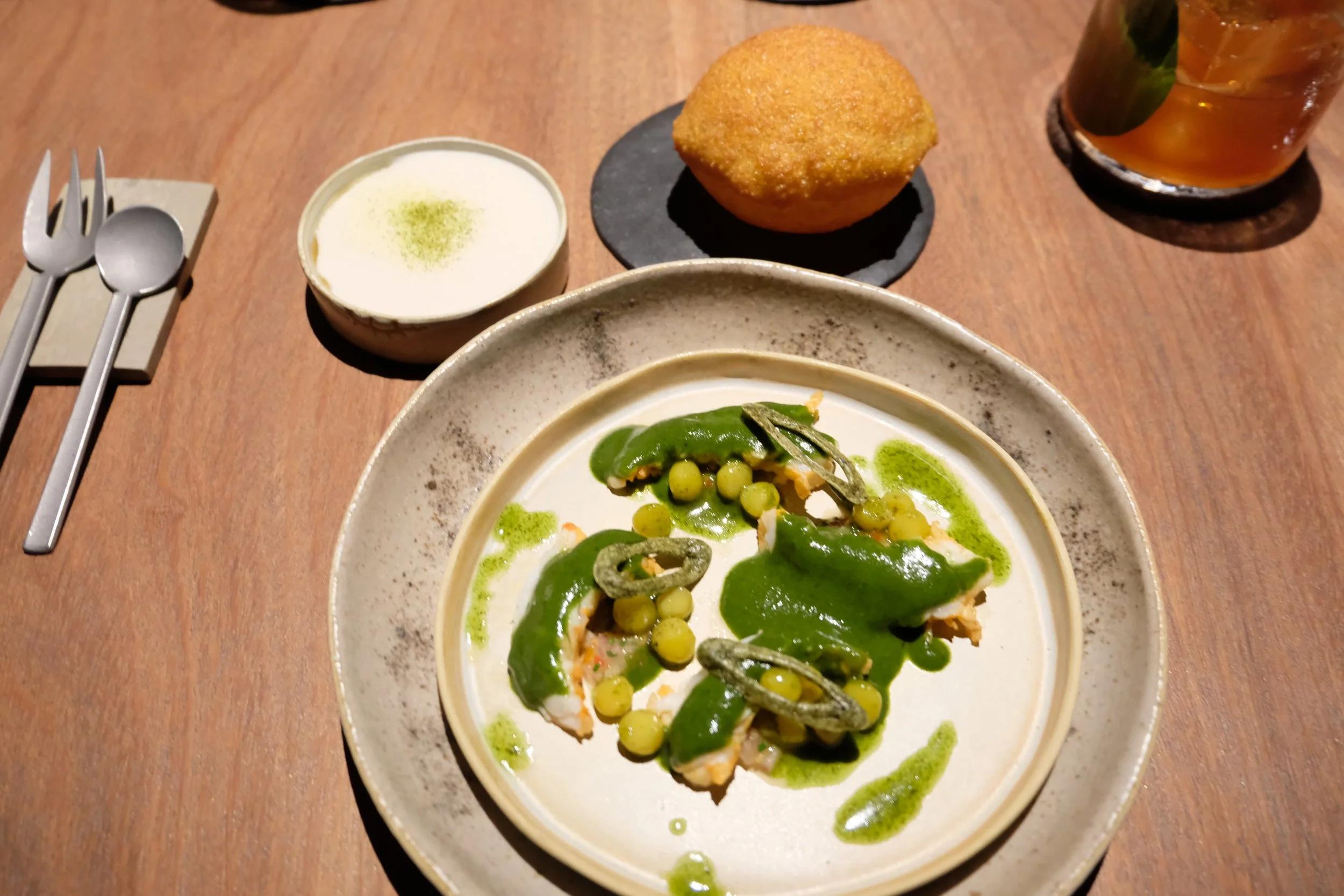
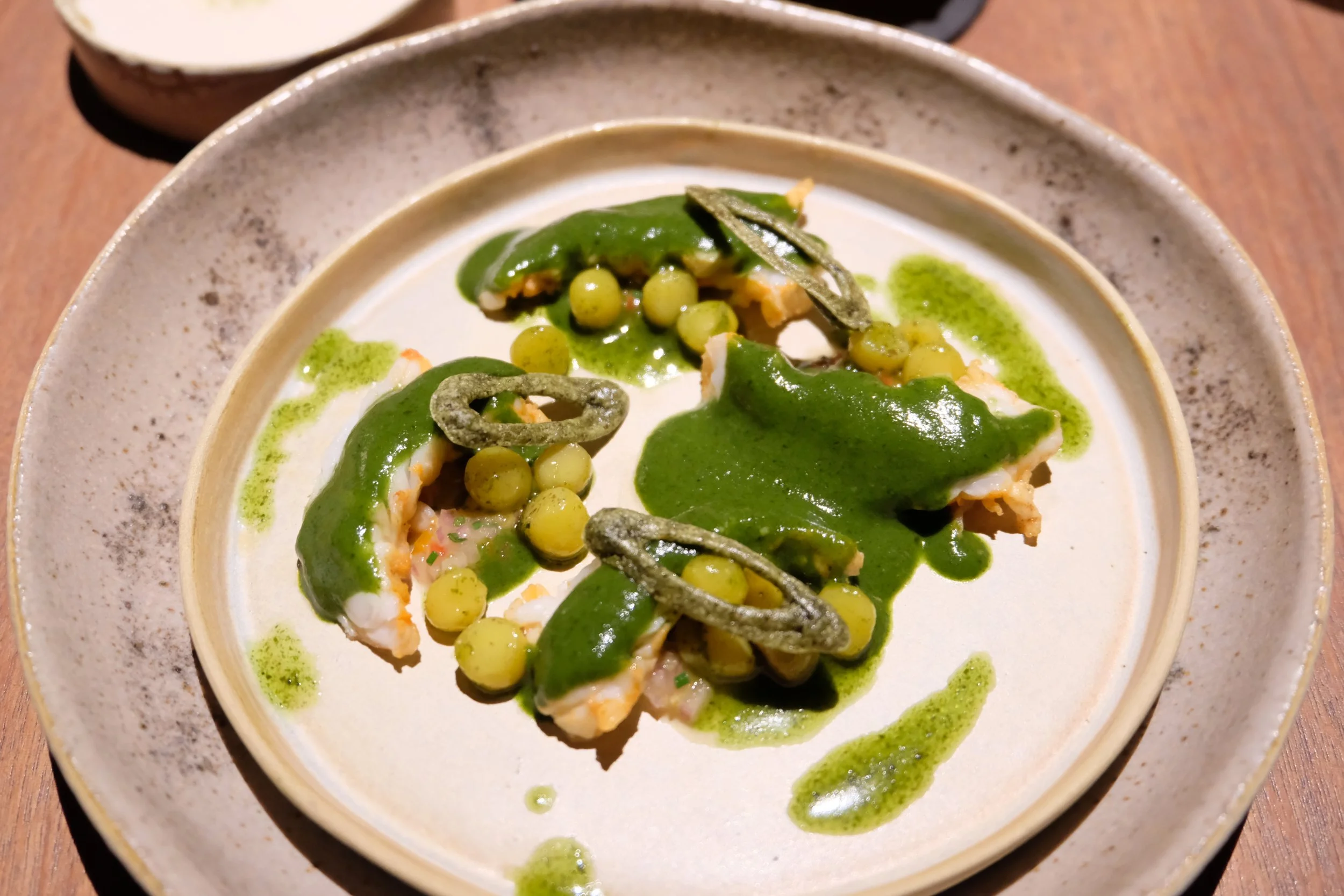
Andean Curry with local shrimp, served with bread and coconut foam.
The sauce is made with coconut cream and cardamom. Amazing dish. I love the chewiness of the bread when you dip it into the coconut foam. The shrimp had a clean flavor. I can’t remember much of the details.
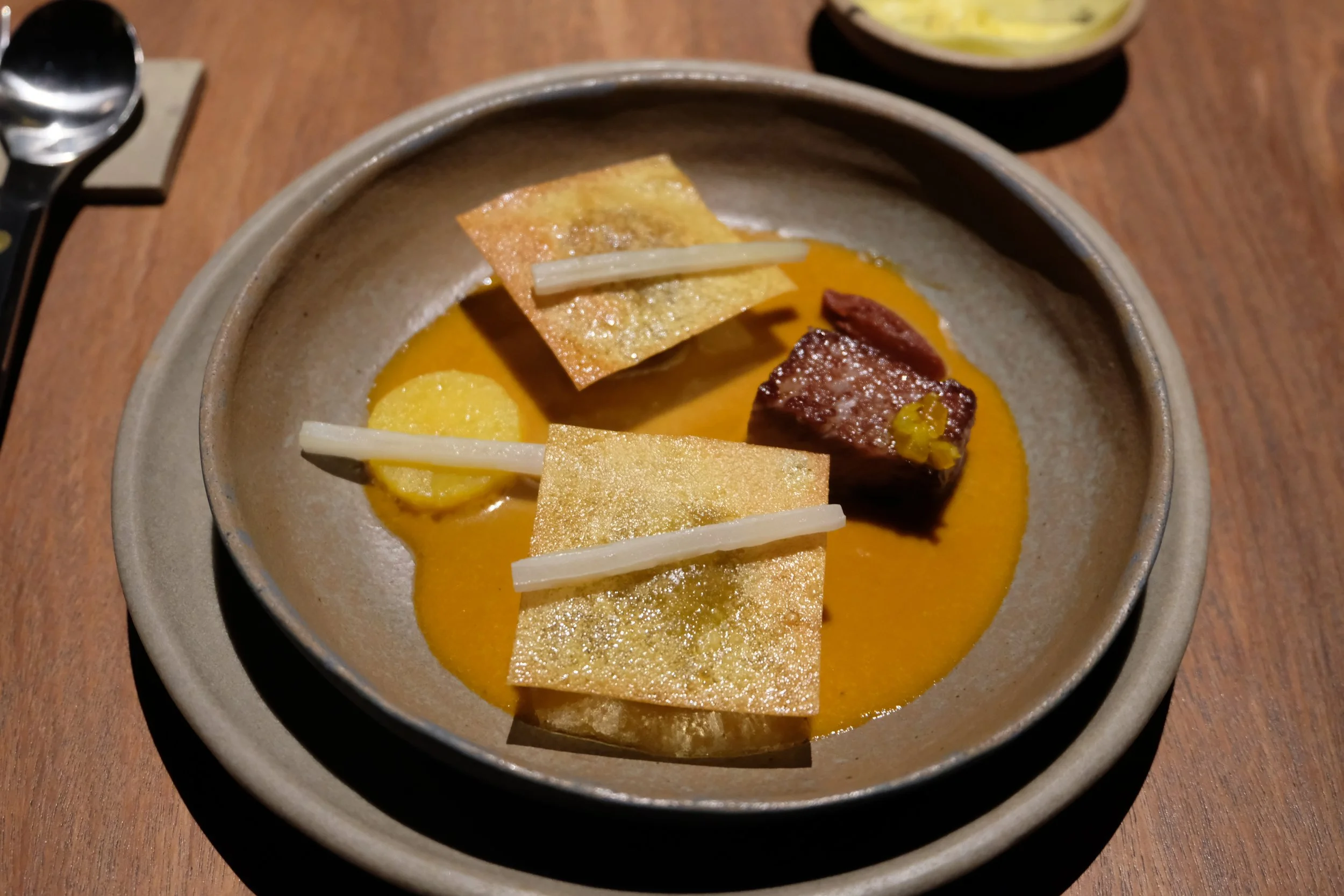
Beef, Arracache and Mango
Arracache is another root vegetable.
The yellow sauce is made from Arracache and is similar to the flavor of sweet potato. Underneath the chips are two balls of beef dumpling, highly flavorful and tasty that reminded me of cheeseburger. On the side, a piece of wagyu meat and a tiny quenelle of something similar to tomato paste. You are then served with thinly sliced green mango to cut through the richness. It was the perfect plate to end the savory side of the experience. I could eat two more rounds of this.
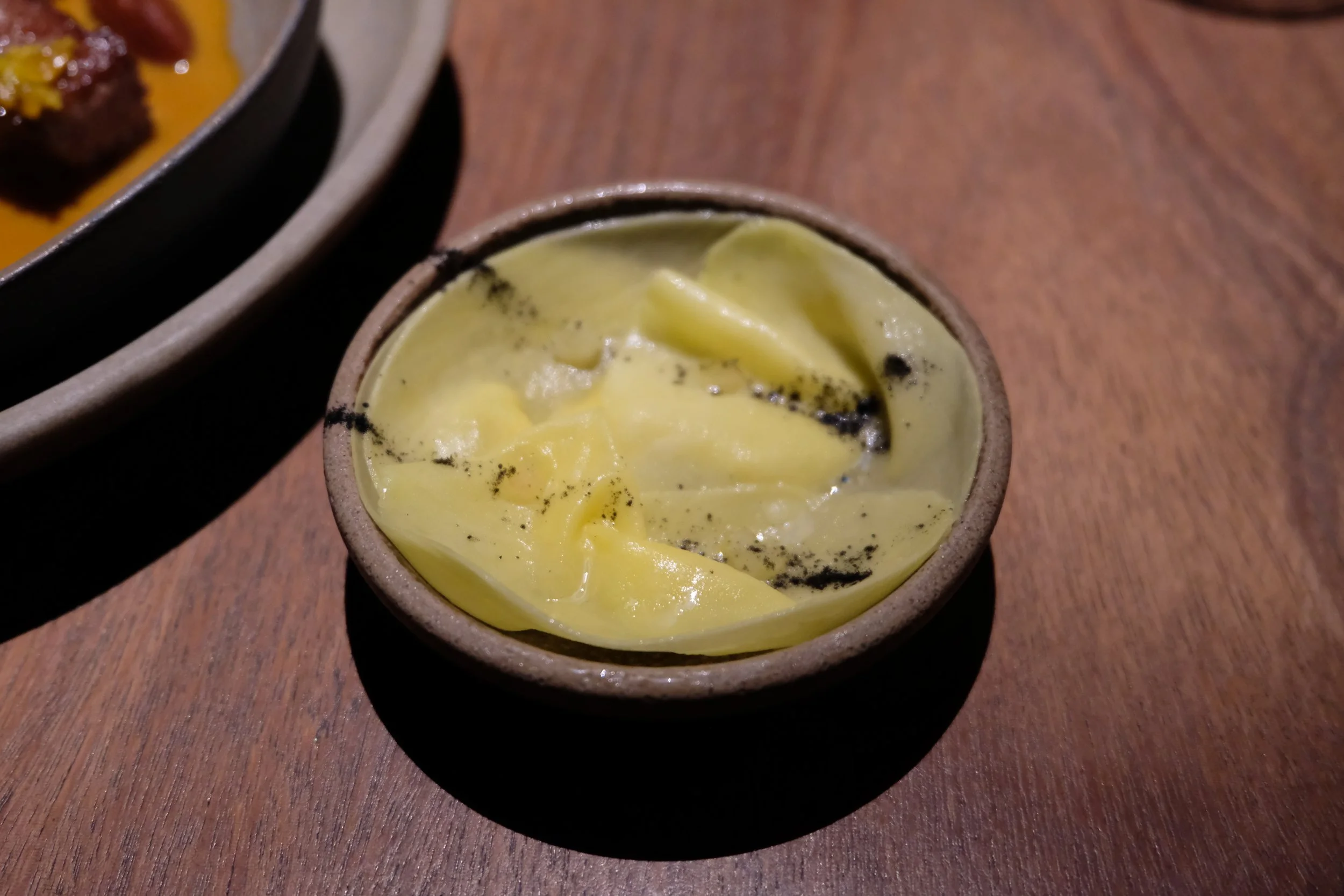
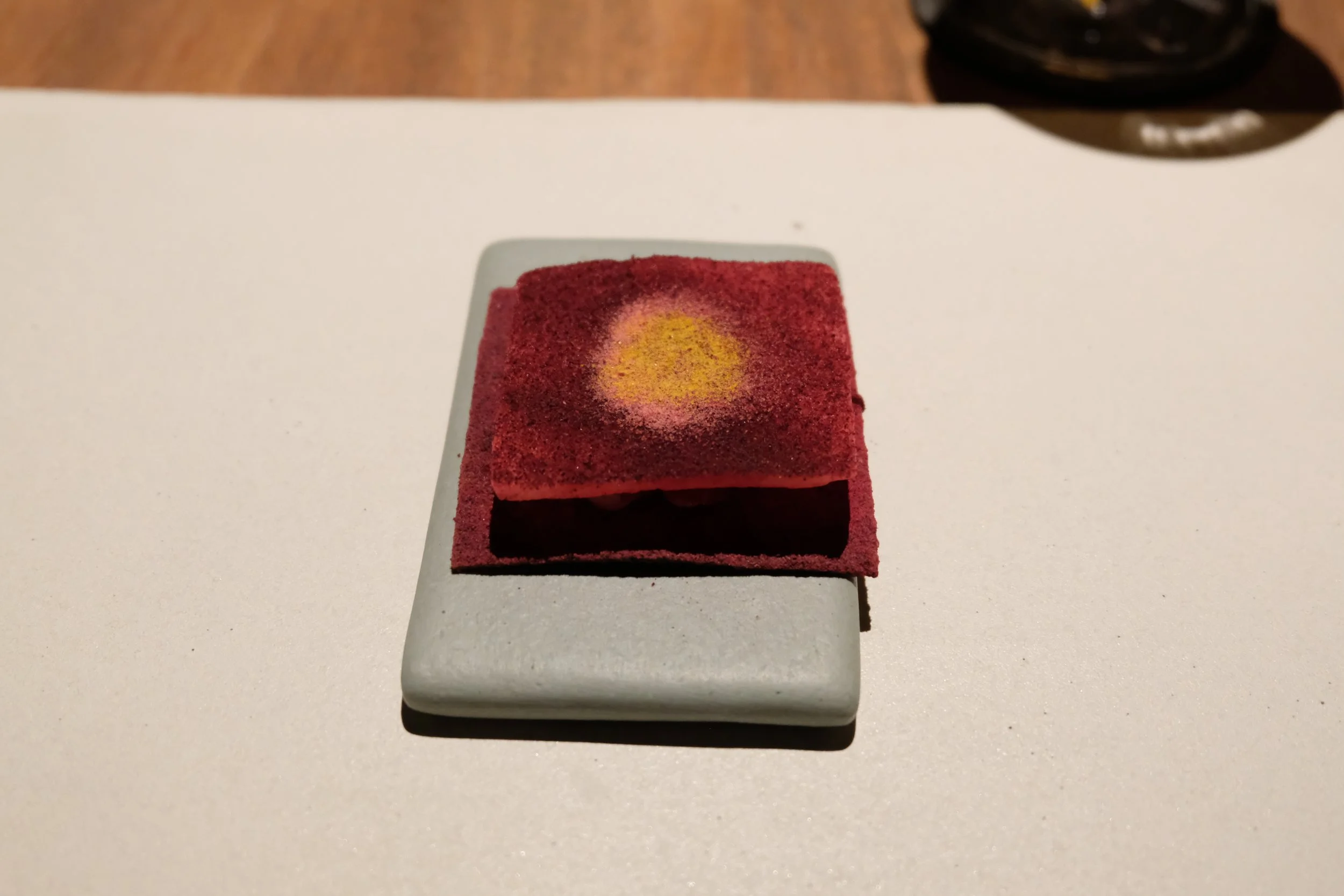
Cocona, mashua and lemon verbena
Cocona is similar to a persimmon.
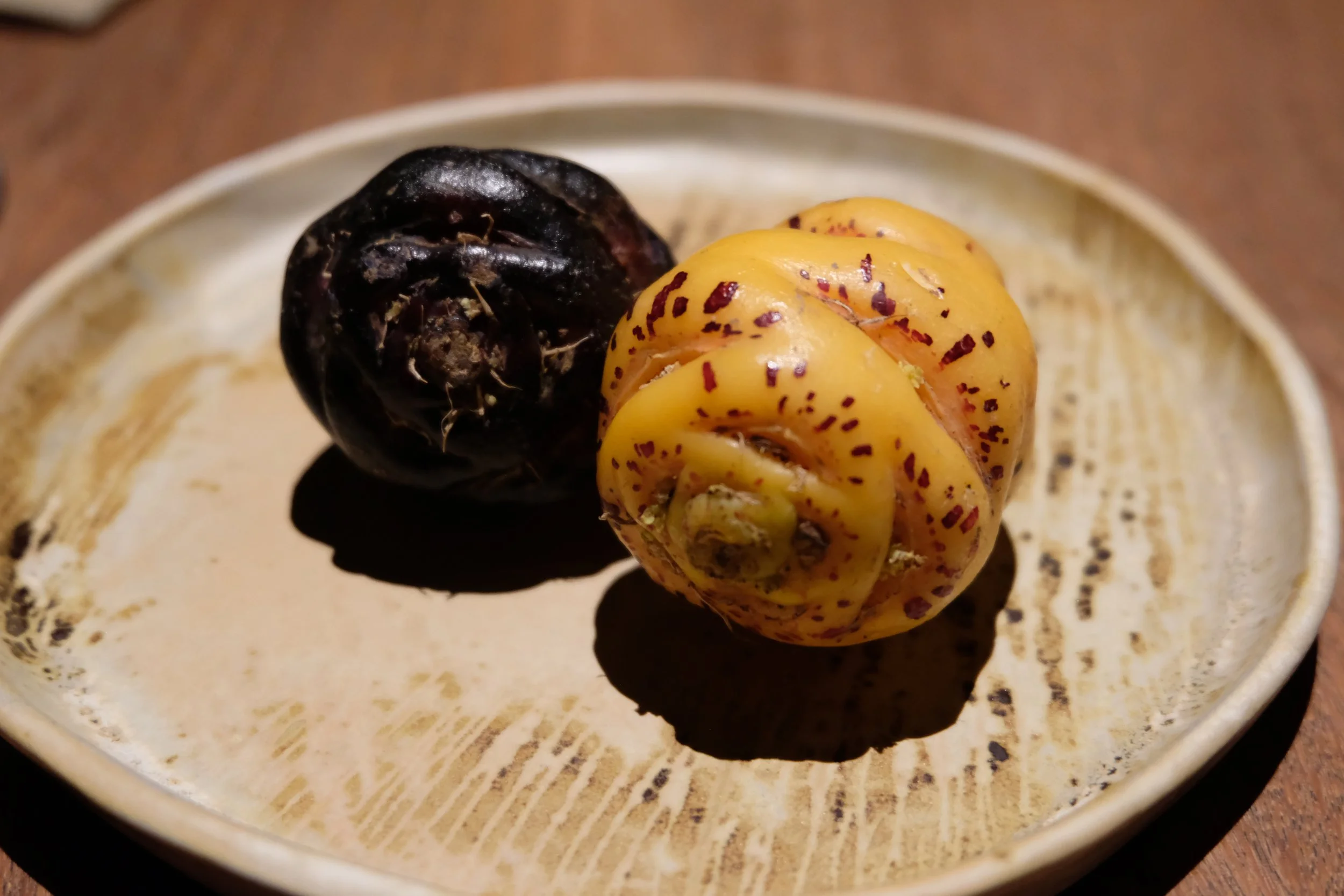
Mashua is a tuber vegetable, photo provided below.
When eating this, you have to smear your spoon on the side of the plate to grab the red powder adhering to the sides. The powder has a “tajin” flavor, similar to chamoy or dried plum.
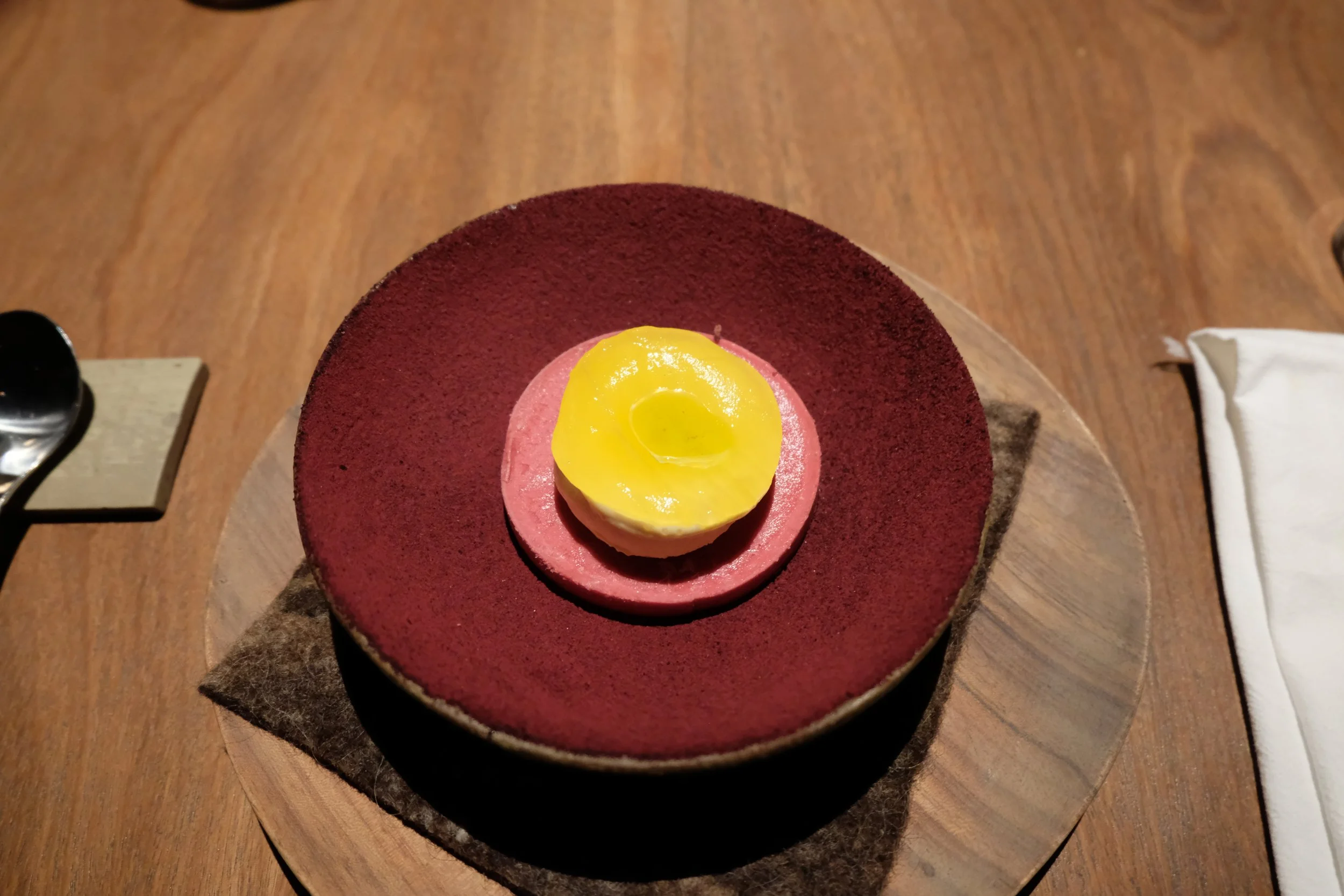
Papa Voladora, Coffee granita and Lucuma
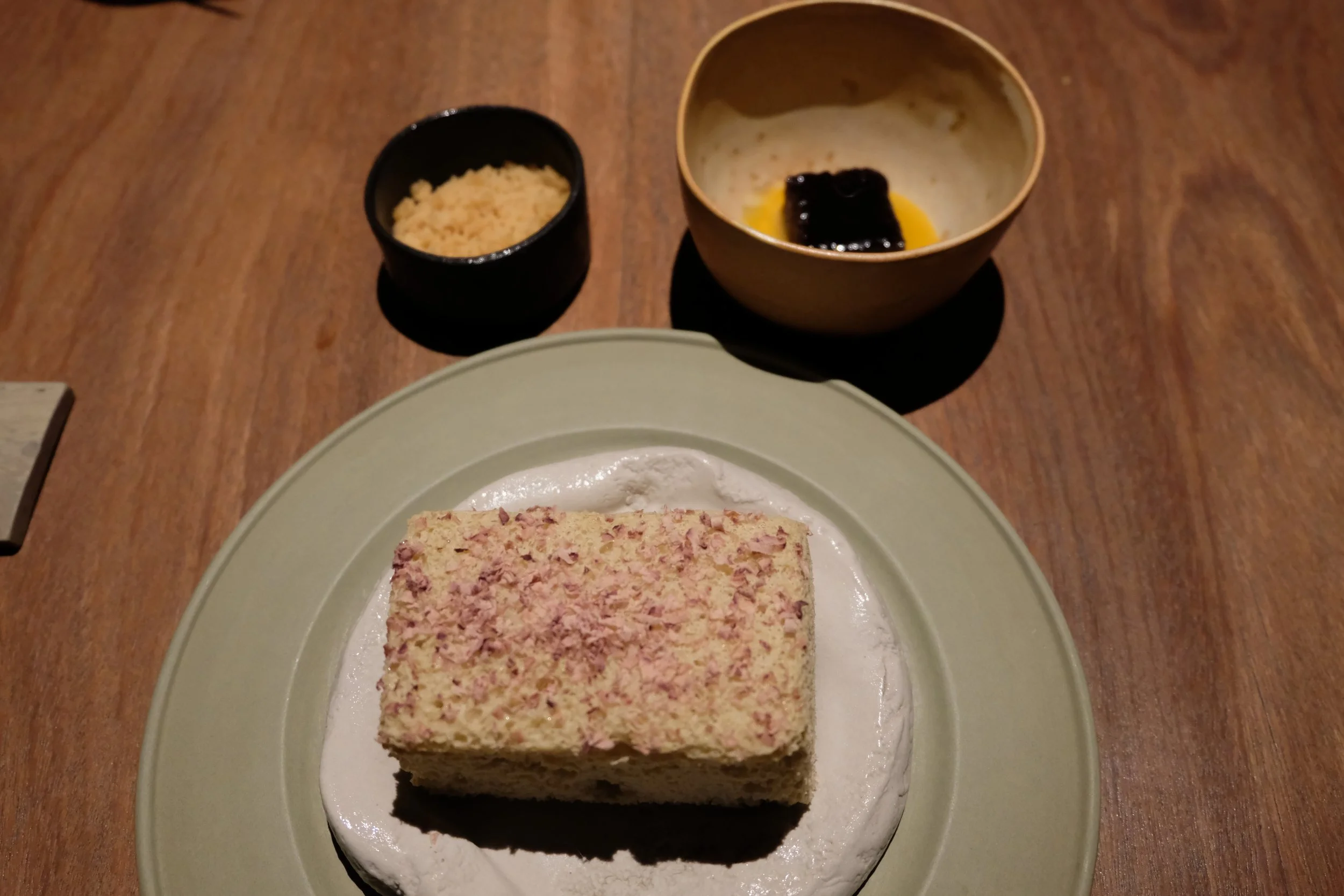
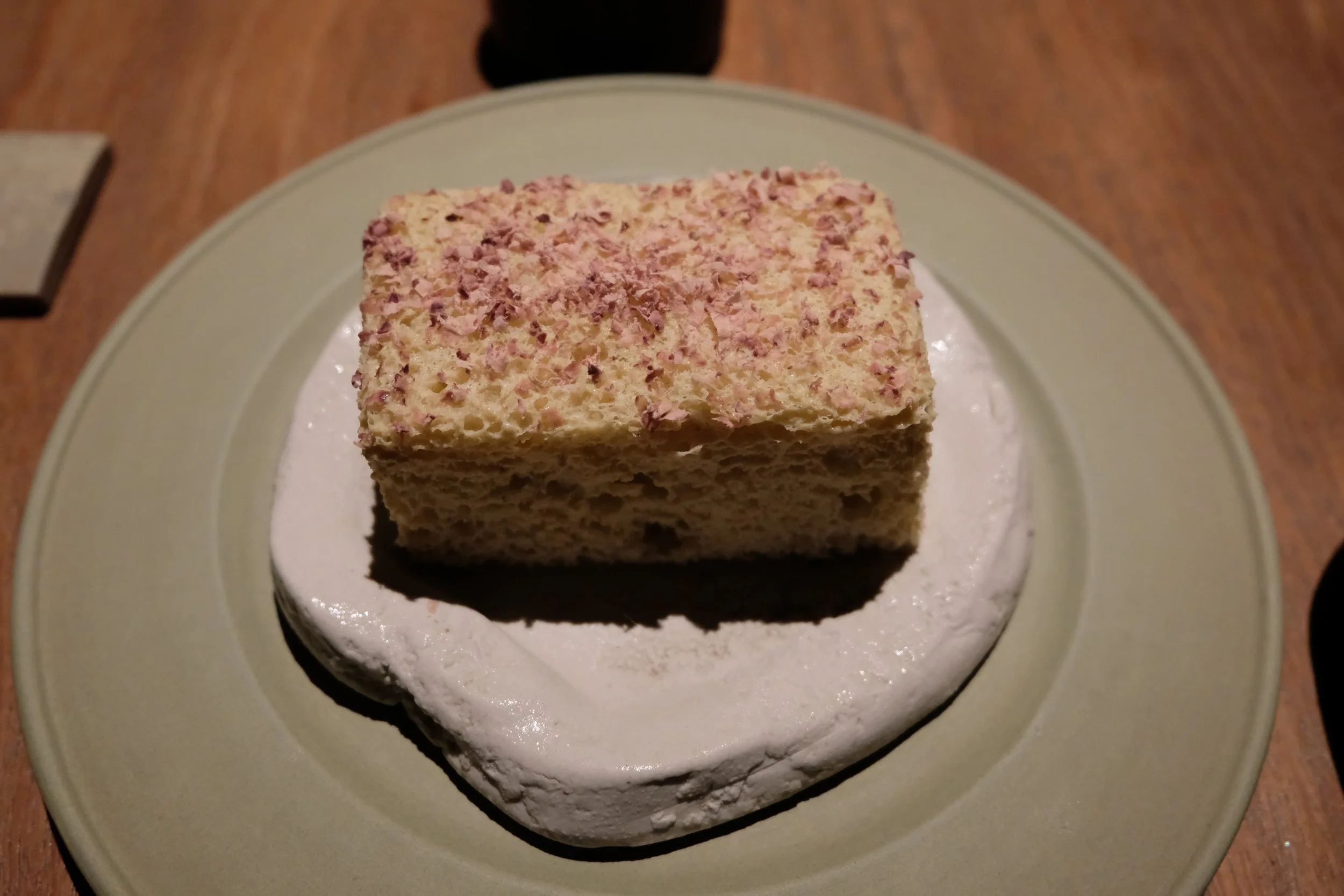
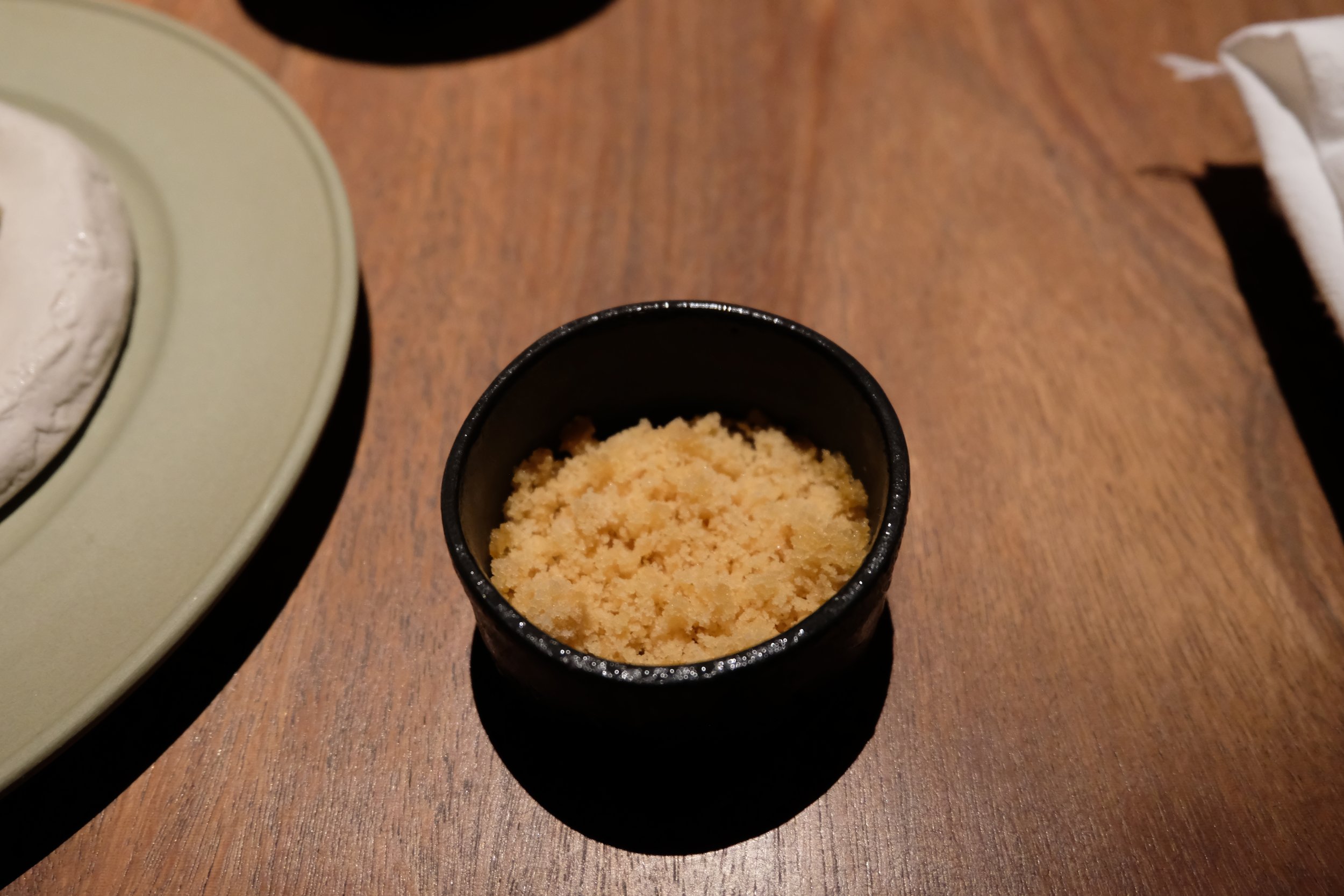
Papa Voladora or flying potato, is a culinary technique when you aerate a puree / mixture and freeze the “sponge.” When you take a bite of this, it just melts in your mouth, while the are pockets lends a very light texture, reminding you that you’re eating something similar to a cloud.
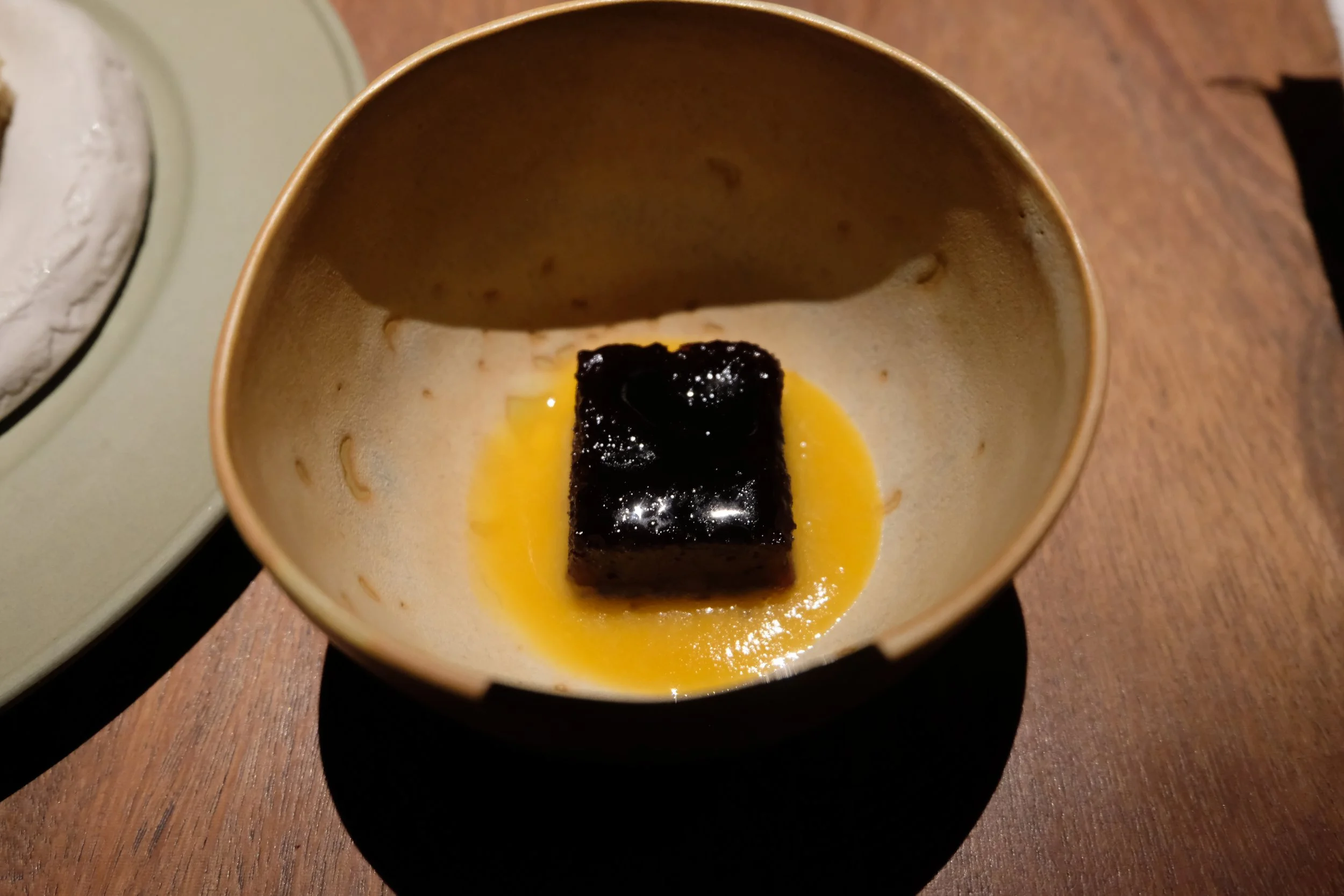
Lucuma is considered to be the “Gold of the Incas.” A fruit native to Peru, Chile and Ecuador that has a dark skin when ripe. It has a sweet, maple taste. The black square cake is made of lucuma as well. It tasted like a date cake, amazing!
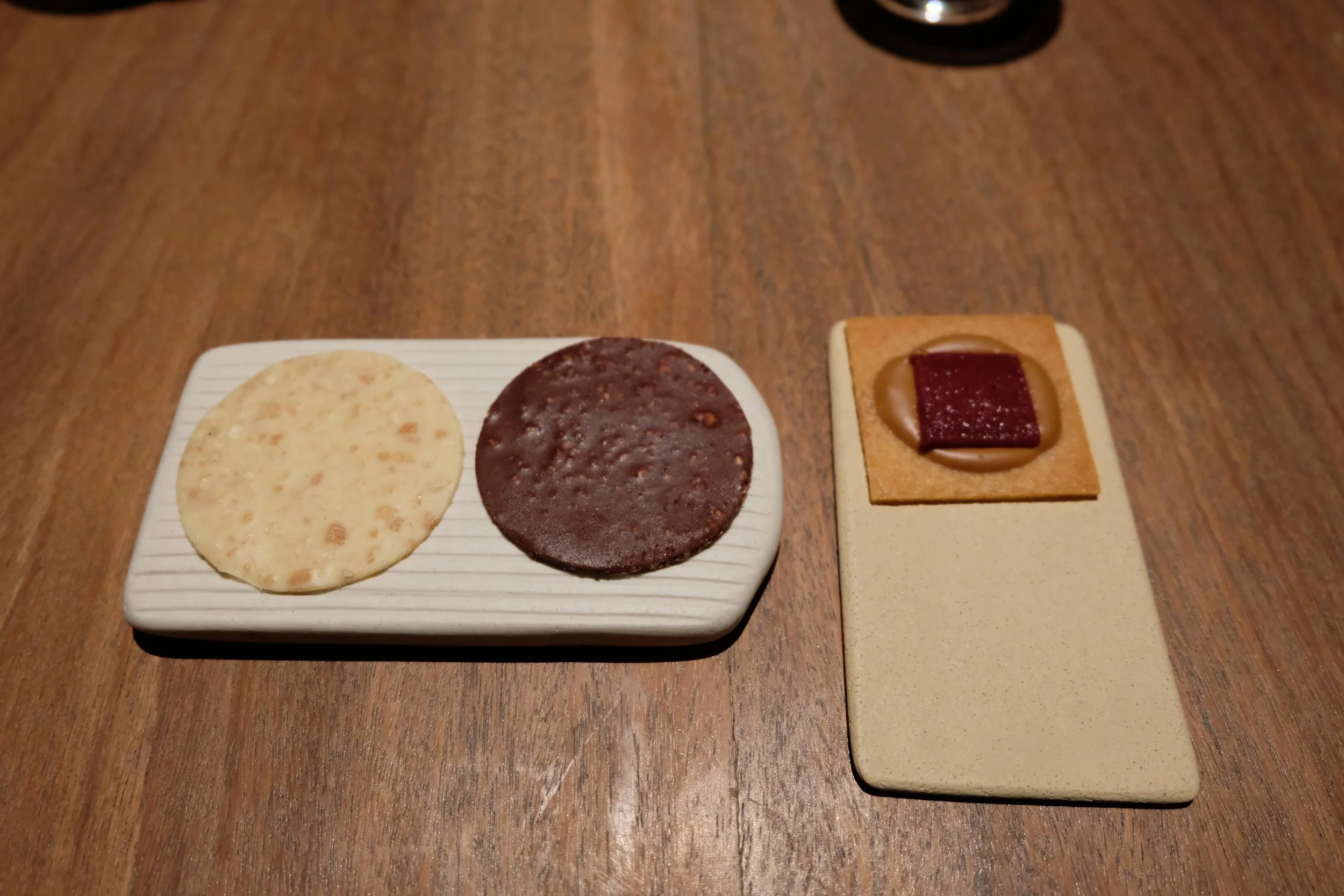
To end the night, a round of locally sourced petite fours.
At the end of the meal, we bid farewell to the people who were integral in making the experience a success. The team delivered above and beyond. The front of the house team were highly attentive and knowledgeable, I didn’t hear anybody say “I don’t know.” They all answered with something and this, my friends, makes a huge difference. When even the servers are aware of what they are selling and how things are being made, it makes the restaurant team strong.
I don’t even need to justify what the Back-of-the-house team did, they already have the DNA to produce extraordinary things. No need to add or remove a pinch of salt, sweetness or whatever, everything was just perfectly seasoned. The dishes were creative, innovative and are strongly tied to the Peruvian heritage. I believe that they deserve more than just being at the 26th place.
Despite eating fast, I didn’t feel rushed. it took us about two and a half hours from start to finish, but it didn’t have any downtime. Food came out in a timely manner, one after the other.
As our first entry to high-end Peruvian dining, I must say, that I was impressed and amazed by how in-touch the chefs of this country are to their roots. There’s so much pride in what they do. I was able to shake the chef’s hand and thanked him for an amazing time. I am proud and blessed to have gained this immersive experience.
After dinner, we walked towards the plaza where a large crowd is chanting for the national football team, not too far away. The chant, produced by about two hundred strong, boasts about how they love their country and everything that goes with it. While walking towards the festivity, I can’t help but think how much the people of this country has been blessed.
Keep traveling.
-Stan