

Visiting The DW Drums Factory
DW is a renowned company that builds extraordinary musical instruments celebrated by artists worldwide from Neil Peart of Rush, Terry Bozzio of Zappa, Chad Smith of The Red Hot Chili Peppers, and other big artist names. Prestige is articulated very well in its branding brought by a long history of excellence, innovations and breakthroughs. Founded by Don Lombardi & John Good back in the 1970’s, they have molded the way we (musicians) perceive modern drums as we know it now. DW stands for “Drum Workshop,” and as simple as it sounds, they make some of the most intricate, yet user-friendly percussion instruments that can make a fanatic’s jaw drop. When you say DW, you know every beat will be a hit.
Little did I know that their factory is situated in Oxnard, California, about forty-five minutes away south of Santa Barbara. I was listening to the radio while driving when the announcer mentioned that the brand conducts factory tours every Thursday, for free. Well, I did not hesitate to reach out and booked my reservation immediately! What a treat.
There’s something about visiting factories and production lines that fascinate my interest, and it might be the same for all men. Even as a kid, I wondered how toys were manufactured—imagining elfs and other magical machineries all working in harmony to make kids happy. Now that I’m a full-blown adult, the magic didn’t change. Still, I want to see and witness how amazing things are created with the right pair of hands, skills—honed through years of experience, and an efficient production line.
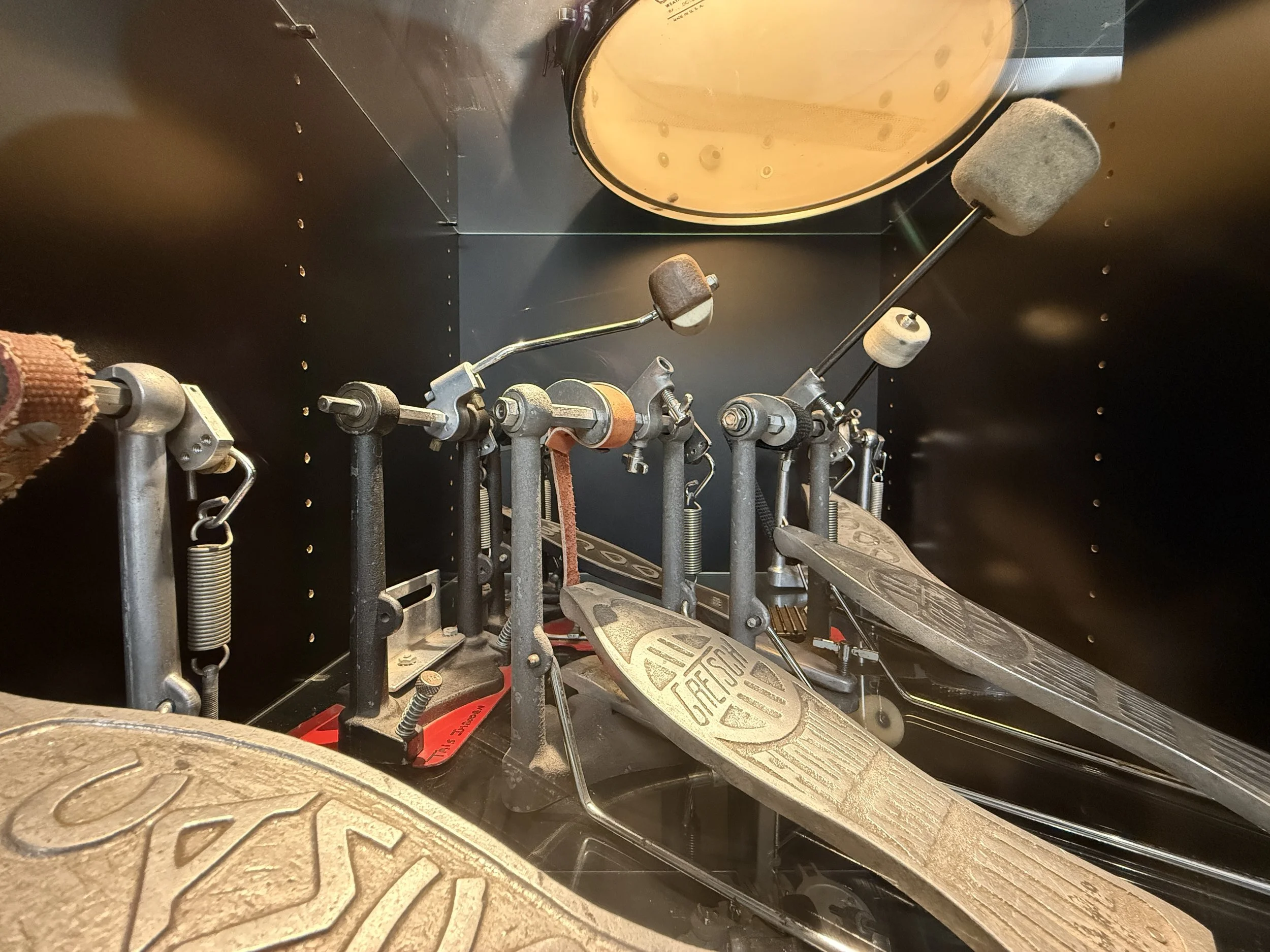
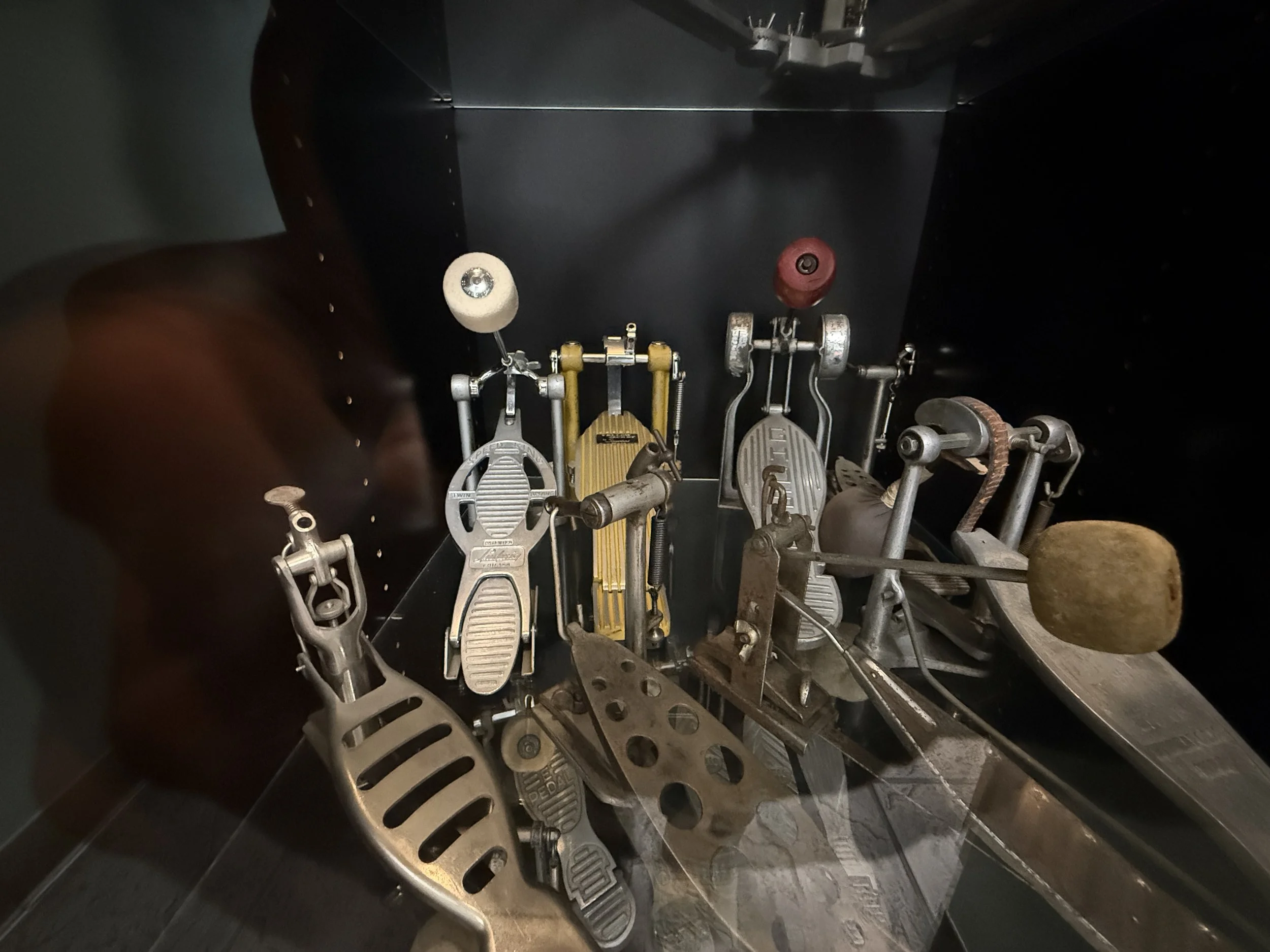
Upon entering, you are held in a waiting room. On one corner, there’s a glass showcase that depicts the evolution of bass drum pedals throughout the decades. These might not seem to be much in the eyes of a non-drummer, but a pro will appreciate the history tied to each pedal.
When the tour started, our guide kindly introduced himself and took us to the main entrance of the office where three drum sets awaited, showcasing company milestones.
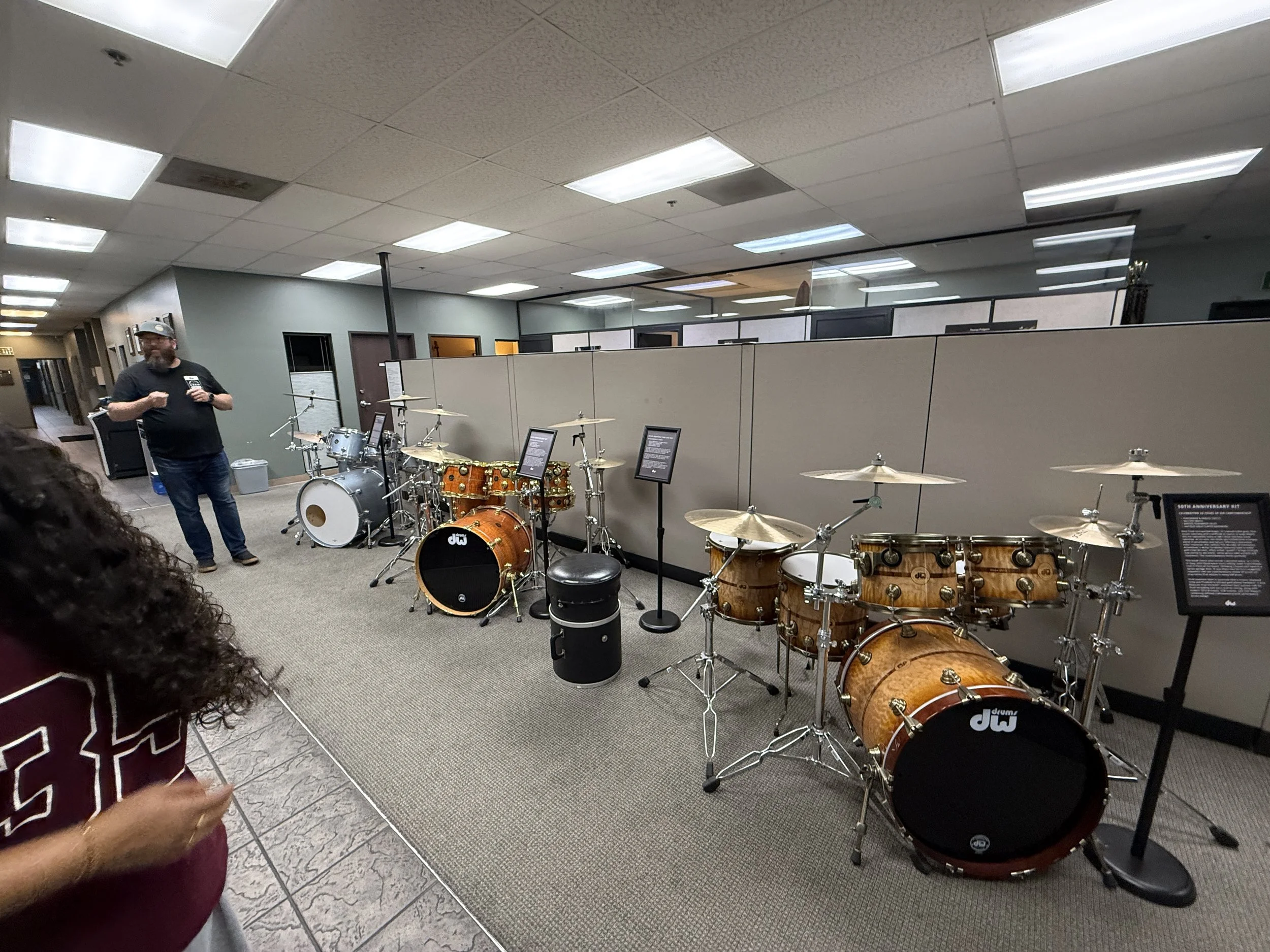
The photo above: Starting from the far left is one of the first sets created that dates back when the company just started. In the middle is the Special Edition 25th Anniversary Drum Set and lastly, the 50th Anniversary Edition. Each set shows how DW has evolved in innovation, customization, style and taste. Don’t get your hopes us to snag one of these. Due to limited production numbers, these have become very rare.
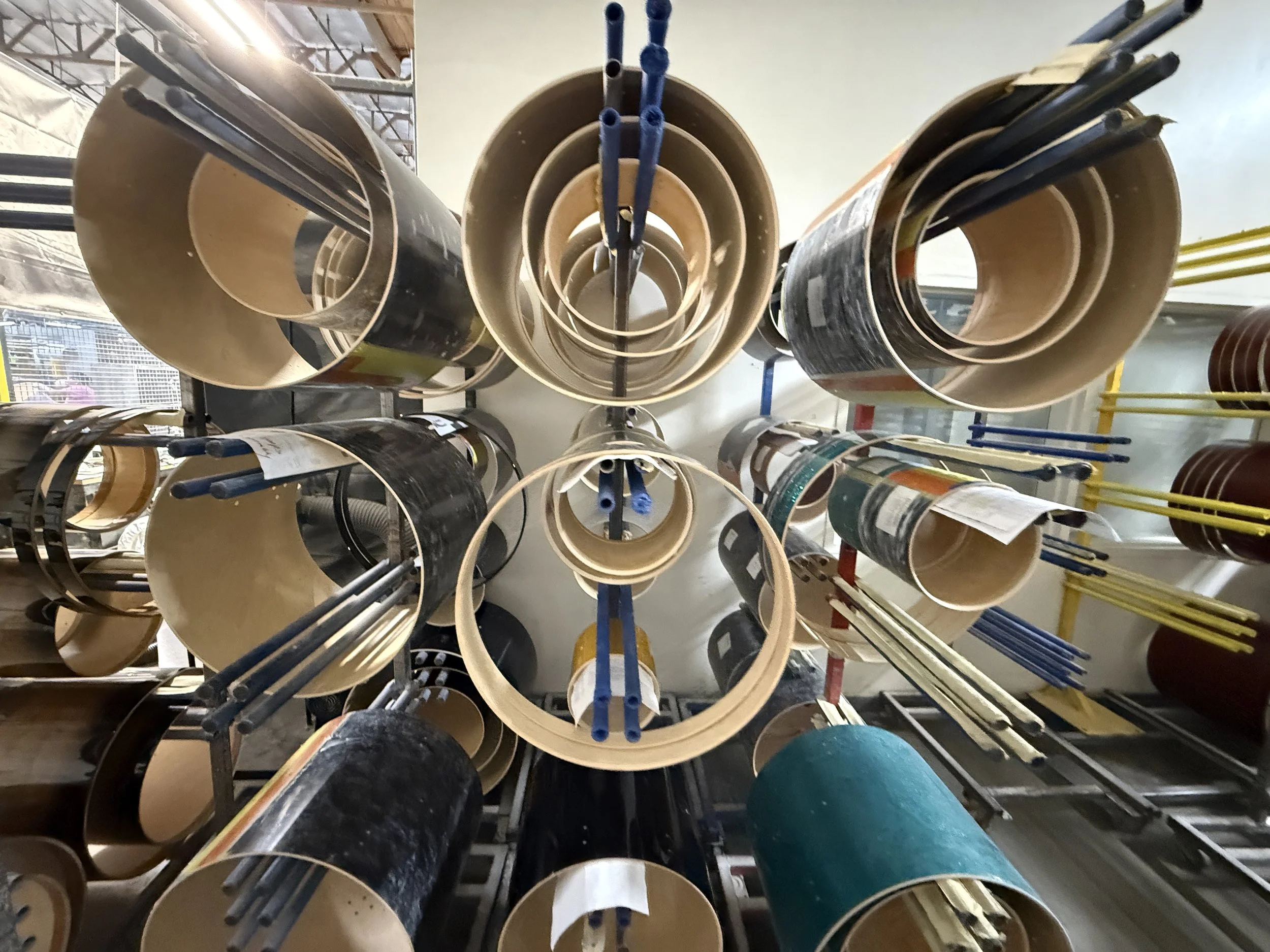
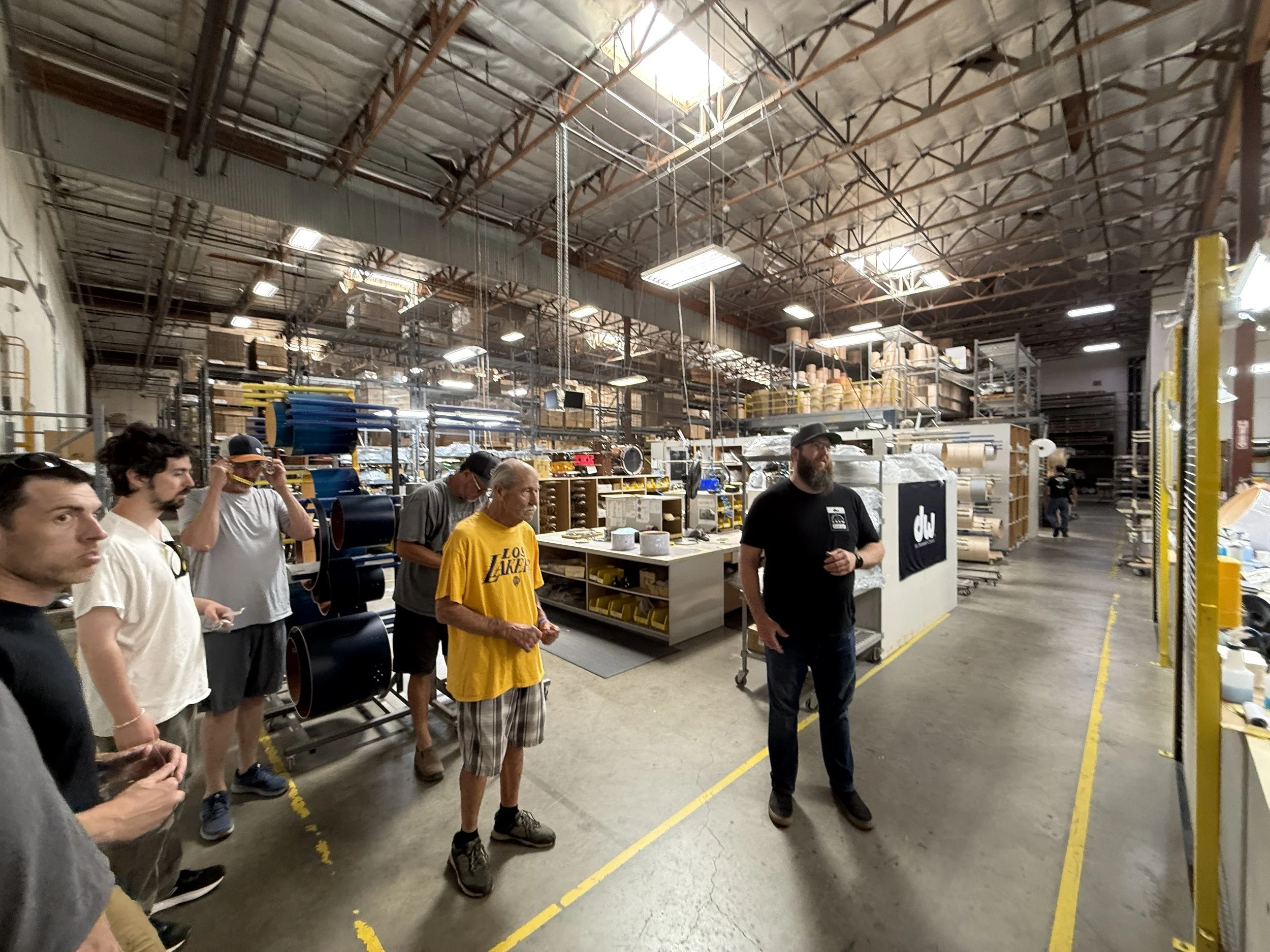
Entering the main factory, we were welcomed by drum shells after drum shells after drum shells. Just a beauty to see. Like any manufacturing plant, the floor is divided or separated in different departments.
Below, our guide was giving a quick introduction to the different sections of the factory.
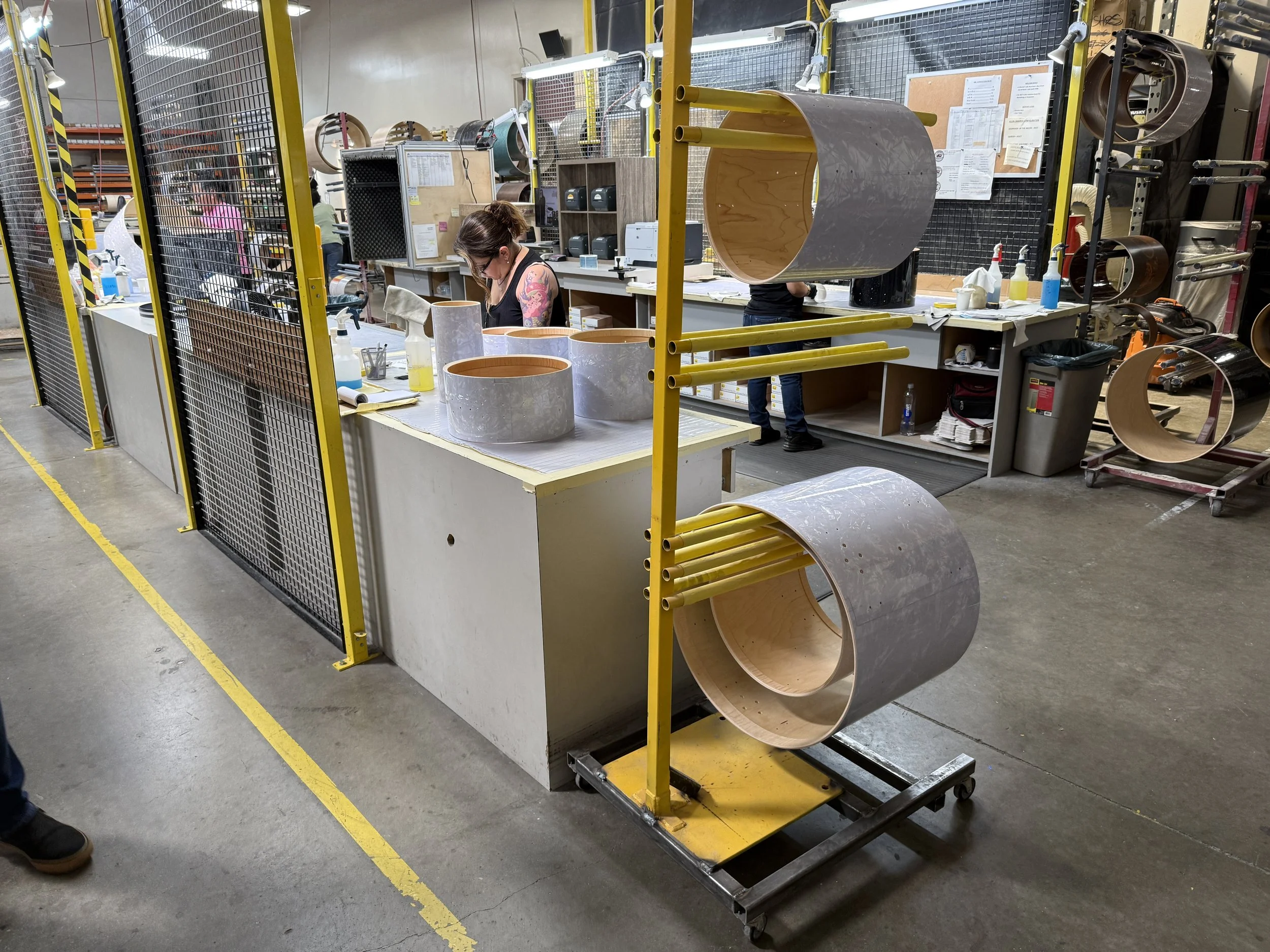
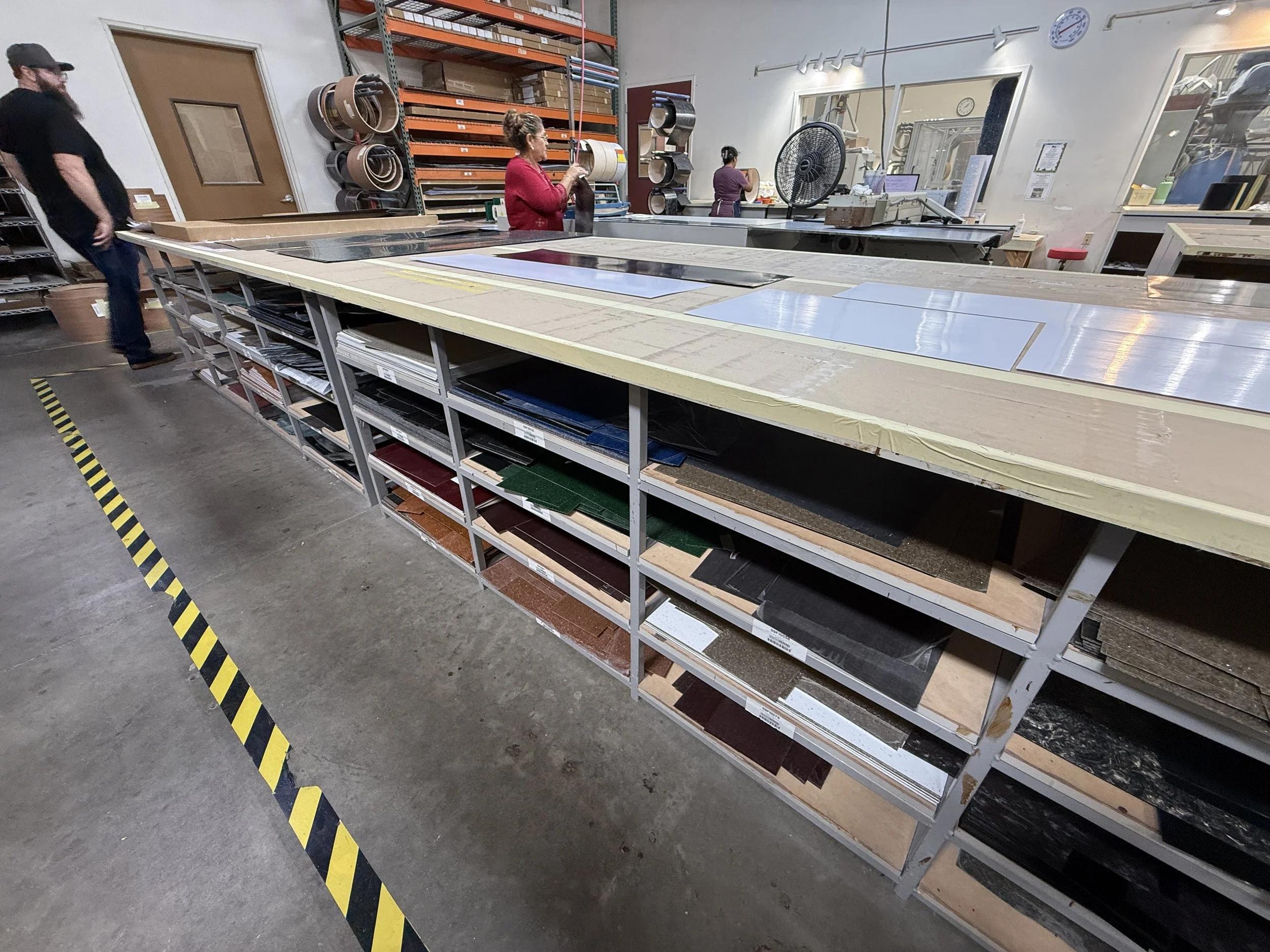
In the bottom photo, you will see their collection of wraps, or the layer of design that you normally see on the surface of each drum. They keep an archive collection of designs that can be traced back to the 70’s. Which means that you can have a 70’s style drum set custom ordered.
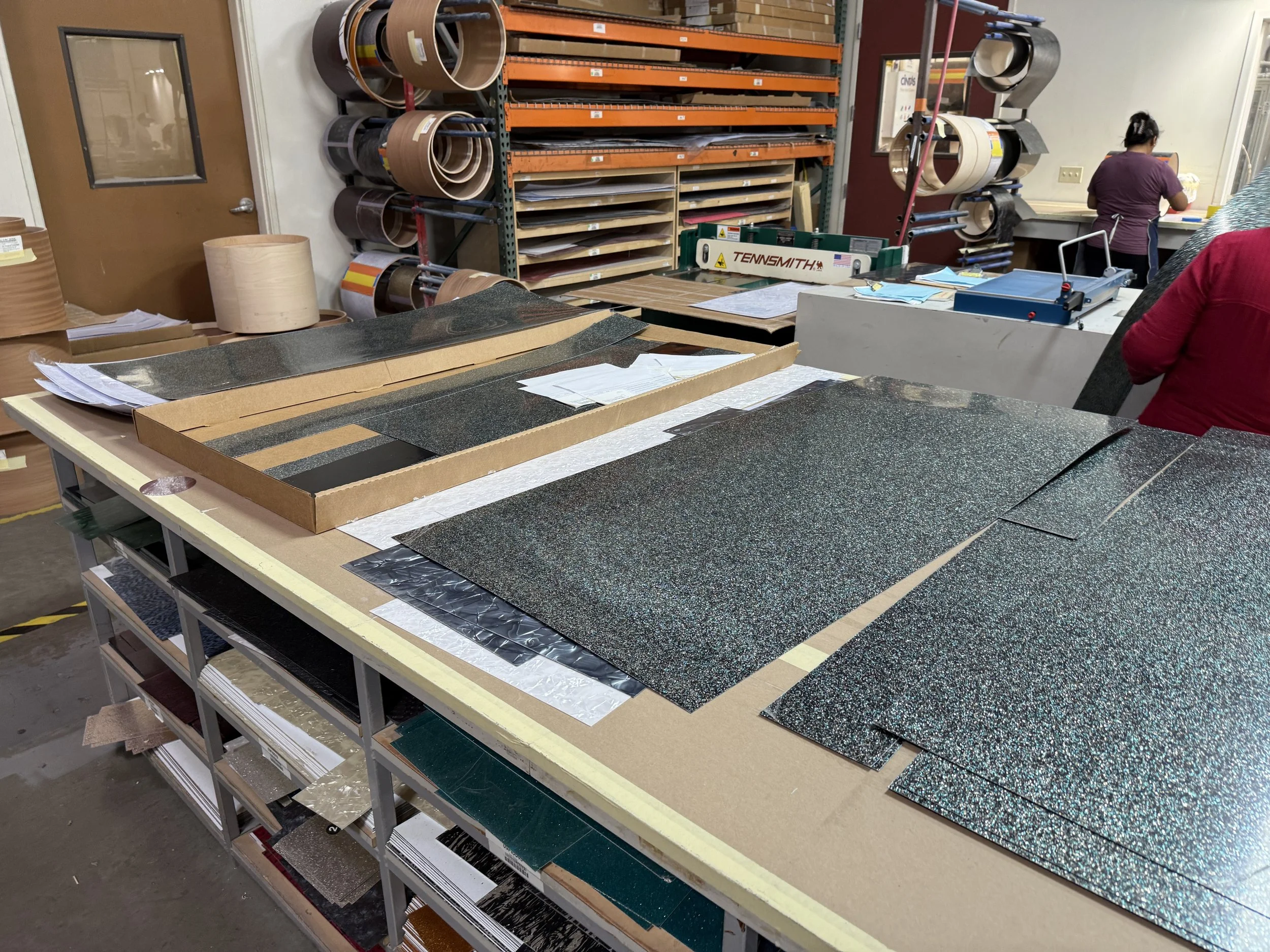
In this factory, they only manufacture top-of-the-line Collector’s Series and Performance Series. These are the exclusive made-in-the-USA lines that demand a steep price tag for you to handover to the next in line. Let’s just say, heirloom pieces.
Below, you will see some finished shells. They source most of the wood within the US. Wood Types such as North American Mahogany, Cherry and Maple are some of the most well-utilized for drum making, renowned for their resonance, warmth and ability sustain sound.
The biggest question is: How do they make drums?
I’m glad you asked! Let’s jump into the rabbit hole.
The life of a drum from start to finish
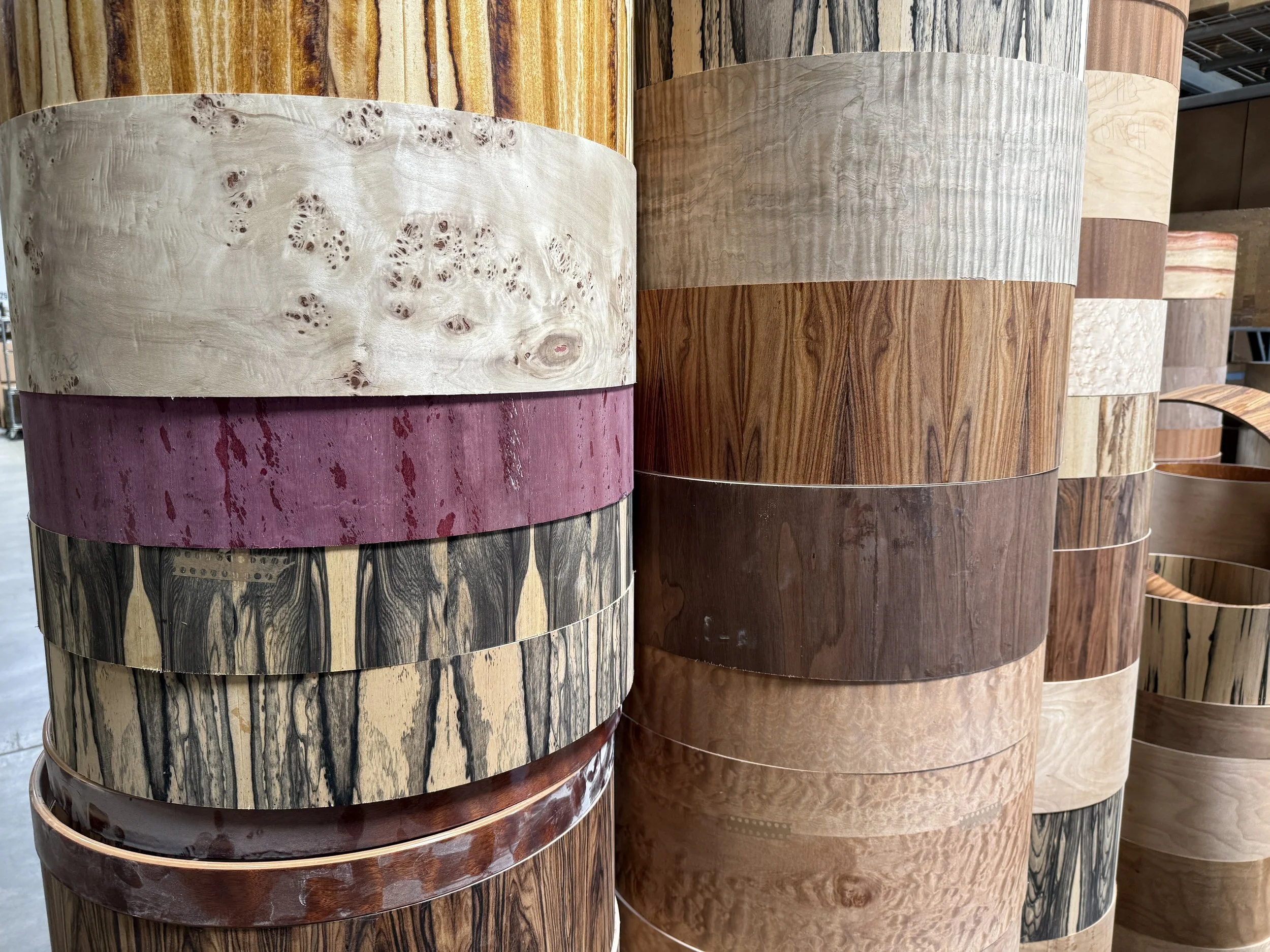
Wood is sliced into thin paper-like sheets and are stored accordingly. The photos below show how the factory organizes them. Same as the design archive, they also keep wood sheets dating back from the 70’s. Just in case a customer decides to order an expansion pack for their fifty-year old drum set, DW will be able to provide the same wood which will result to the same sound.
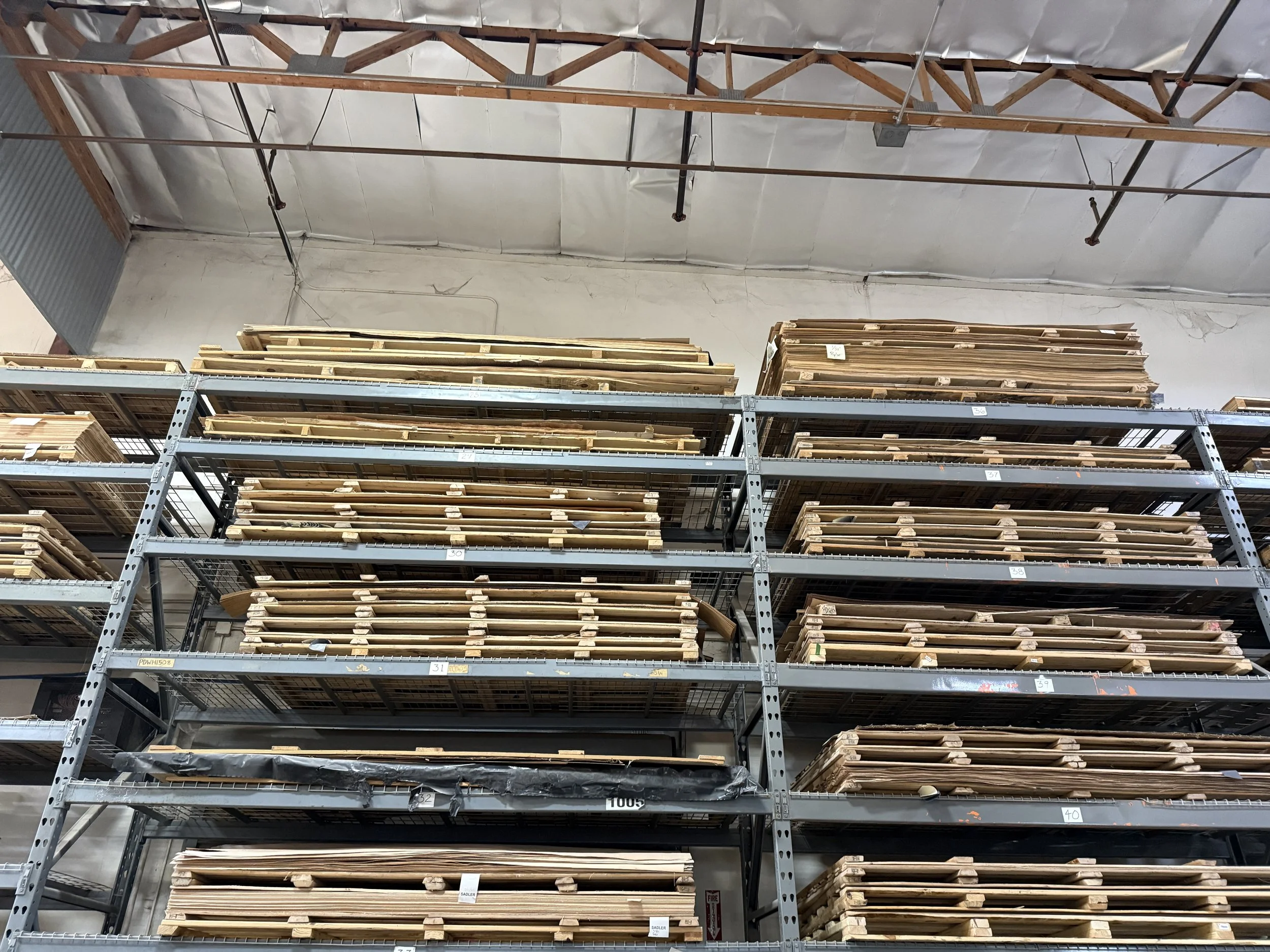
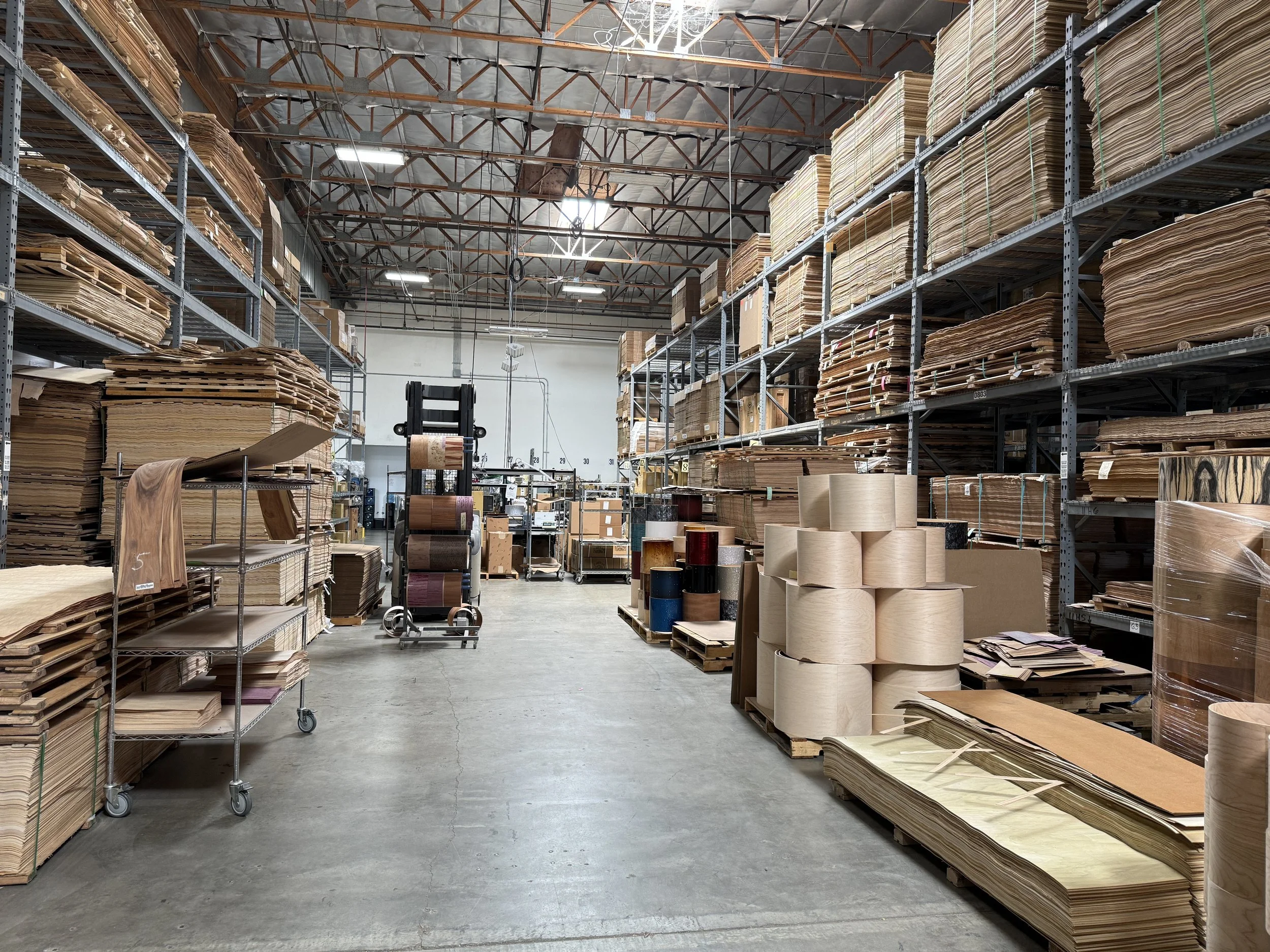
See below how the worker is showing a sheet of wood made of Cherry.
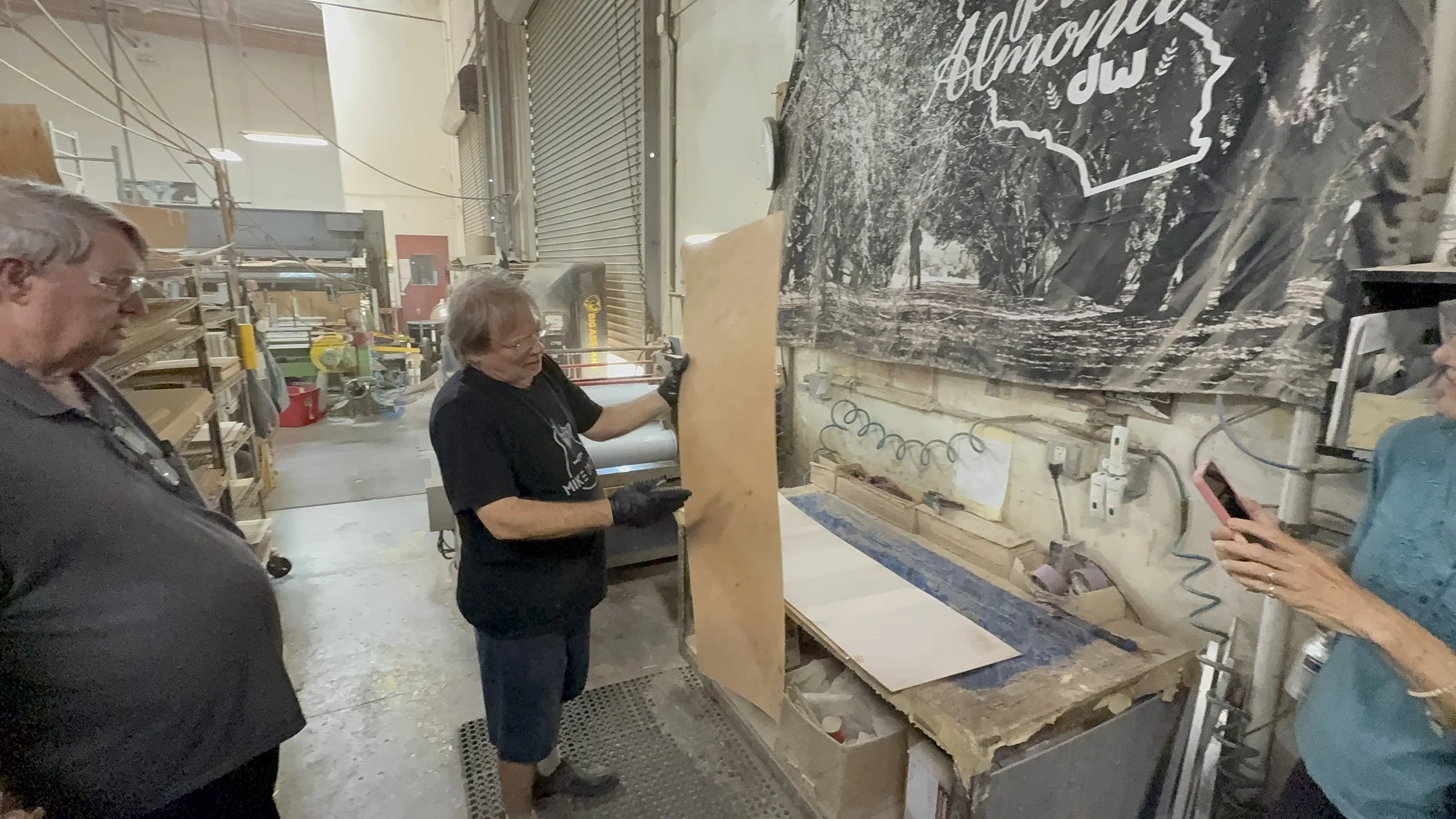
Depending on specifications or custom order, the factory glues together a number of these wood sheets, pressed by a machine, for maximum adhesion. He begins stacking three of them at a time.
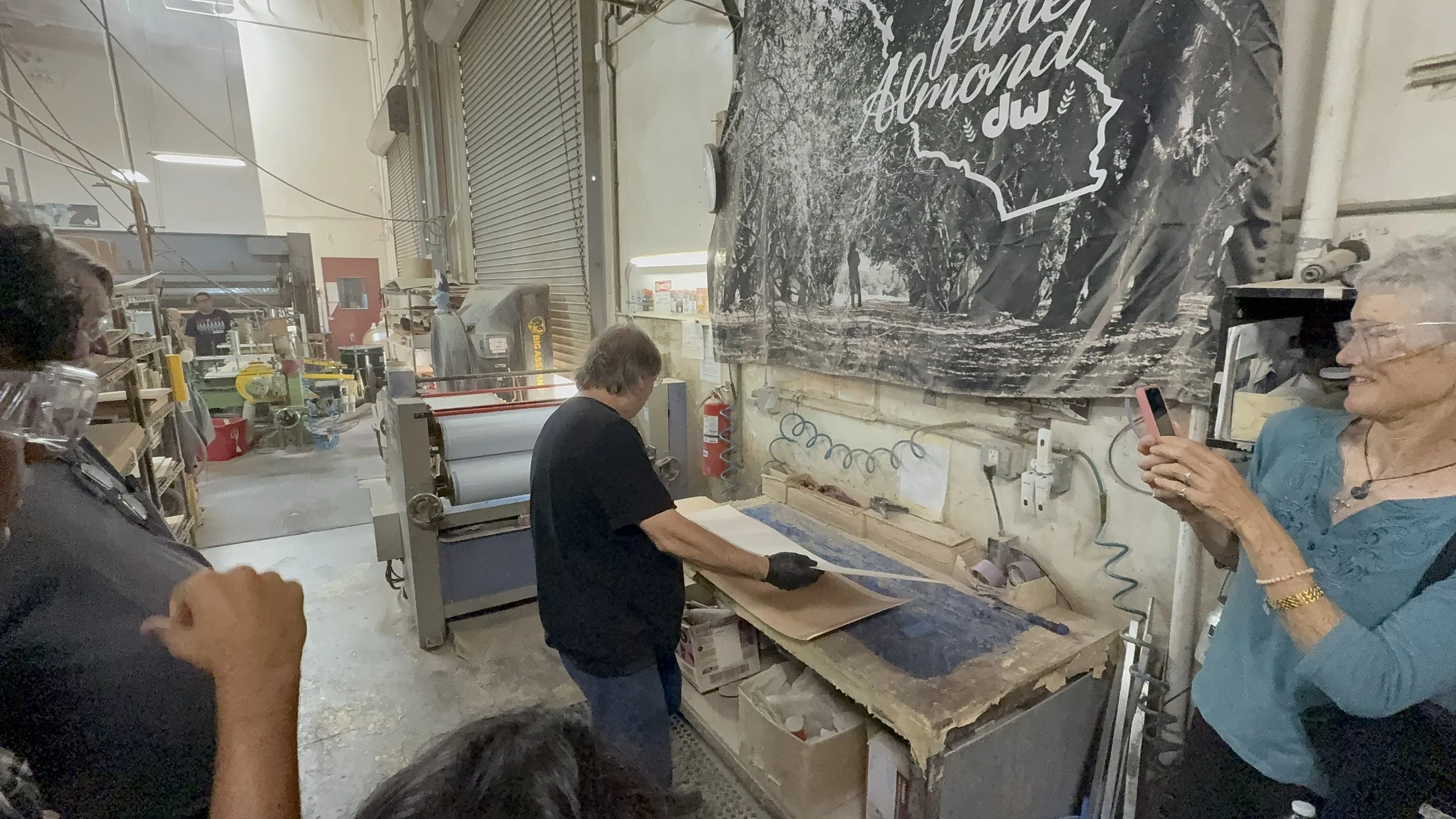
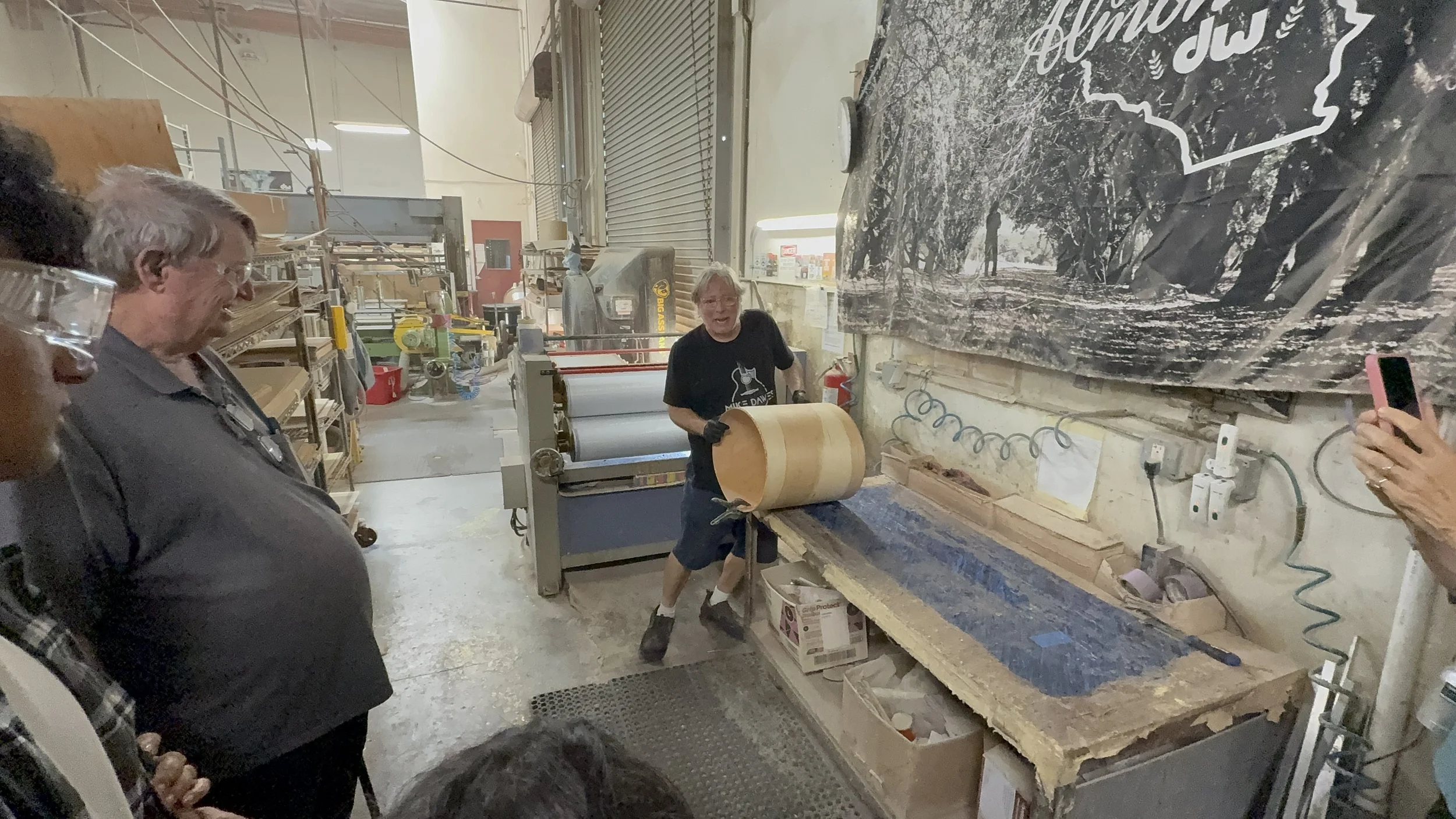
Then, the worker bends and rolls the wood pieces and clamps them, before finally taking it into a machine that “bakes” it into shape.
When the shell gets dropped in this machine, the center components push the shell against the edge of the frame to keep it secure. A preset temperature bakes the shell for a couple of hours.
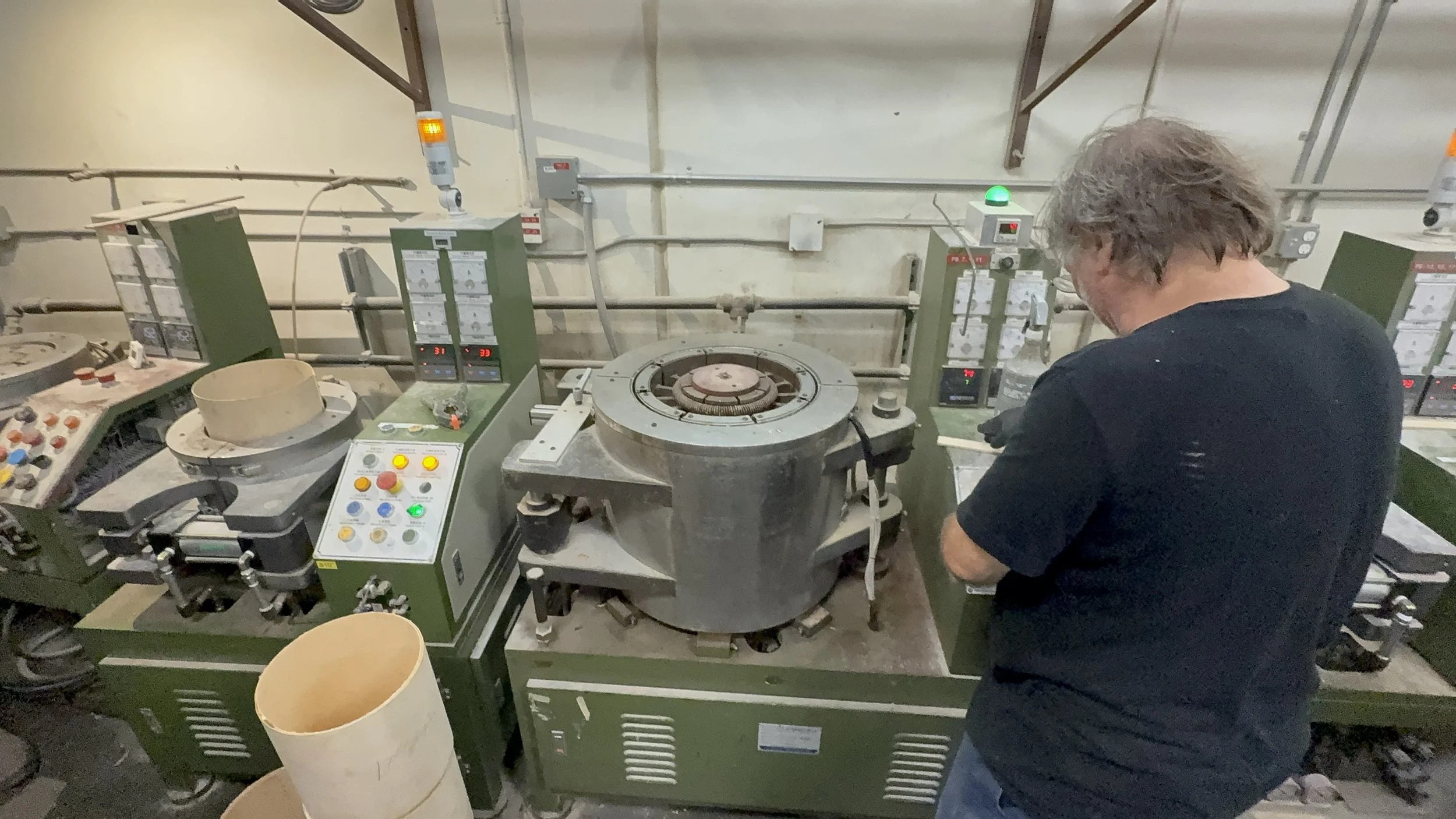
After baking, the shell is then released from the mold. And from here on, the shell retains its shape, is left to dry out and is now ready for wrapping.
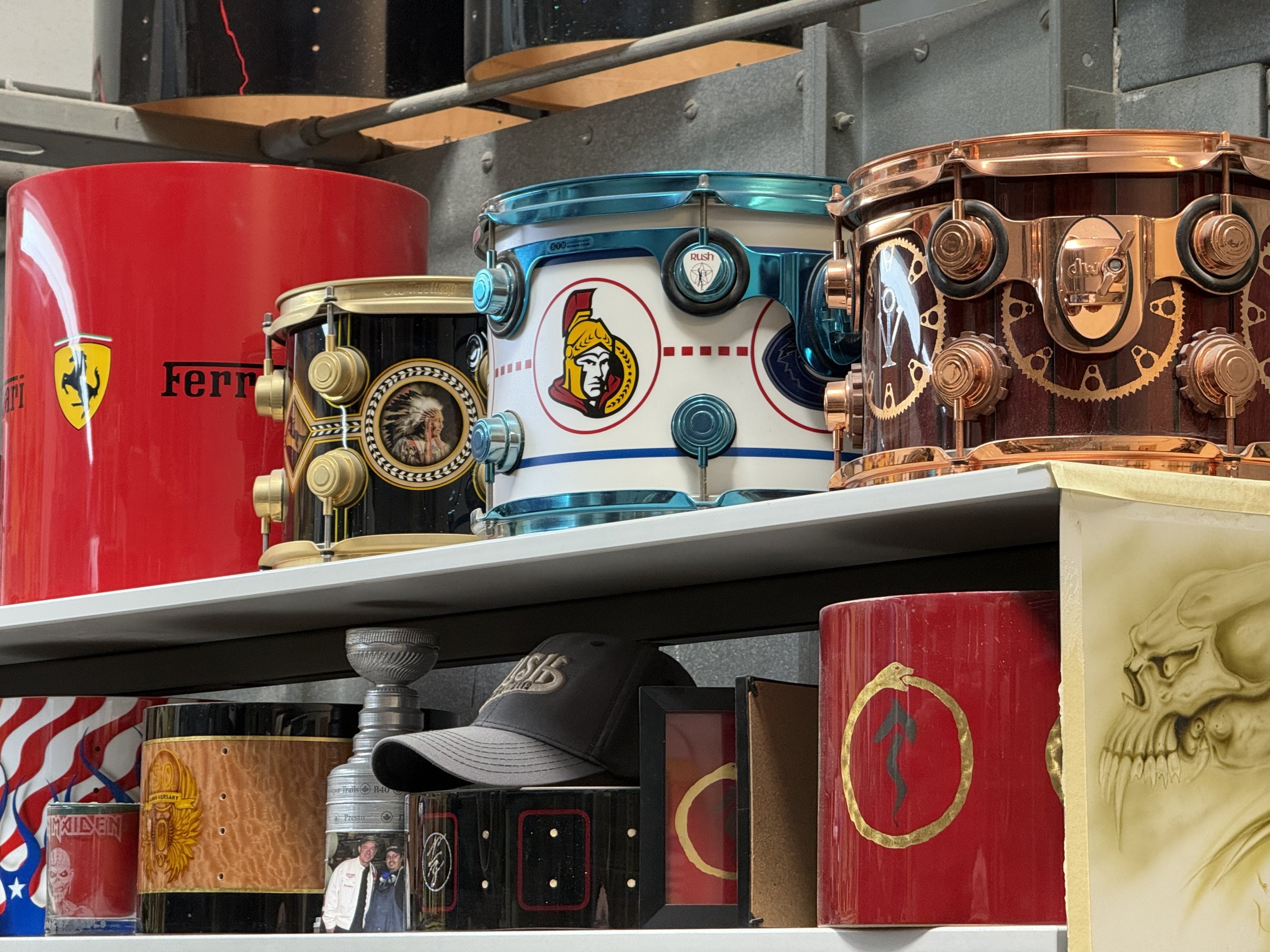
The appropriate design is chosen and glued all around the drum shell. For special orders and unusual patterns, DW has a special design department for it. See these amazing designs that are out of this world.
From here, the top and bottom ends are sanded to make sure that both surfaces are flat. They use a technique where they put a shell on top of a perfectly flat marble counter, then place a lamp directly on it. Then they assess whether light is escaping from the bottom. If they detect light is coming out of the shell, then it means that it is not even and will have to go back for further processing.
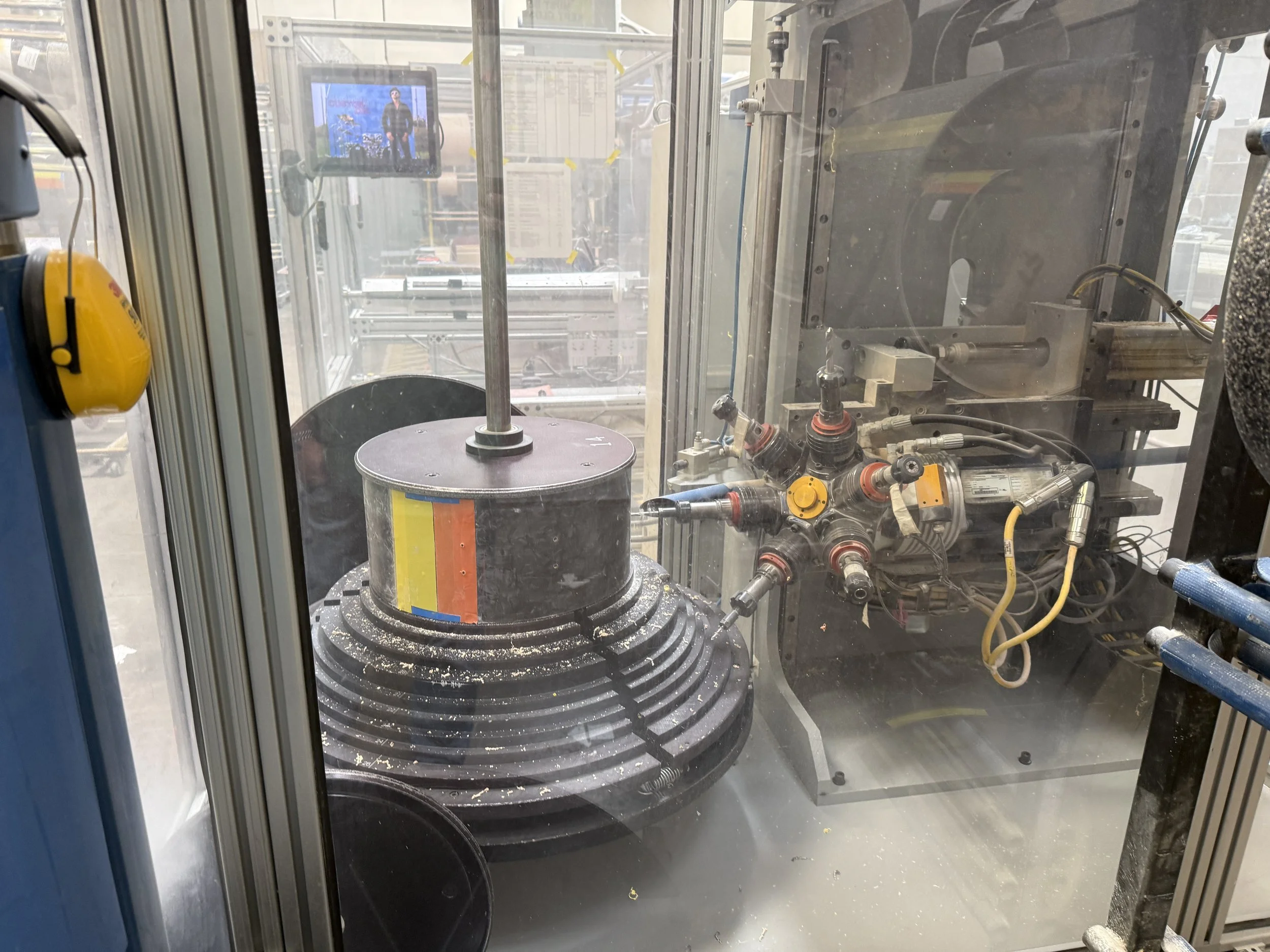
When both the top and bottom ends are perfectly flat, they move to the next process, which is drilling.
A machine, guided by a computer, drills holes where the lugs, tuners and other hardware components will be put into place.
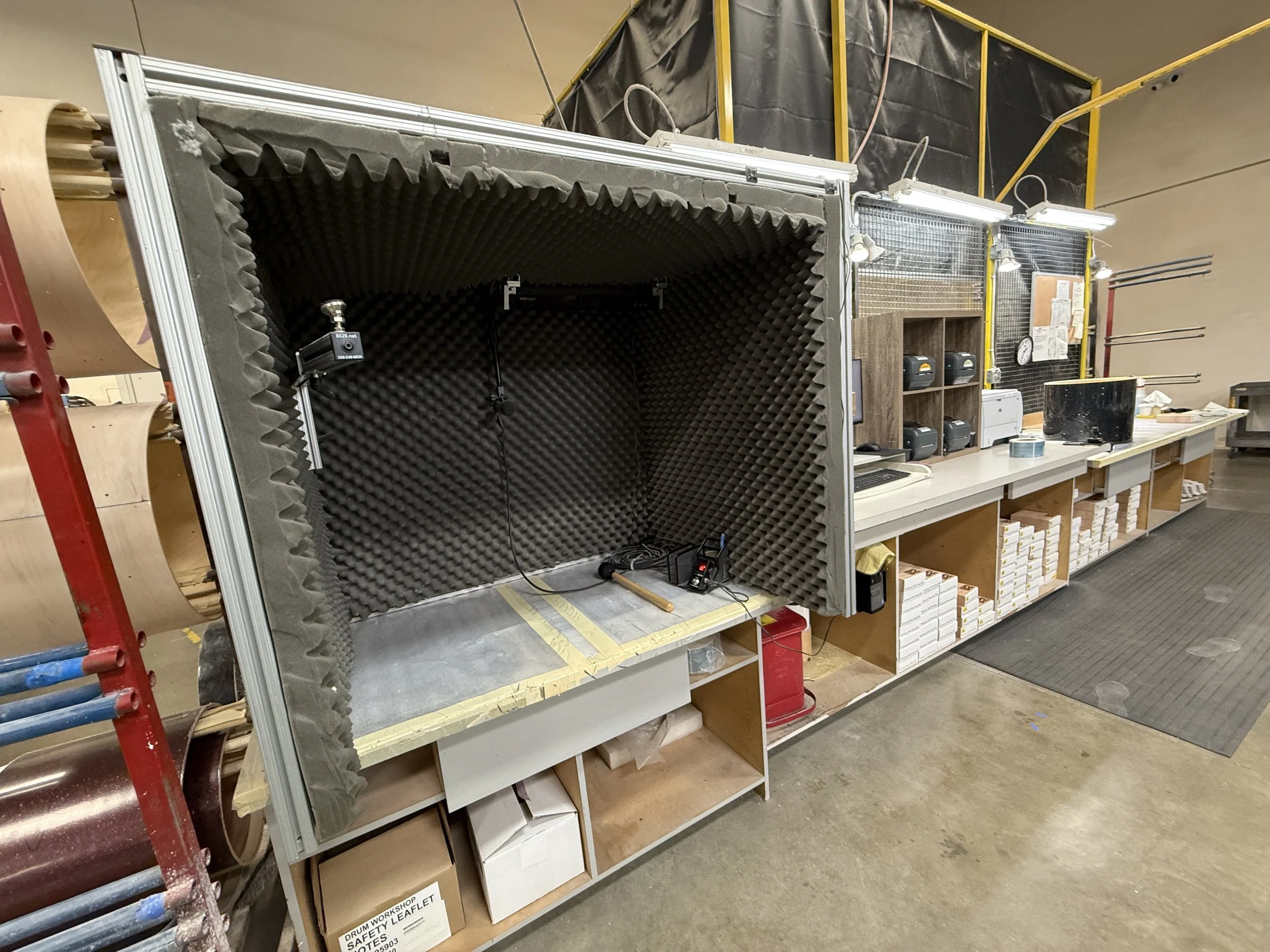
The next step is quite fascinating.
Below, you will see a sound box where they hit the shell with a mallet to “hear” the sound, resonance and “note.” Yes, if you hit a piece of shell, it will register a (musical) note. This step is essential for the company to produce consistency in their line of products, an extra step that sets them apart. It allows to detect whether there will be an issue with how the drum will sound like even before it’s finished. It’s like finding whether a baby that is still in the womb will have any disorders before labor.
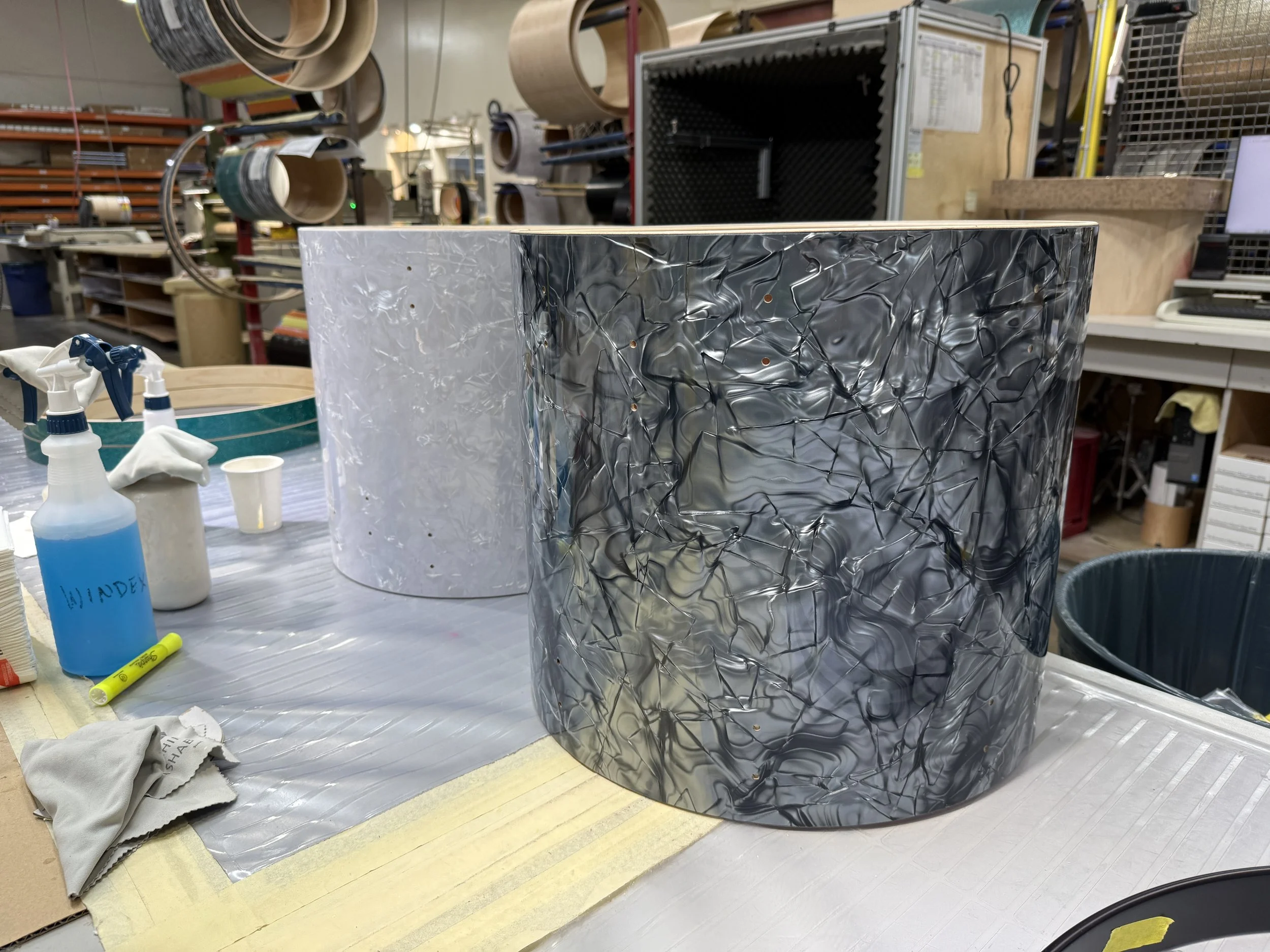
When they’re able to pass the sound test, the shells are then transferred to the “building” department where they install all the hardware components and drum head.
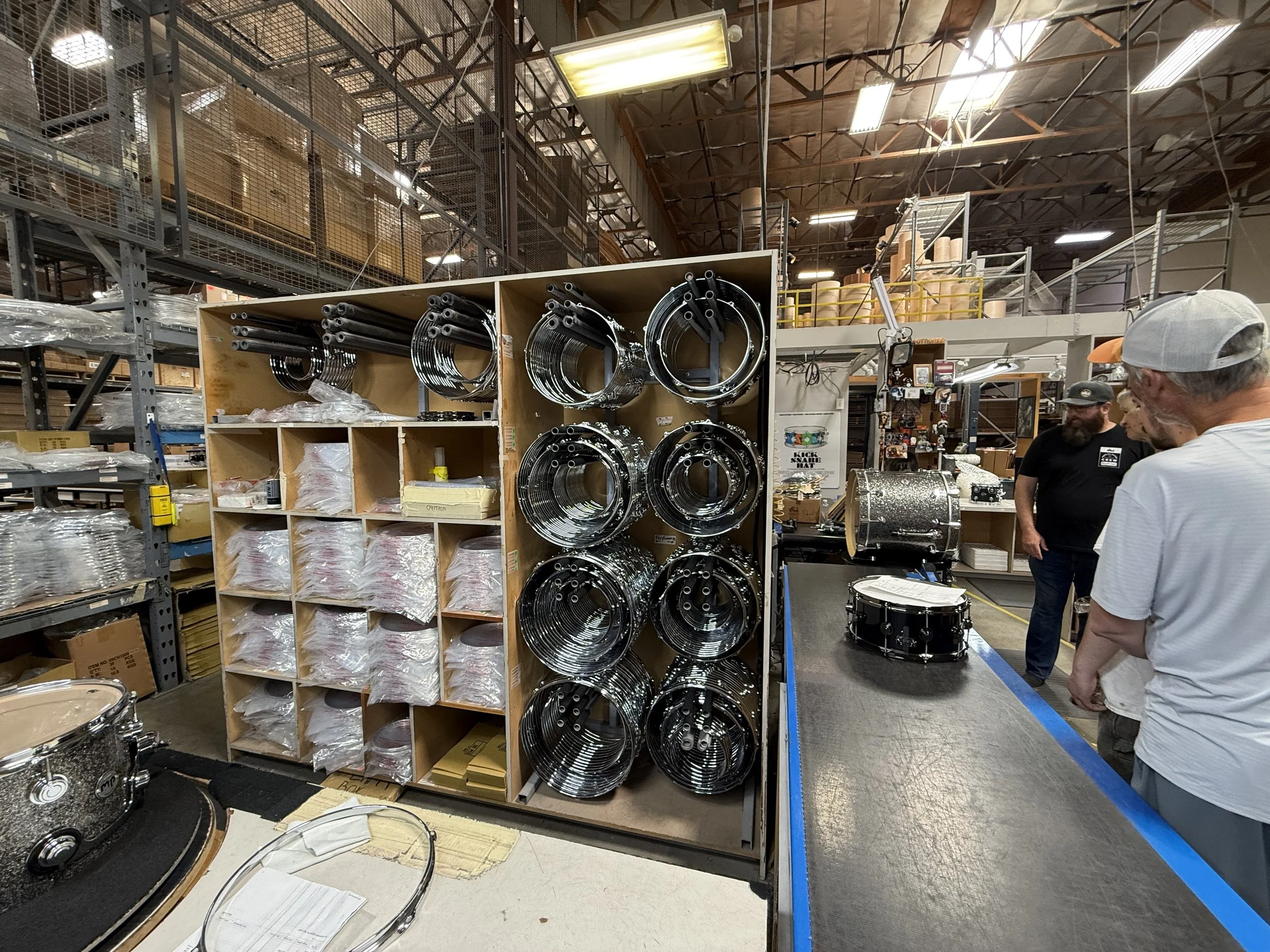
These metal rings below are what holds the drum heads. They are connected to the shell by screws.
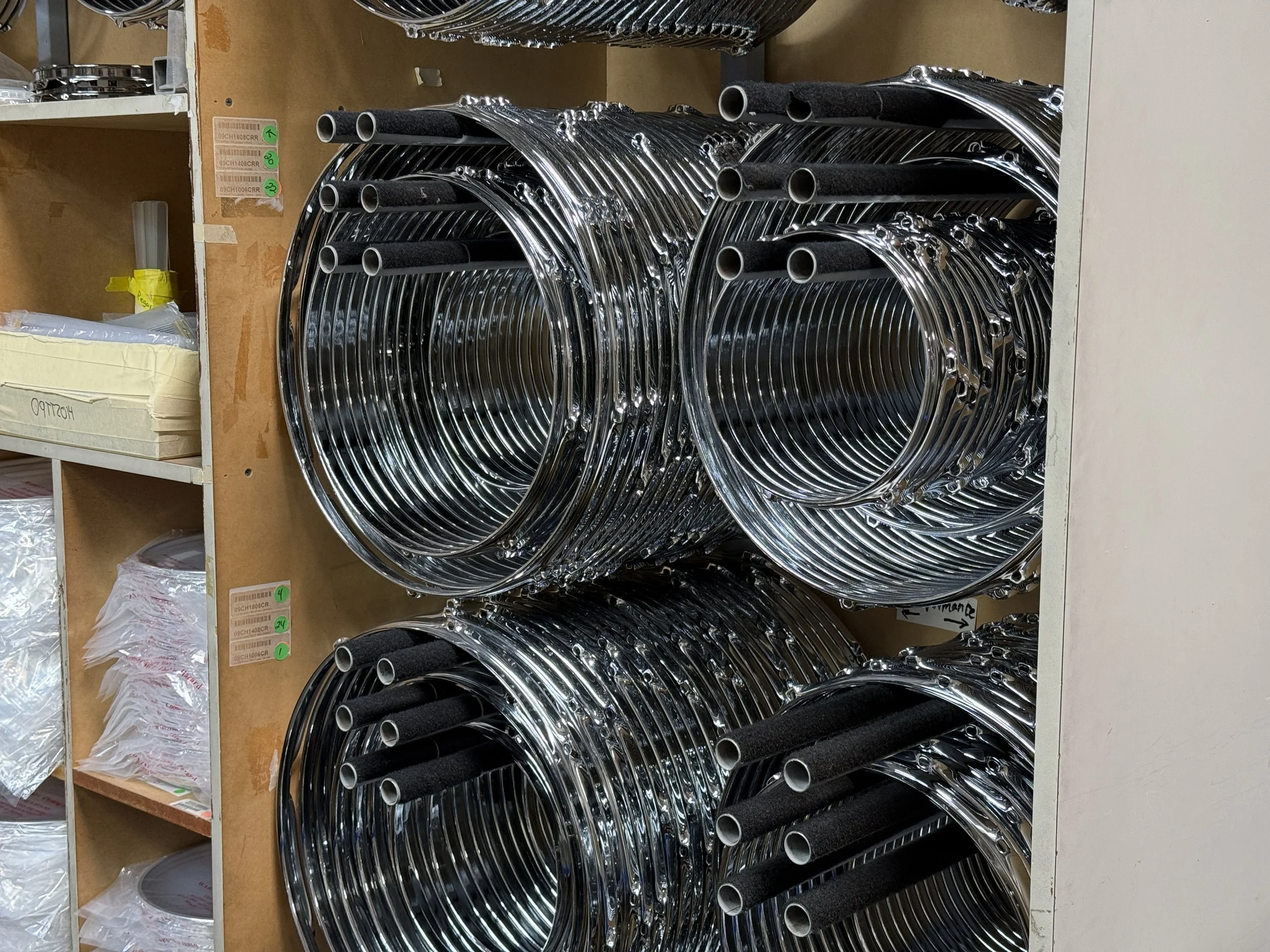
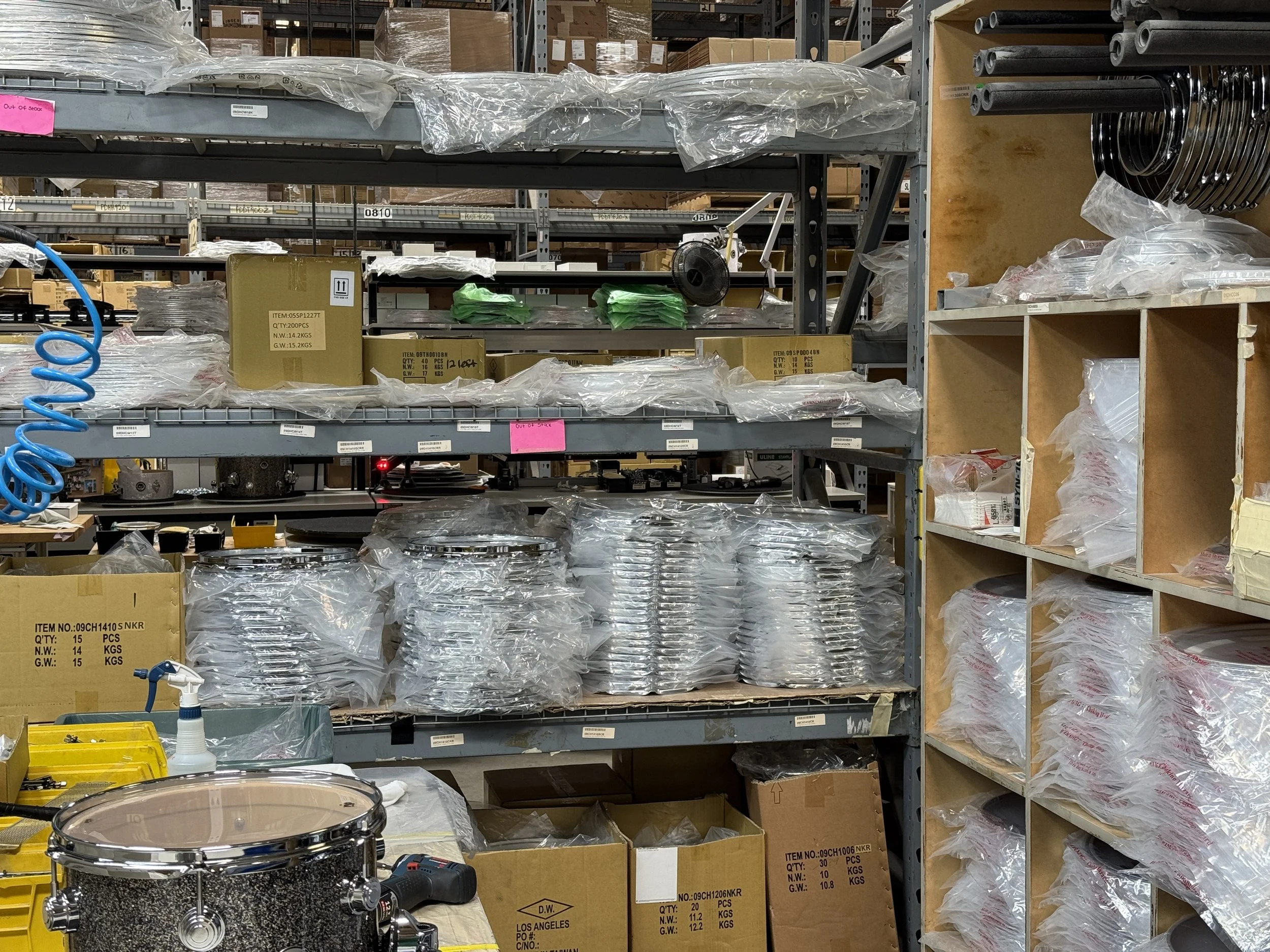
Below, you will see some hardware being installed.
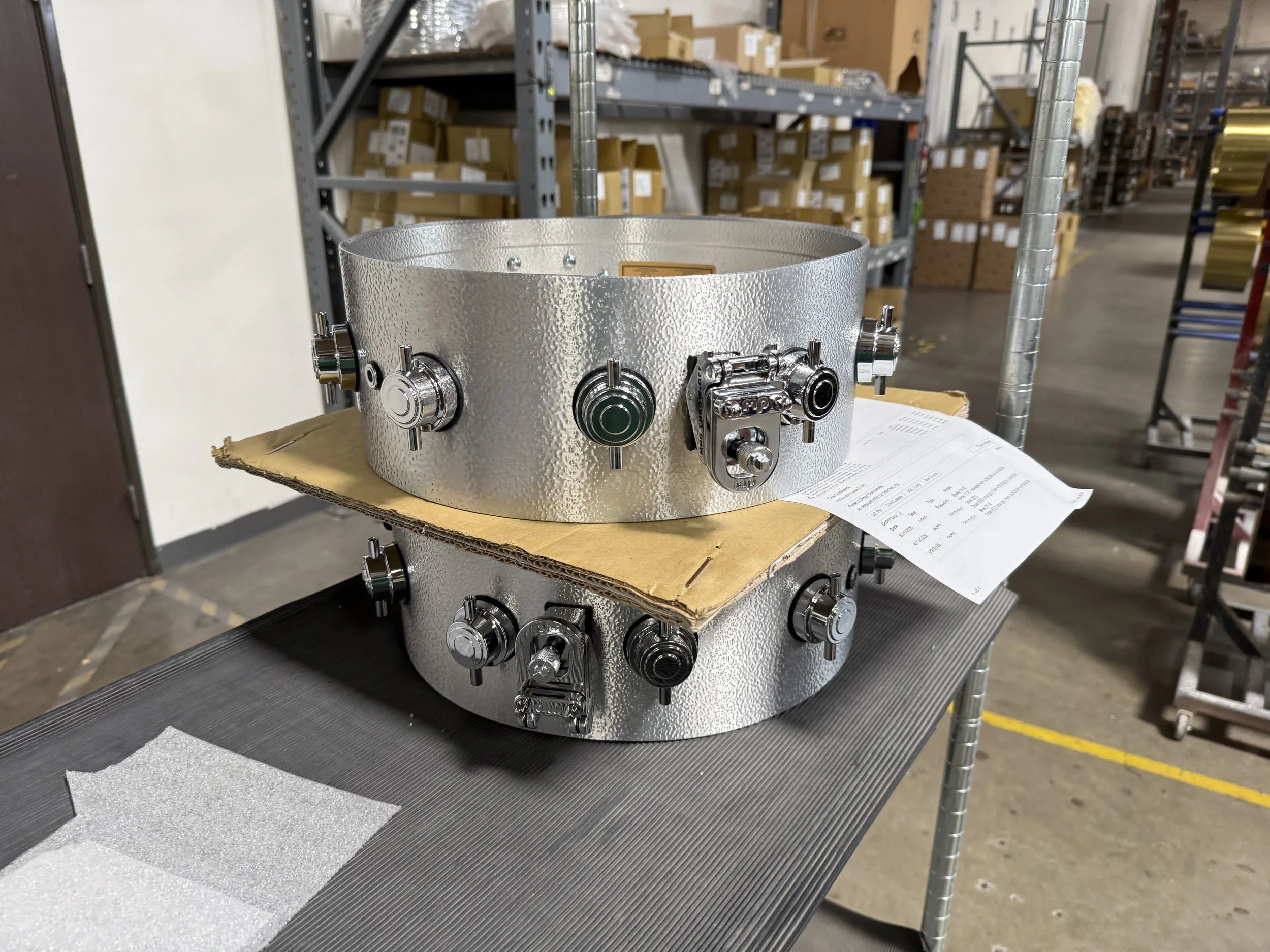
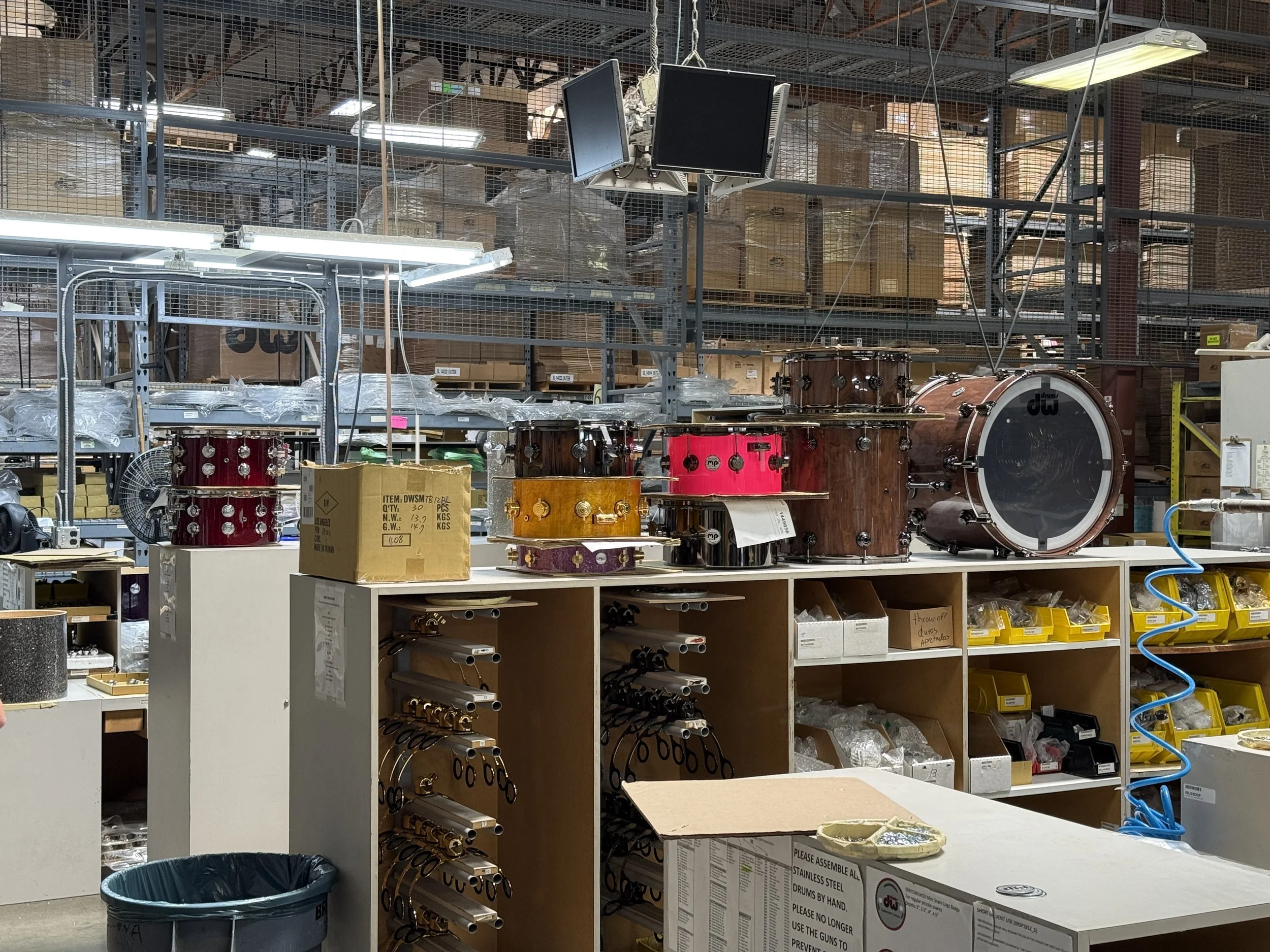
This is the finished product that will now be passed on to the inspection area, called the “White House.”
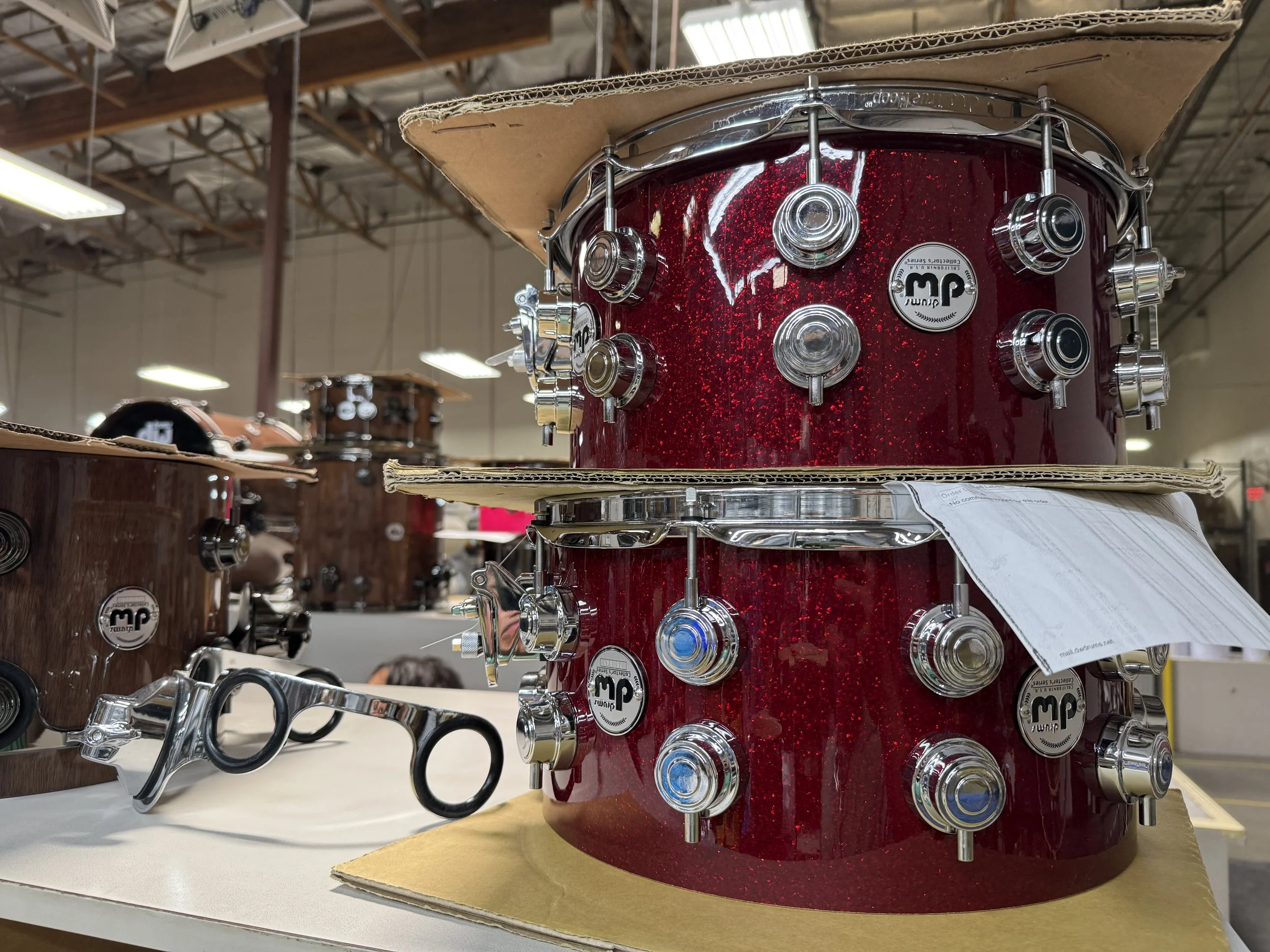
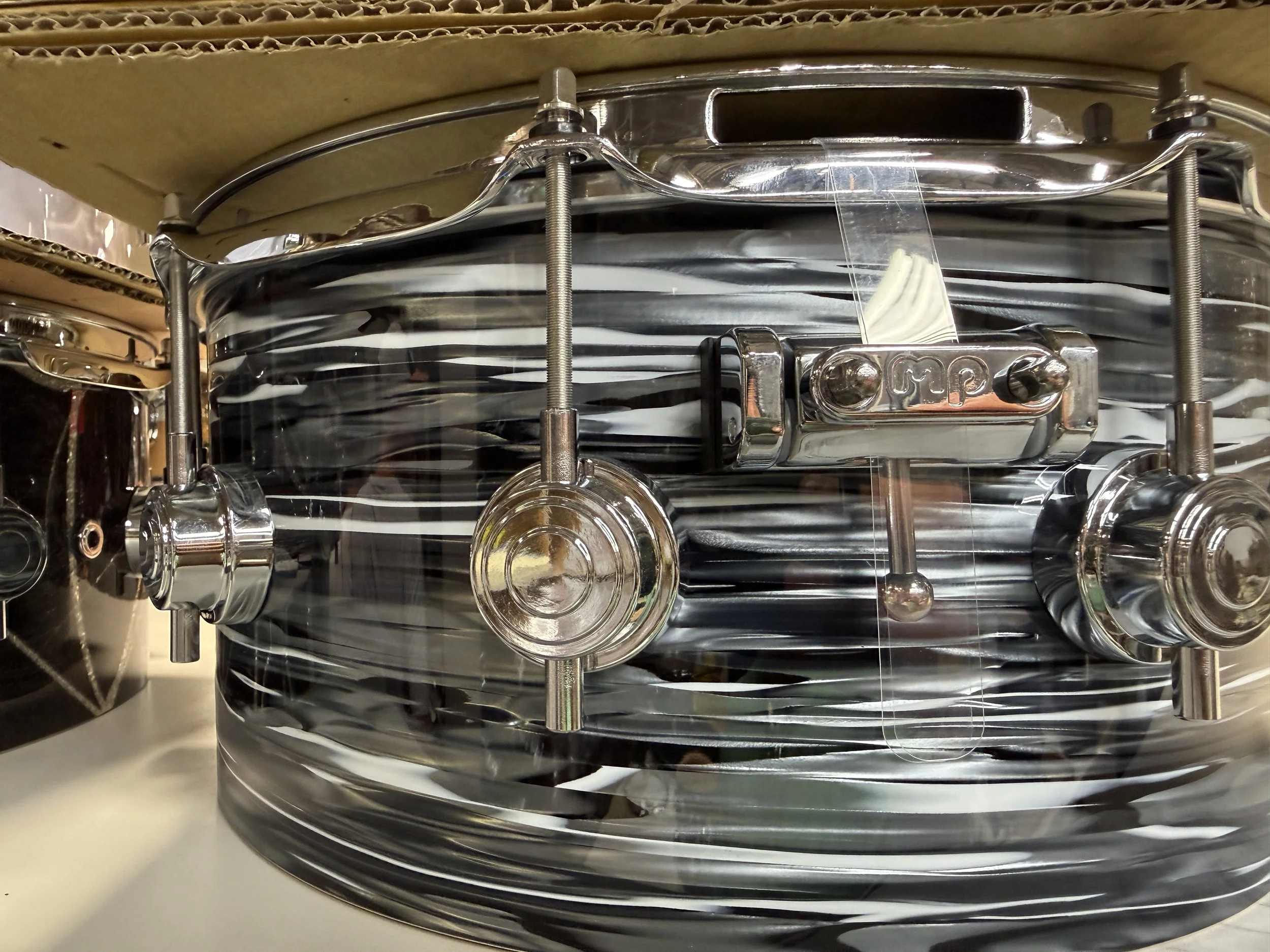
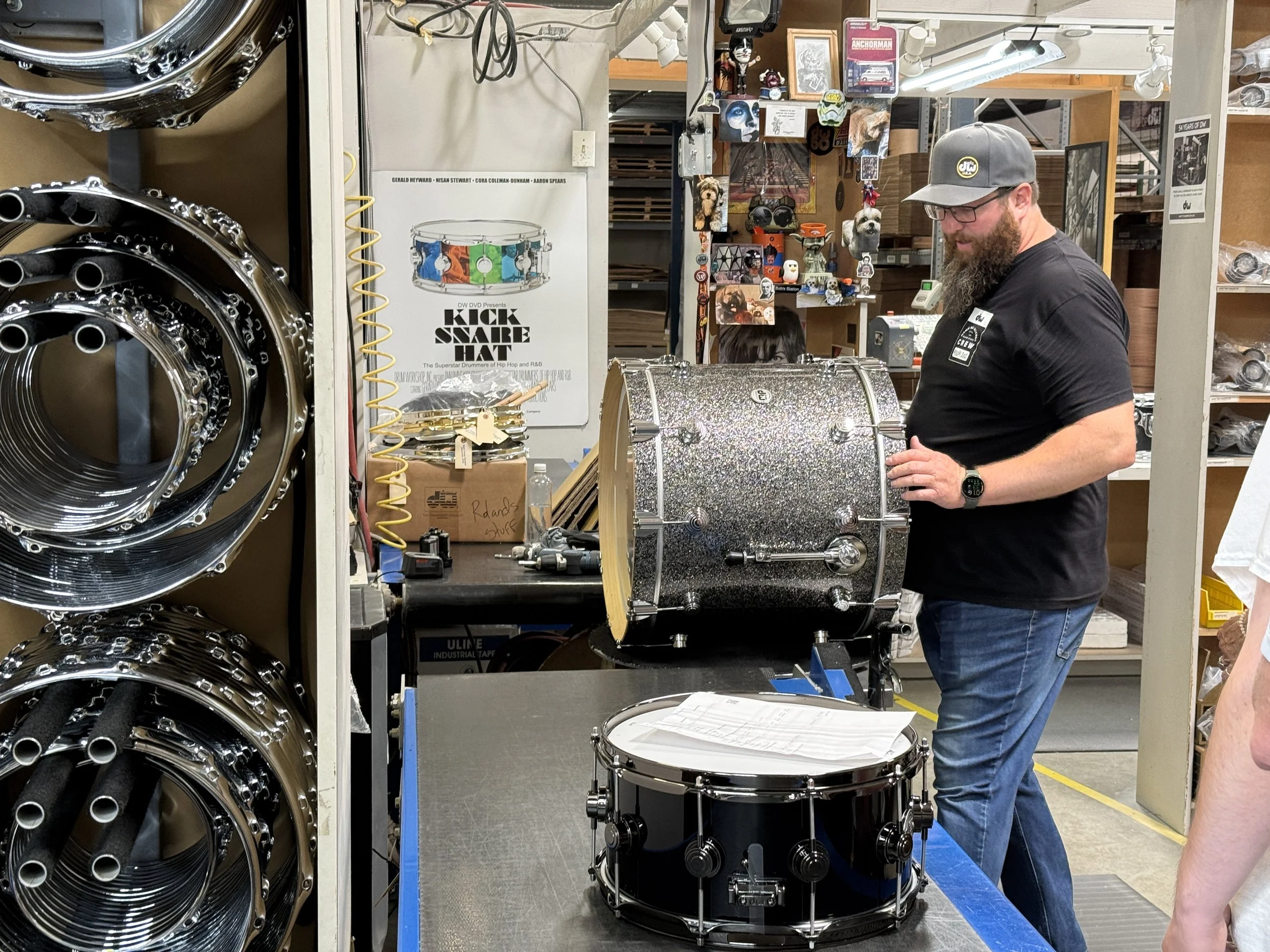
The White House is the area where they tune and scrutinize any issue to the tiniest detail before packaging. This is where they really criticize any imperfection, flaw or ding. If it’s not perfect, they don’t get shipped out.
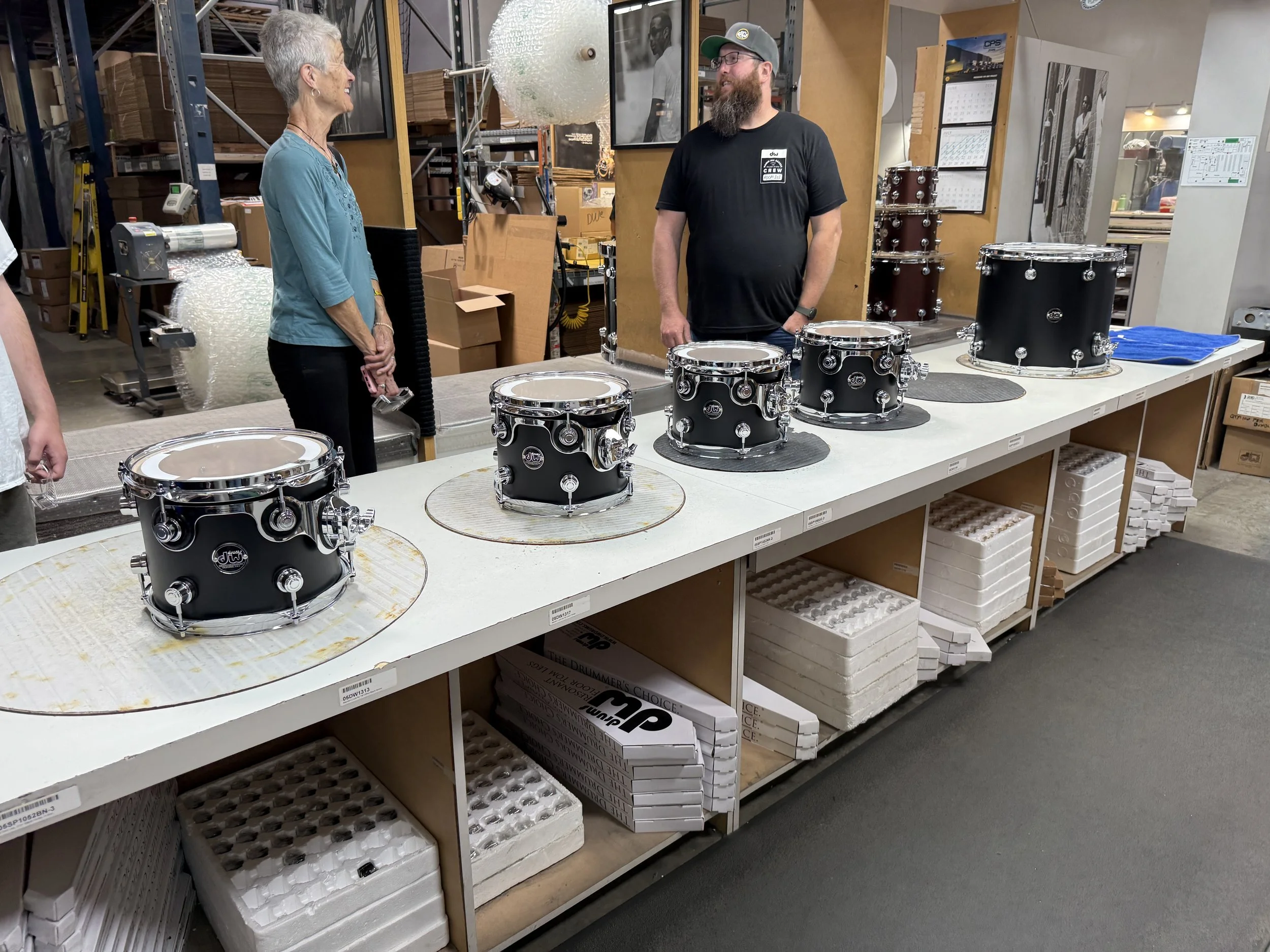
Metal hardware, is also fabricated in the factory.
The next part of the tour took us to where they manufacture all metal works via a 3D printer.
From raw materials such as metal and aluminum scraps…
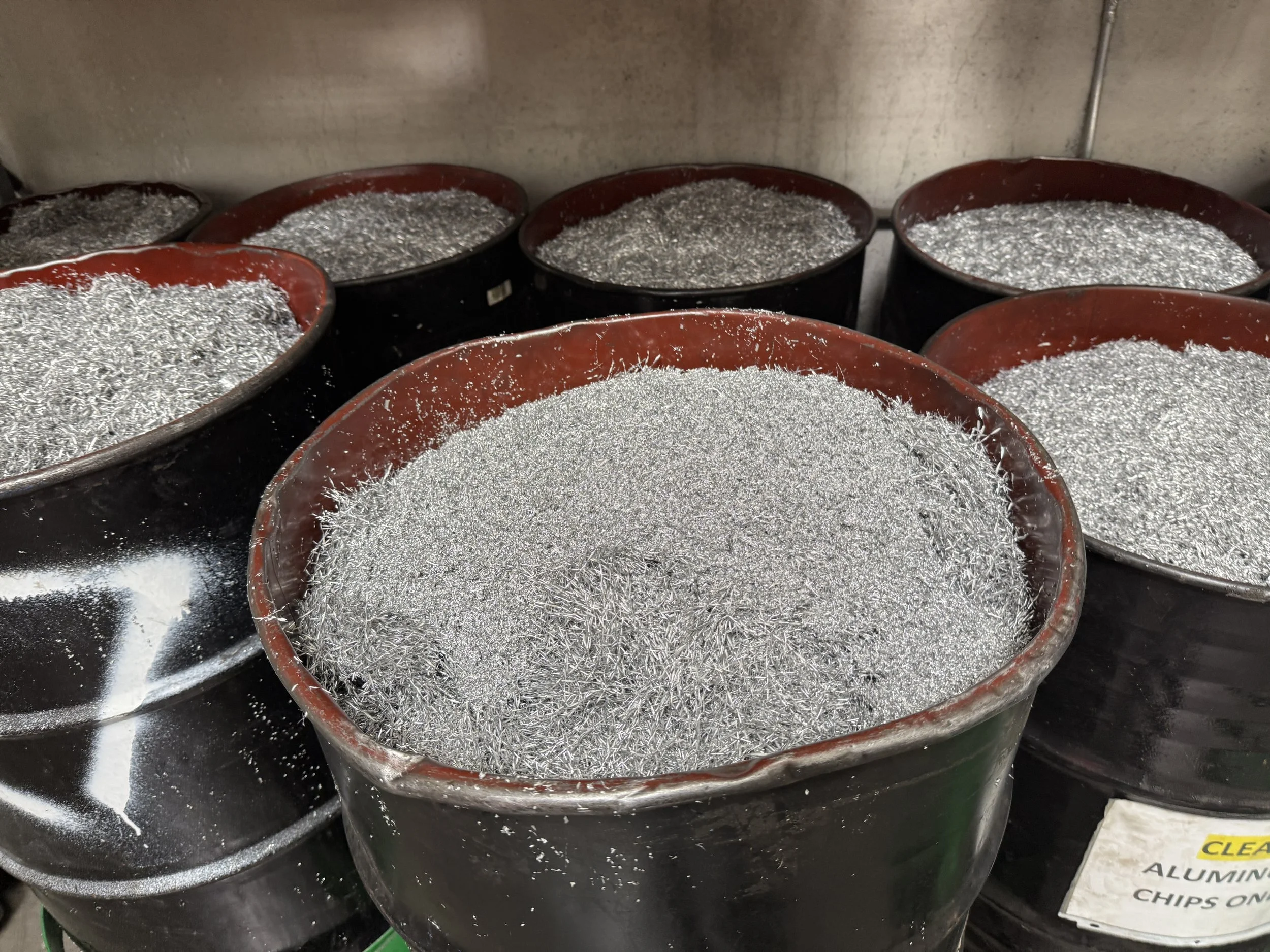
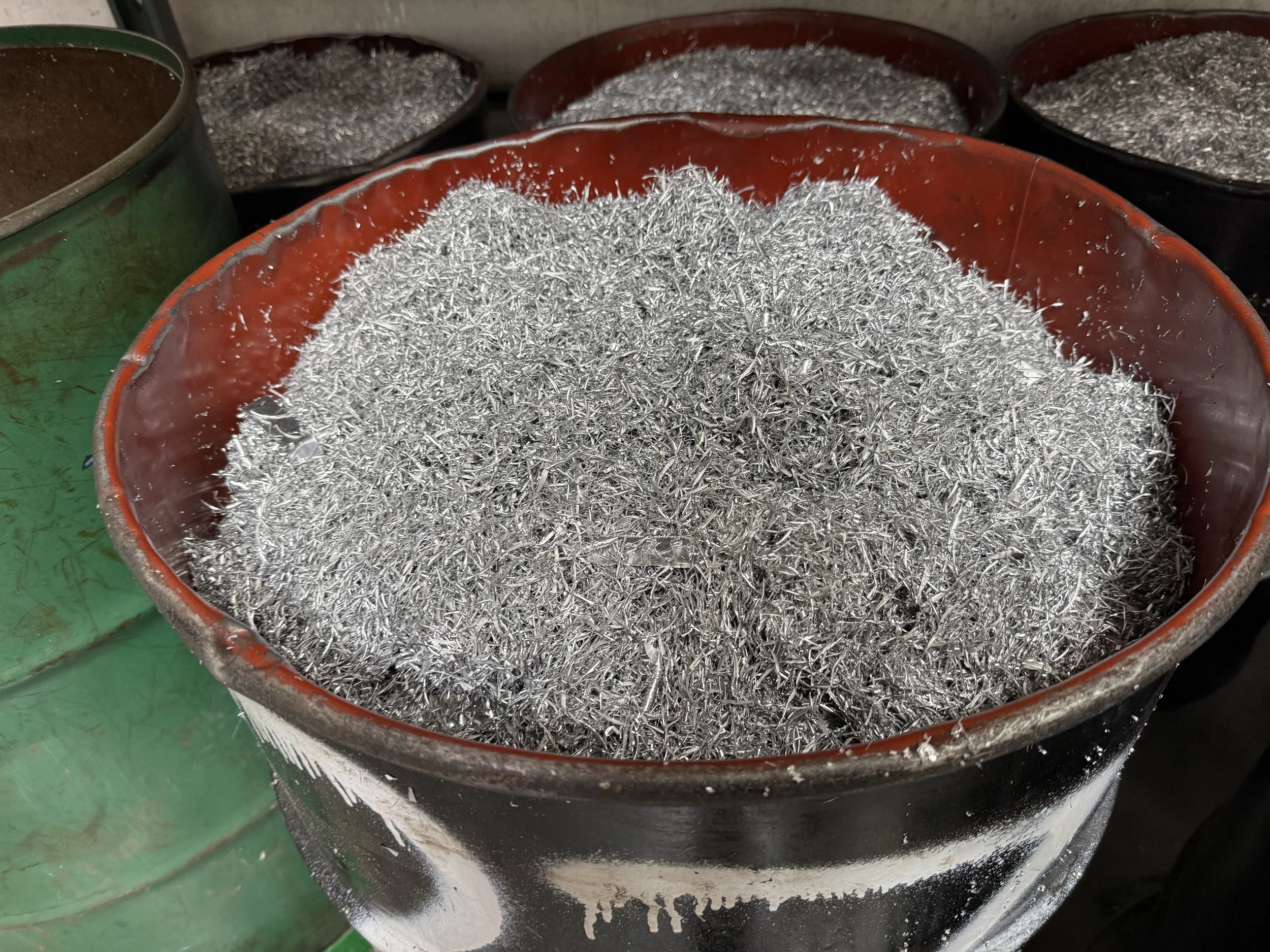
With the help of some machinery
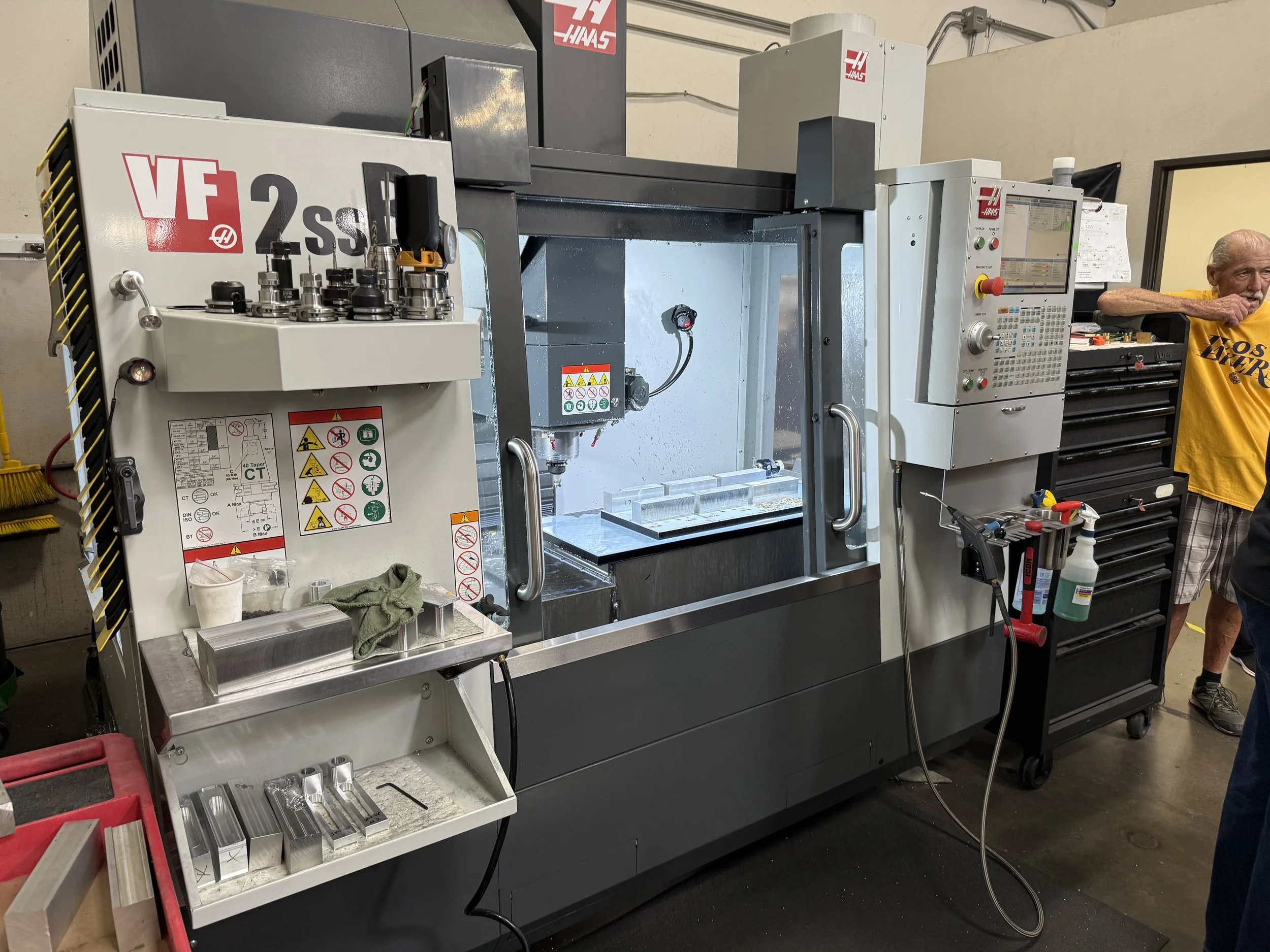
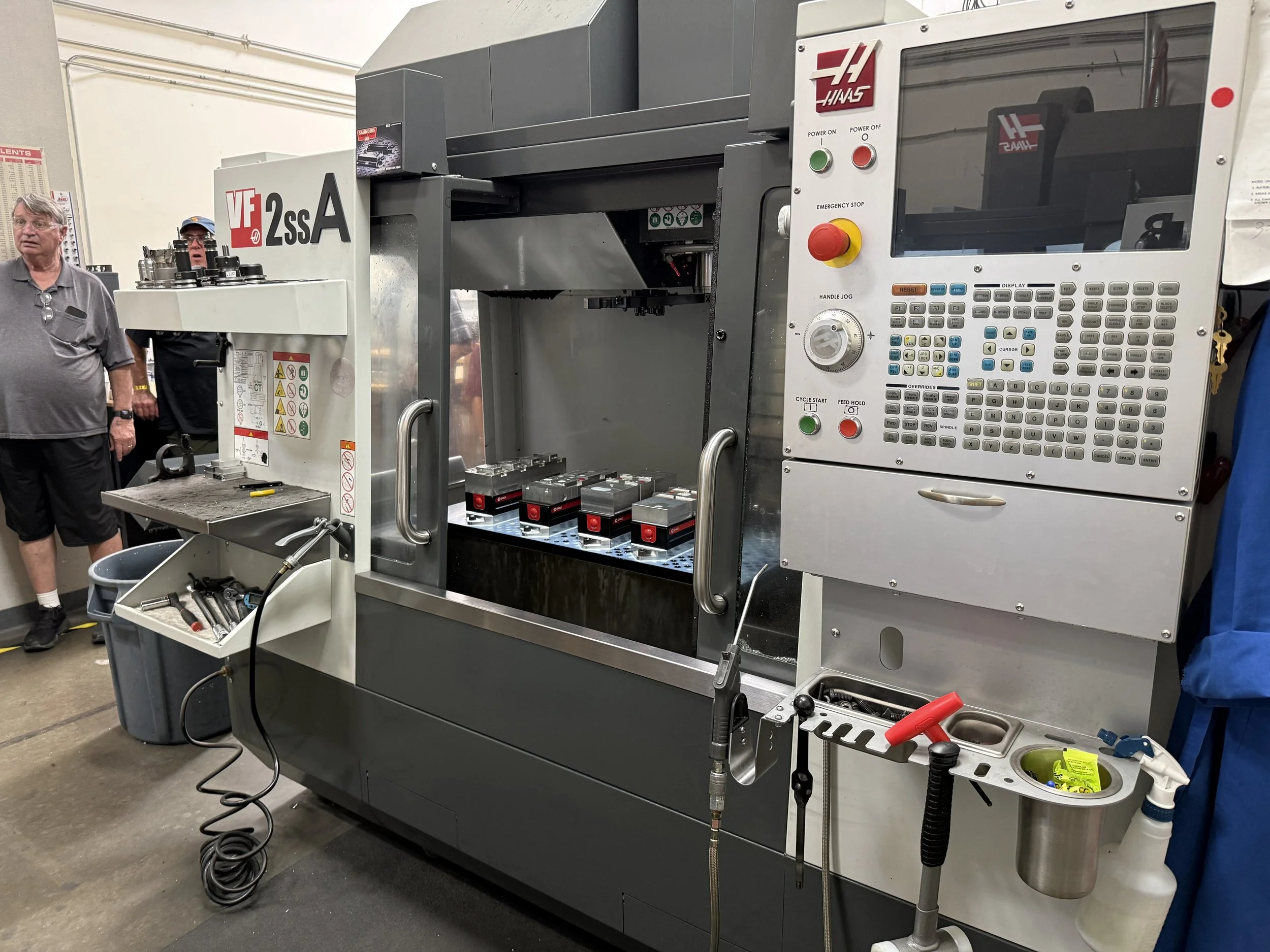
Then you will end up with metal components where they will end up into…
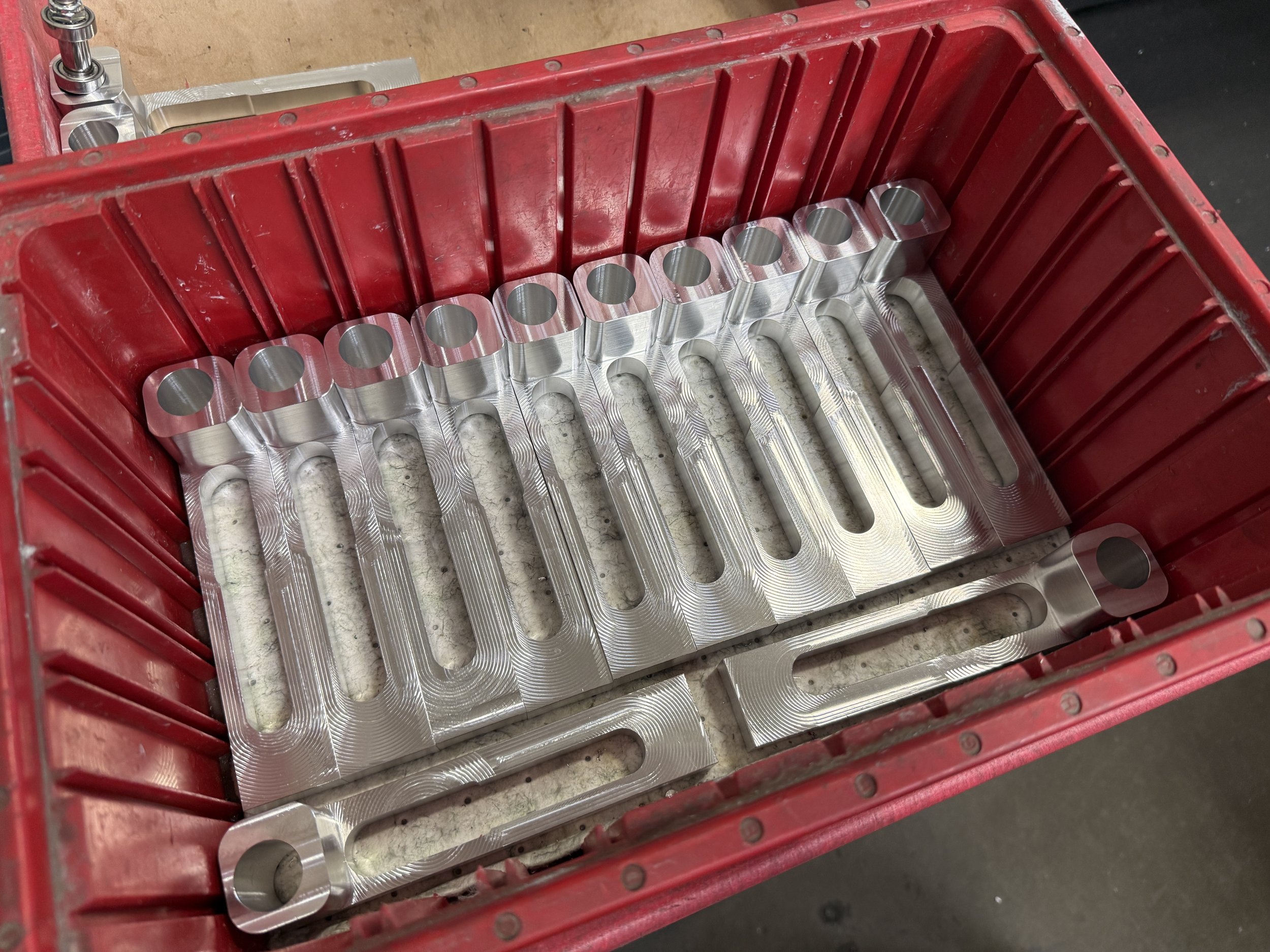
These… and
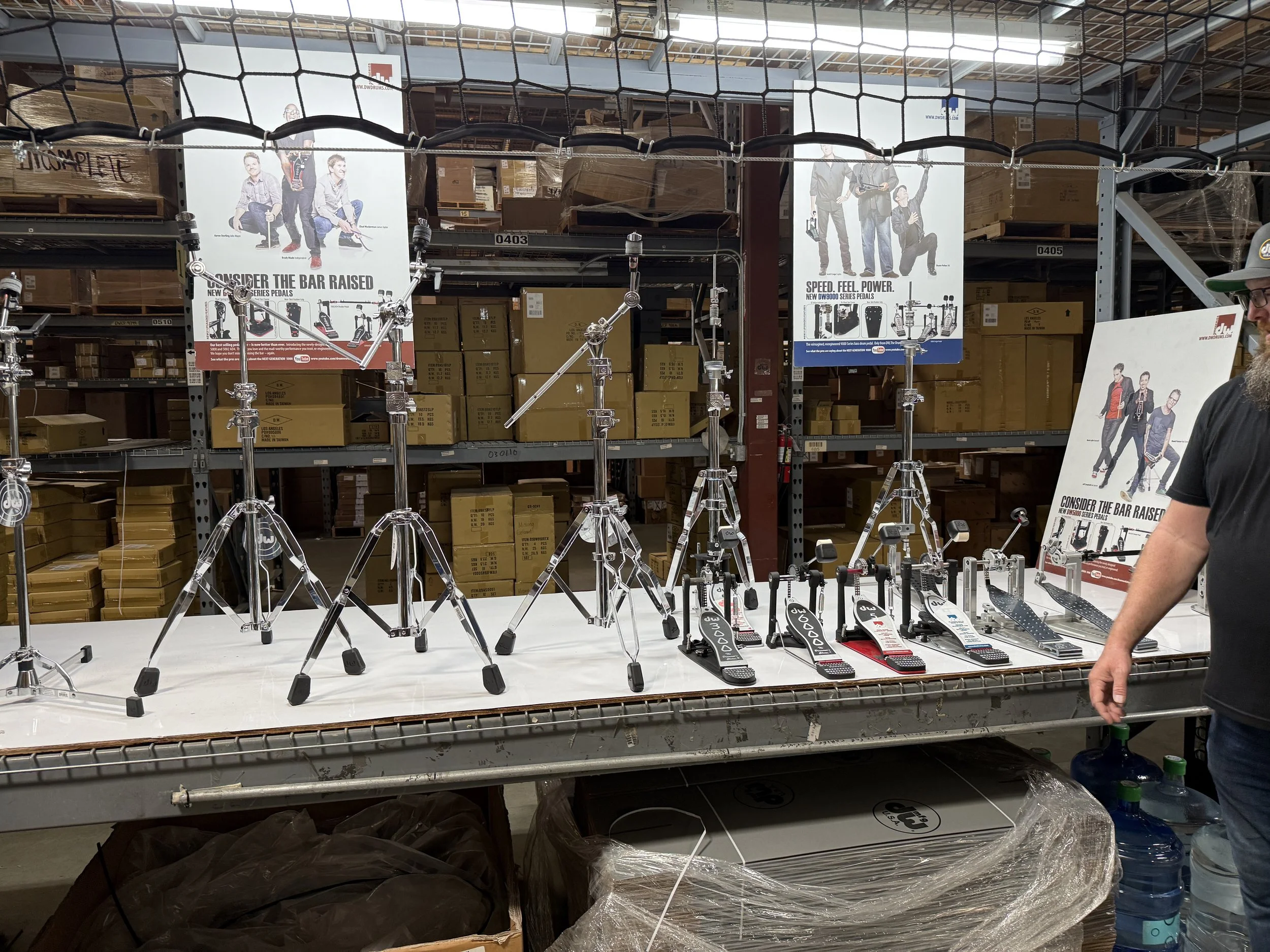
These.
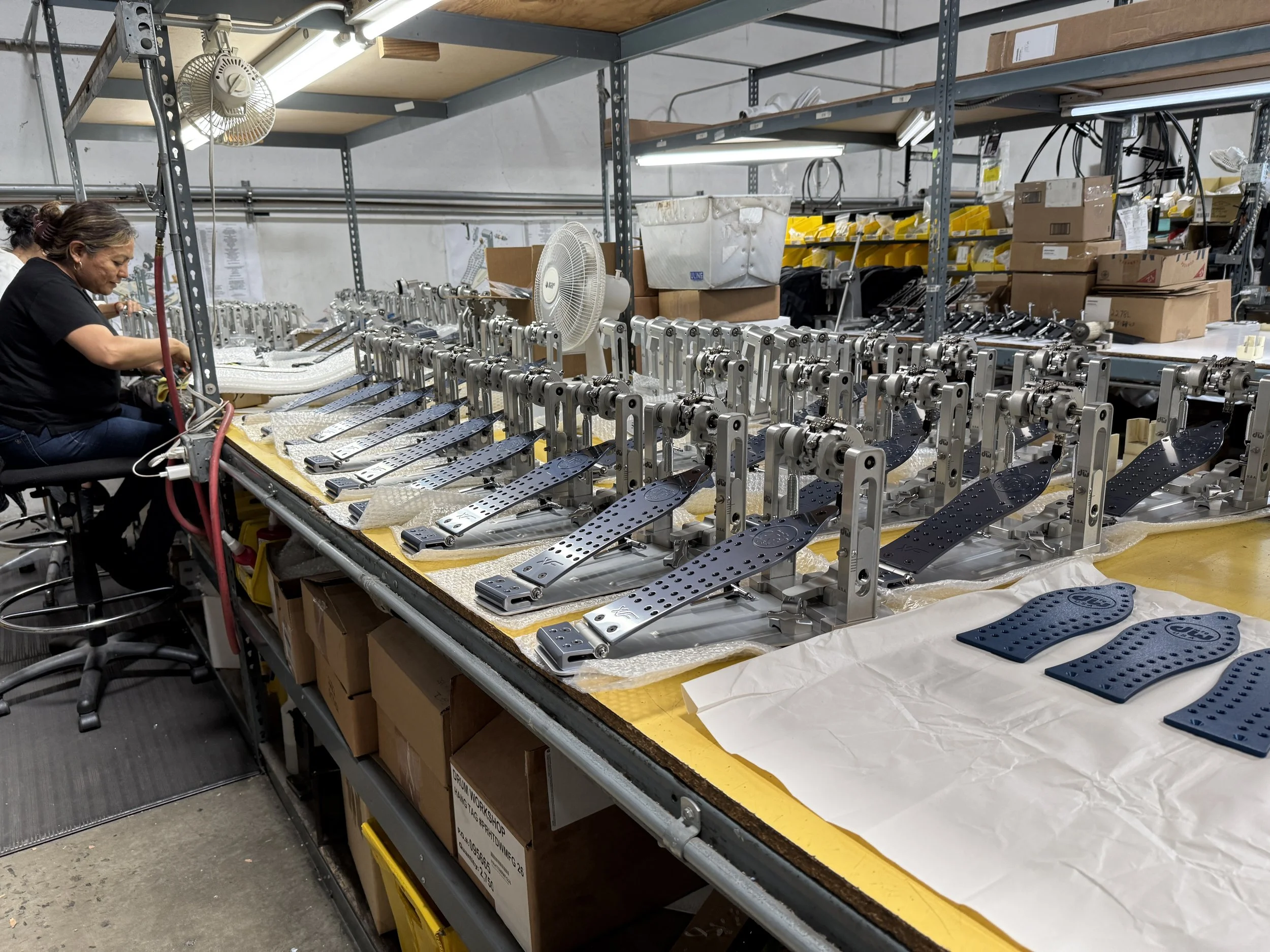
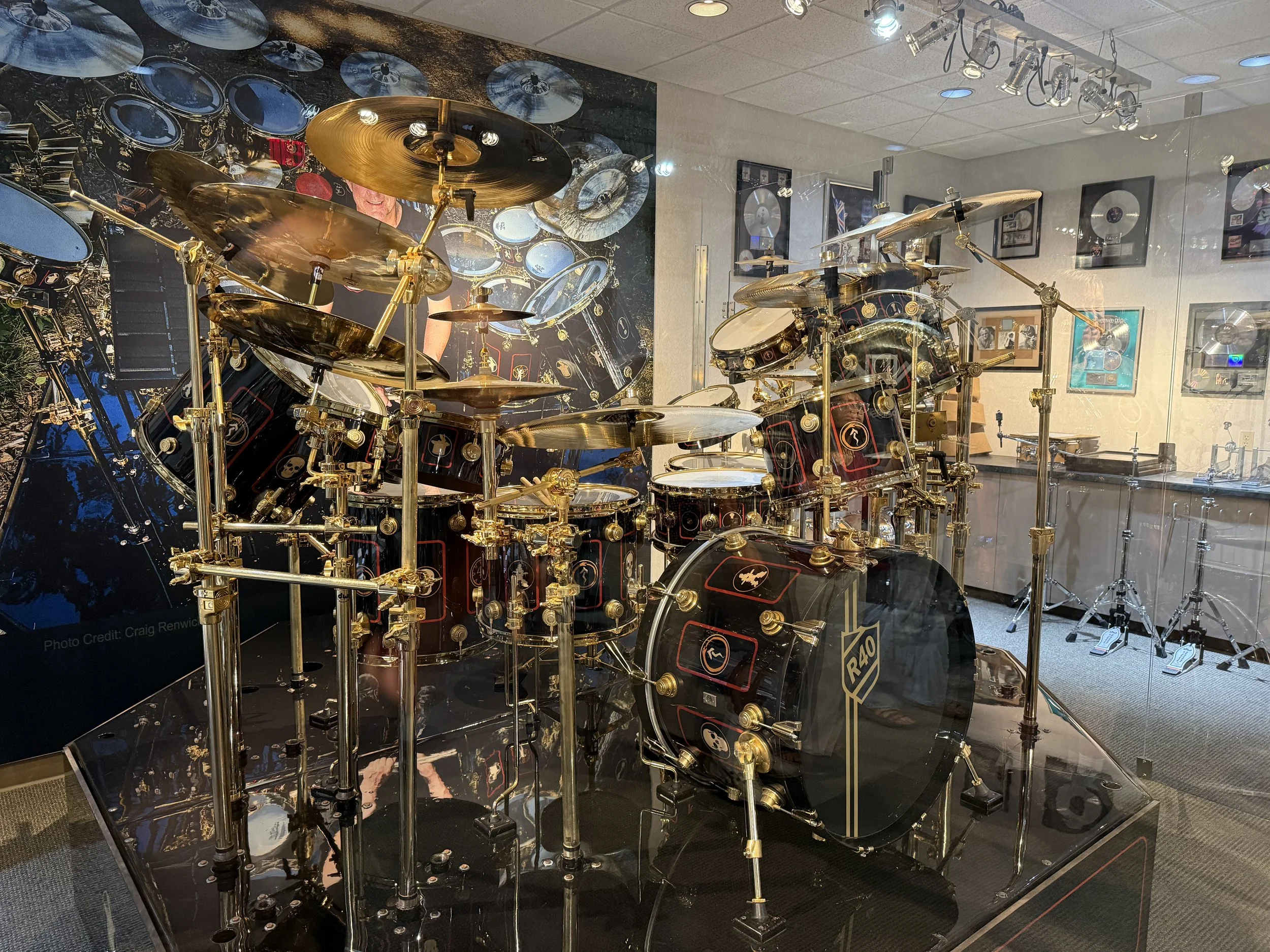
At the end of the tour, we got taken to the owner’s showroom. It was nothing short of remarkable to see all the famous drum pieces that the company has put out through the years. They are really amazing at what they are doing!
Neil Peart’s Drum Set (Rush)
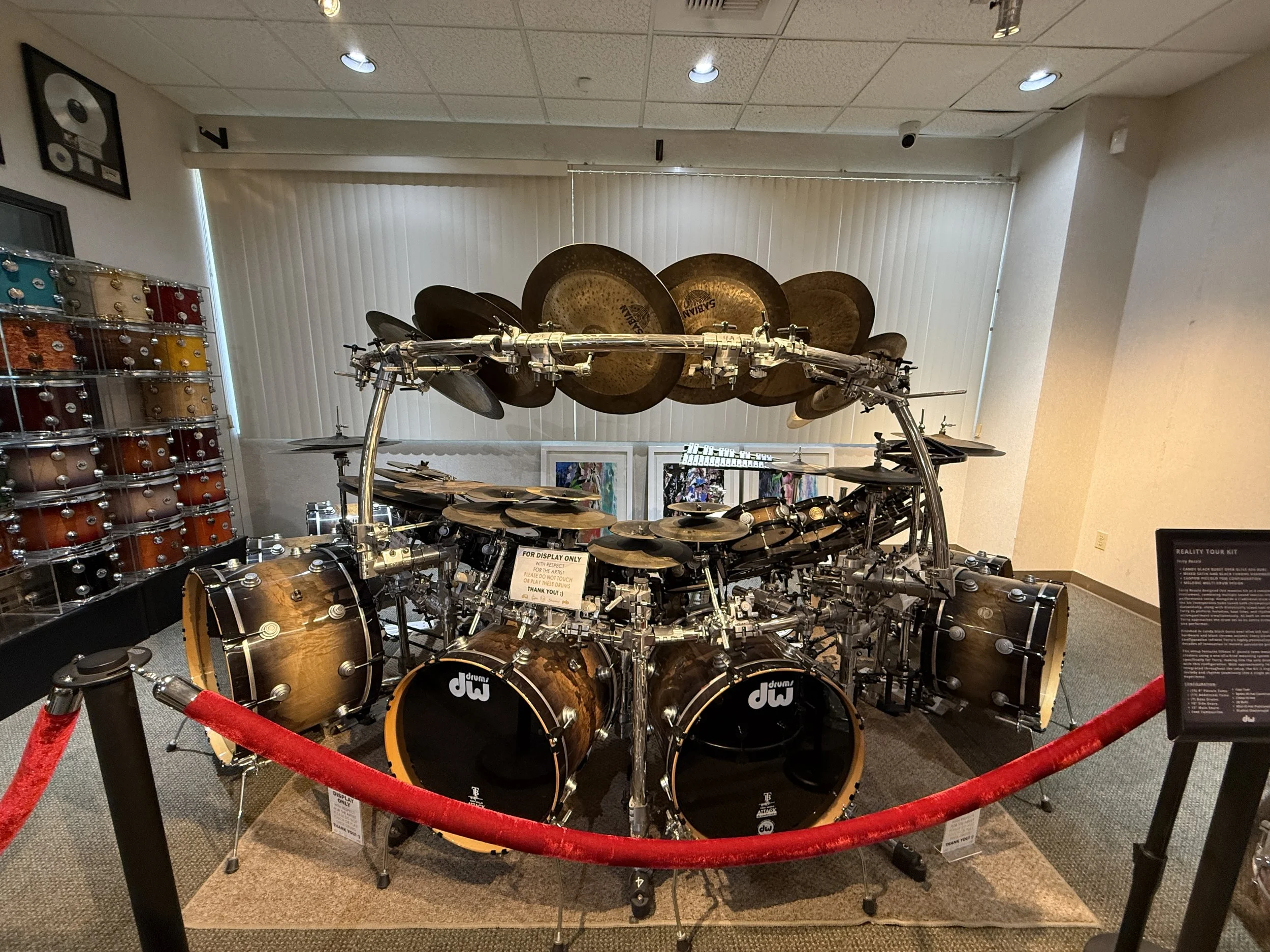
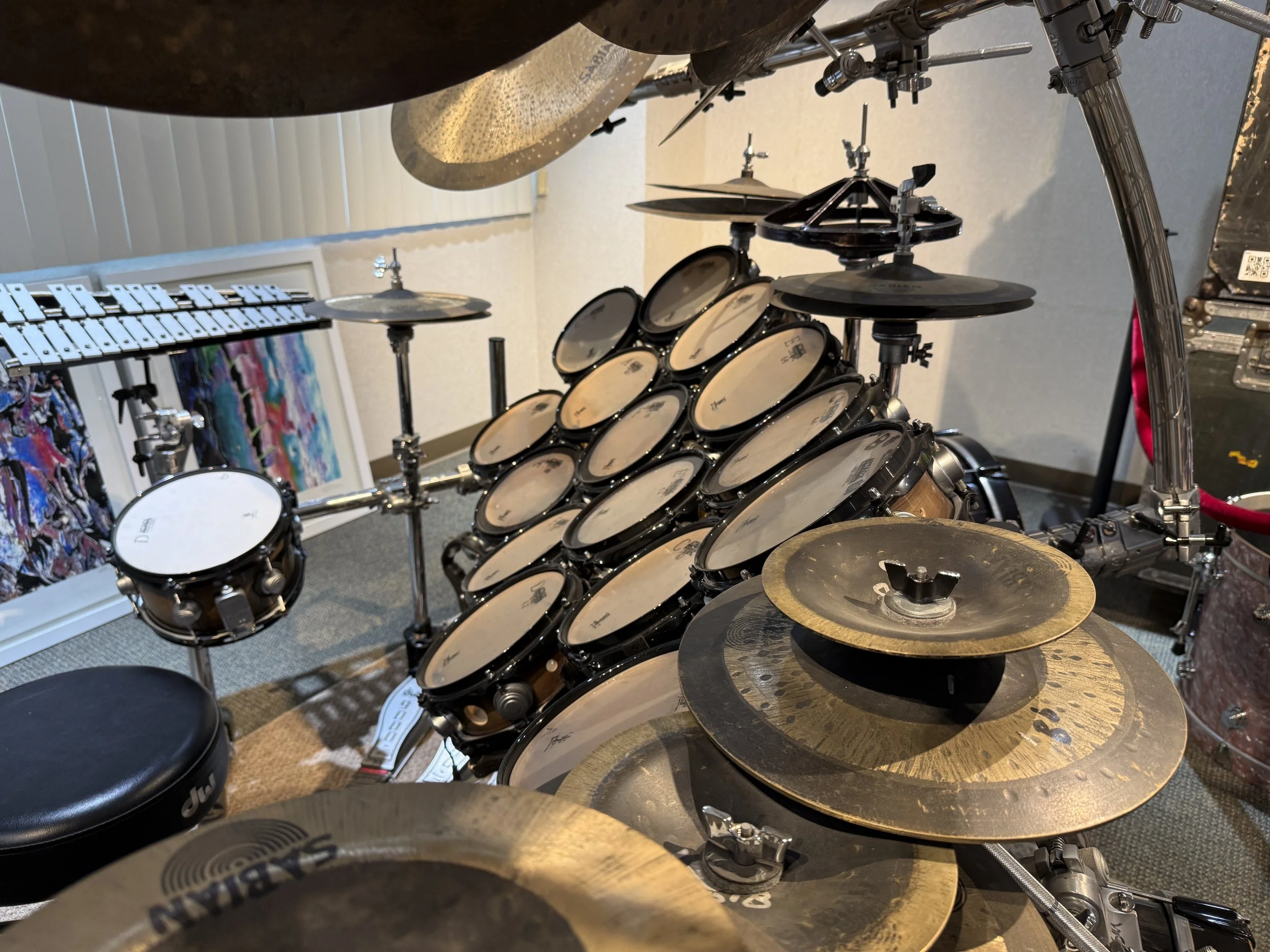
Terry Bozzio’s Drum Set (Zappa, Individual Artist)
This is my favorite drum set of all time, and by far the biggest kit known to man. This is half of what he really has compared to when he plays live. I salute his drum tech for being patient when assembling this monster. The way he plays this one hell of a set is outstanding. With 26 toms, 8 bass drums and 53 cymbals, you don’t even need band members. You become the band!
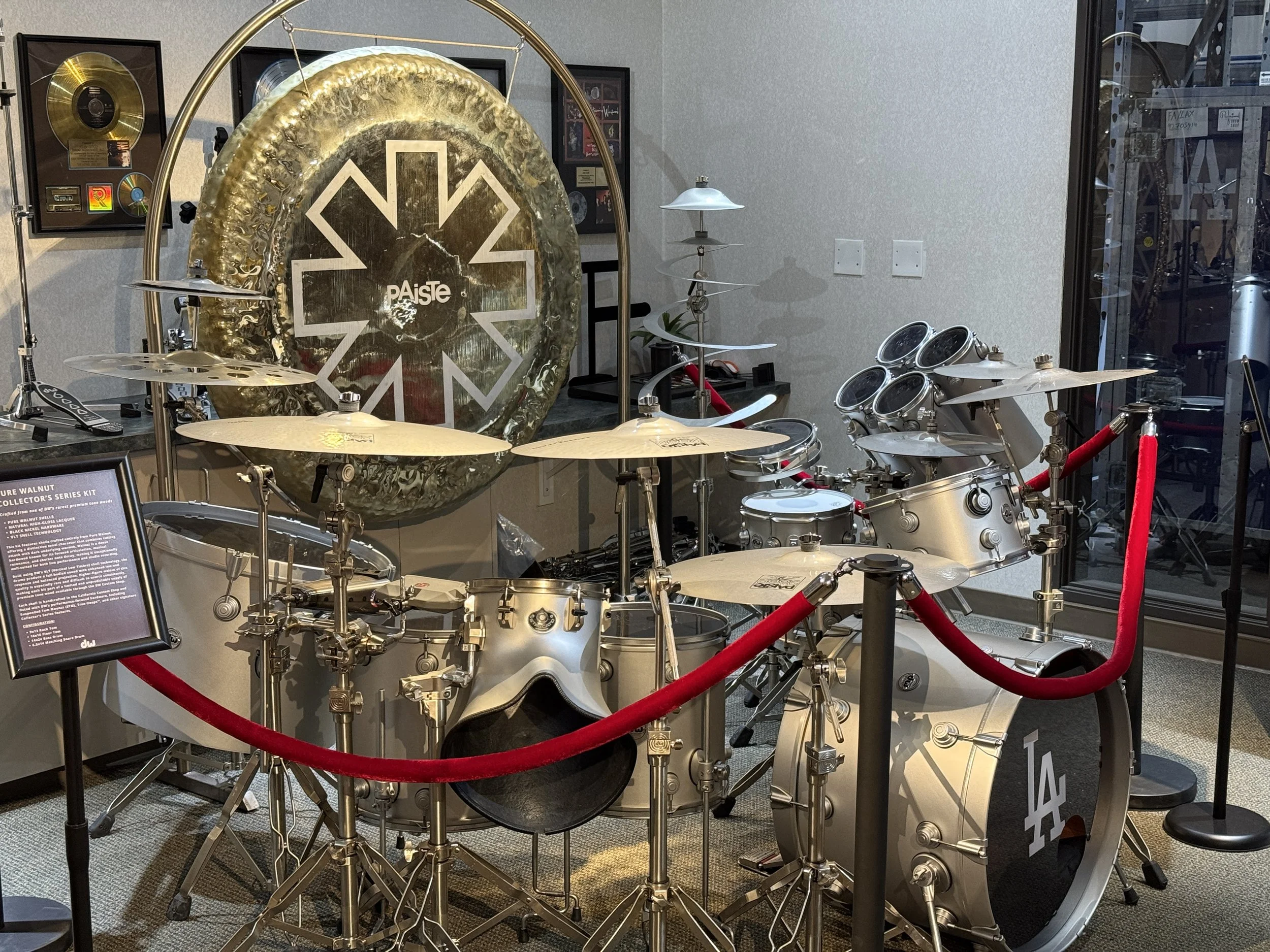
Chad Smith’s Drum Set (Red Hot Chili Peppers)
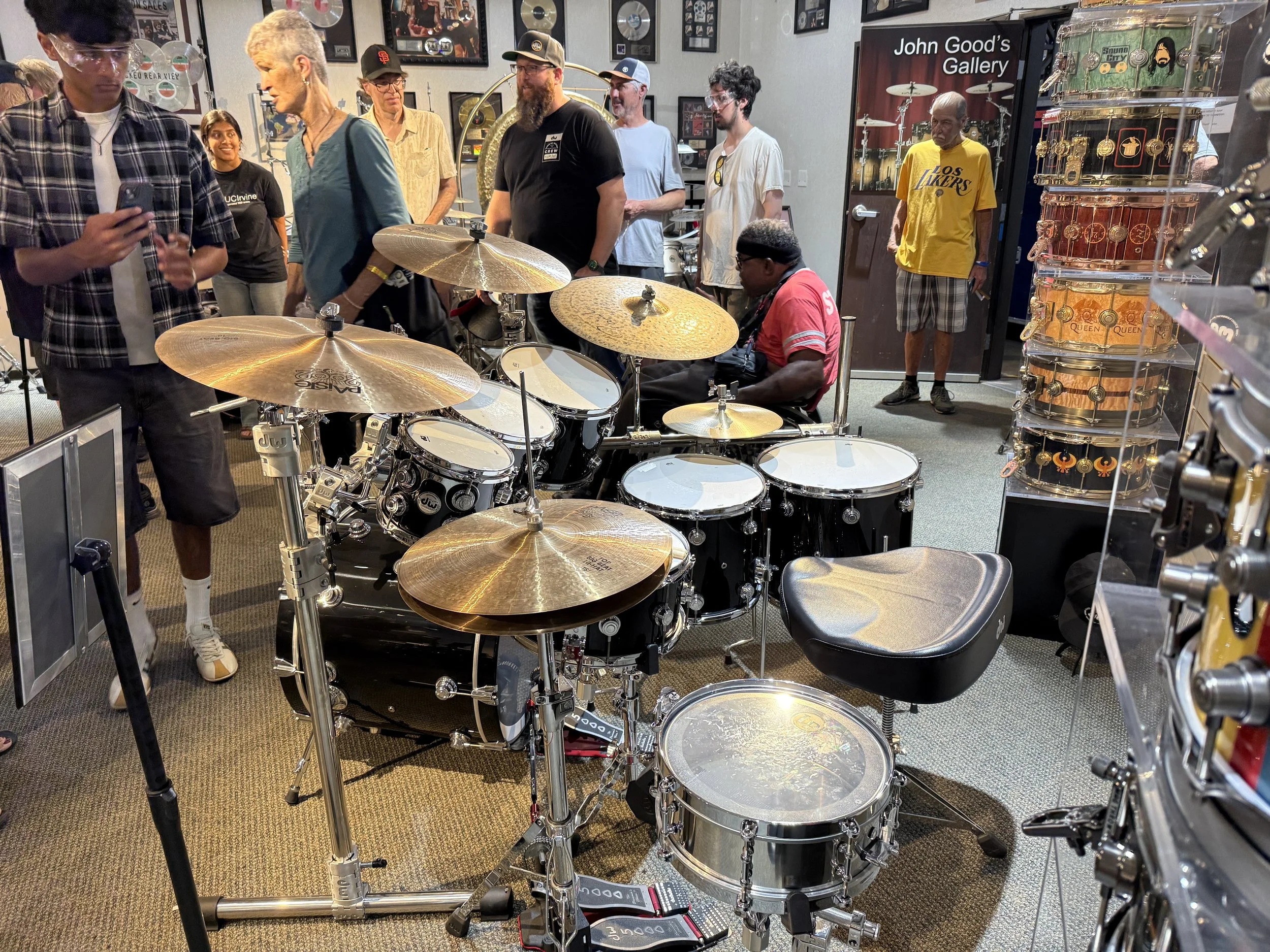
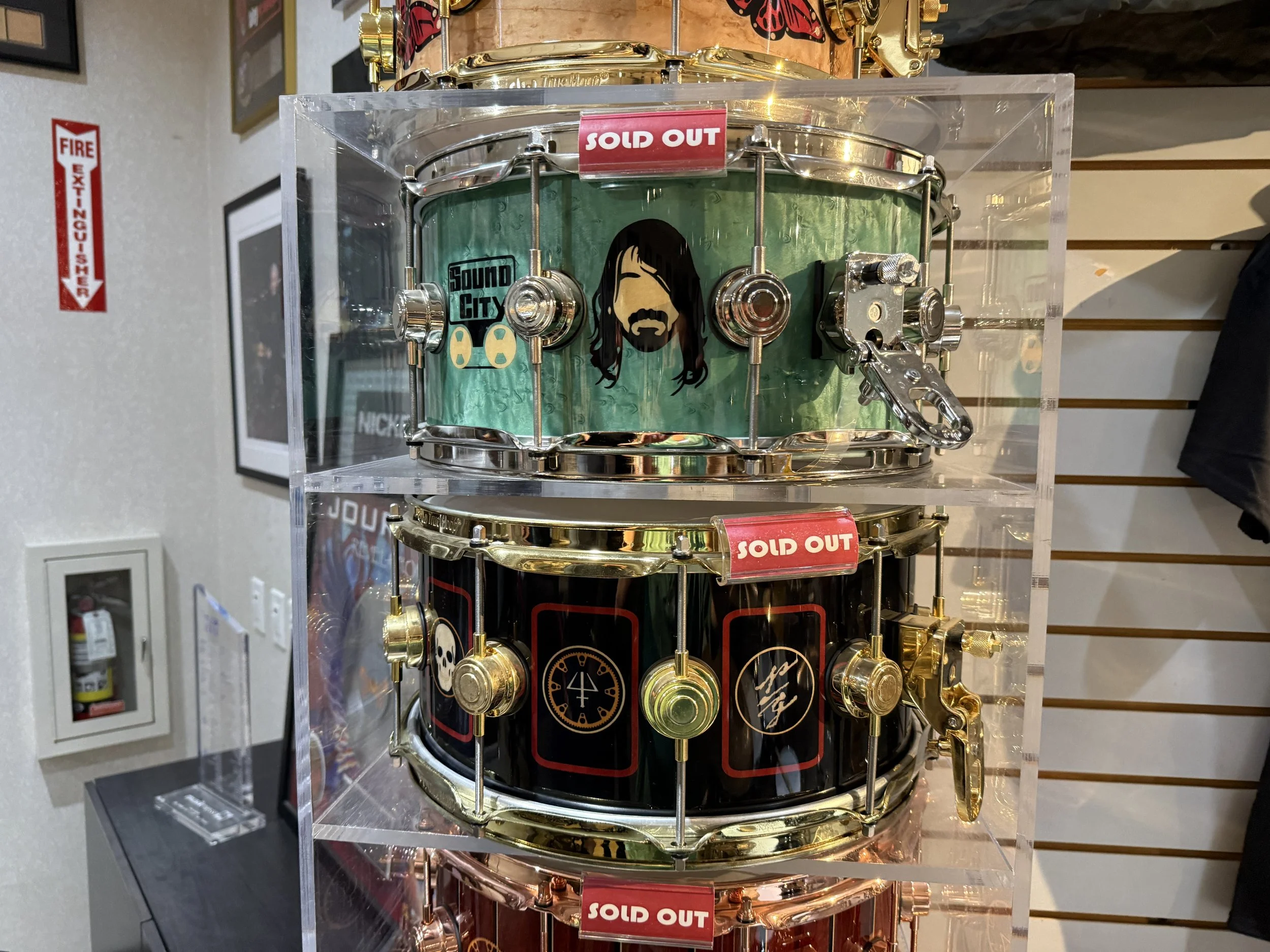
And I’m assuming that this is a David Grohl (Nirvana, Foo Fighters) artist series snare drum.
And that’s it folks! It has been an honor to visit this amazing factory. I was able to cross something off of my bucket list!
Keep drummin’!